


Paid acquisition gets more expensive when your organic authority stays flat. These 10 simple link building ideas give Shopify and WooCommerce brands a practical way to earn relevant visibility without turning outreach into a spam operation.
The old approach chased domain metrics and placement volume. High-performing eCommerce teams start with pages people can genuinely use, relationships that already exist, and links that can send qualified buyers to the right category, collection, or guide.
Simple does not mean automatic. It means reducing wasted motion: fix authority flow you control, reclaim warm opportunities, and make focused pitches where your resource improves the reader experience.
10 Simple Link Building Ideas for Quality Backlinks
Link building is the process of earning links from other websites to pages on your site. The target is not a pile of backlinks. It is a relevant, credible path that helps a publisher’s audience and strengthens the pages that matter to your commercial performance.
You will not find paid link schemes, comment spam, automated outreach blasts, or mass directory submissions here. Those tactics create noise, not durable authority.
This overview helps you choose the right first move. Time horizons reflect the work involved, not a promise of placements or rankings.
| Idea | Effort | Best for | Likely time horizon |
|---|---|---|---|
| Internal-link improvements | Low | Stores with established content | Days to weeks |
| Mention and lost-link reclamation | Low to medium | Brands with existing awareness | Weeks |
| Supplier and partner pages | Low to medium | Brands with real business relationships | Weeks to months |
| Link-worthy resources and outreach | Medium to high | Brands with expertise or useful data | Months |
| Expert and community contributions | Medium | Brands with credible specialists | Ongoing |
What makes a backlink worth pursuing?
A quality backlink is contextually relevant, placed naturally inside useful content, and earned from a site with a real audience and editorial standards. It should make sense to a reader even if search engines did not exist.
Use this five-part filter before you send an email:
- Topic fit: The referring page and your destination page serve a similar buyer question or industry need.
- Real audience: The site reaches people who could reasonably care about your product, expertise, or resource.
- Editorial context: The link supports a useful claim, recommendation, explanation, or next step.
- Destination value: Your page delivers on what the anchor text implies. Do not point every opportunity at a product page.
- Clean rationale: You can explain why the publisher benefits without mentioning rankings.
Third-party domain authority scores can help you screen a prospect, but they are not Google metrics and cannot replace relevance. A niche retailer, trade body, or respected product reviewer may be more valuable than a broad site with an impressive score and no audience overlap.
Nofollow, UGC, and sponsored attributes also deserve a grown-up view. Do not try to influence how another site labels a link. A properly attributed link can still create referral traffic, brand familiarity, and a more natural link profile. A study on backlinks and AI search visibility also reinforces why credible references and mentions deserve attention beyond a single ranking metric.
1. Strengthen Internal Links to Your Most Valuable eCommerce Pages

Internal links are not backlinks, but they are the fastest authority improvement you fully control. They help search engines and shoppers move from an informative page to the most relevant commercial next step.
Start in Google Search Console. Find blog posts, guides, and comparison pages that already earn impressions, clicks, or external links. Then identify related collection, category, buying-guide, or product pages that need stronger support.
For example, a well-linked article about choosing running socks can naturally point to a performance-sock collection, a sizing guide, and a product-care page. Connect readers to the next useful step, not a random page added solely for SEO. This is where clear link building plans prevent internal links from becoming repetitive sitewide clutter.
Use descriptive, varied anchor text. Avoid forcing the same commercial phrase into every article or adding links where the topic does not support them.
Many stores have authority-rich blog posts sitting beside under-supported category pages. If that pattern sounds familiar, SEO.DIGITAL’s technical SEO audits can identify internal-linking, crawlability, and architecture gaps across Shopify and WooCommerce stores.
2. Reclaim Unlinked Brand Mentions

A publisher that already mentions your brand has cleared the hardest hurdle: they know you exist. That makes unlinked brand mentions a warmer opportunity than a cold request for coverage.
Search your brand name, founder name, signature products, and original campaign names. Google Alerts, Ahrefs, Semrush, or a simple branded search can surface reviews, retailer coverage, founder quotes, roundups, and press mentions.
Prioritize editorial pages where a link would help the reader verify a claim, view the featured product, or access a useful guide. Then send a short note: thank the author, name the exact mention, and suggest the most helpful destination page.
Not every mention needs a link. If the page is thin, irrelevant, or clearly not maintained, move on. The goal is useful context, not a 100% conversion rate.
3. Turn Supplier, Retailer, Partner, and Association Relationships Into Links
Your commercial ecosystem is often your most underused prospect list. Suppliers, stockists, technology partners, associations, complementary brands, and customers already have a legitimate reason to show shoppers where and how to buy.
Look for opportunities such as:
- Supplier directories: Request an accurate listing on manufacturer or ingredient supplier “where to buy” pages.
- Stockist pages: Ensure retailers carry the correct brand description, category links, and current product information.
- Partner stories: Contribute a real case study with a platform, logistics provider, or integration partner.
- Trade memberships: Claim profiles with credible industry bodies when membership is genuine and relevant.
This is not a reciprocal-link program. Only link back when it improves your own customers’ journey. Accurate partner information carries business value first, especially for shoppers checking legitimacy, availability, or service coverage. The available data on how often consumers search online for local businesses is a reminder that location and verification matter when your store has physical retail, regional stockists, or local service relevance.
Treat retailer and partner pages as customer-service assets. That mindset produces better listings and more credible link building opportunities.
4. Give Genuine Testimonials for Products and Services You Actually Use
A specific customer story is more useful than a generic five-star review. It can also create a legitimate mention or link when a provider publishes testimonials, case studies, or customer spotlights.
Make a list of software, packaging suppliers, agencies, fulfilment partners, and services your team actively uses. Offer a concise testimonial that names the problem, the operational result, and who benefited.
Ask whether the provider features customer feedback on its site. Supply approved company details and a headshot if appropriate, but do not demand a followed link as payment for the review.
Fabricated testimonials damage trust quickly. A narrow, honest endorsement on a relevant website is a far better addition to your link profile than a manufactured placement.
5. Find Broken Links and Offer a Better Replacement
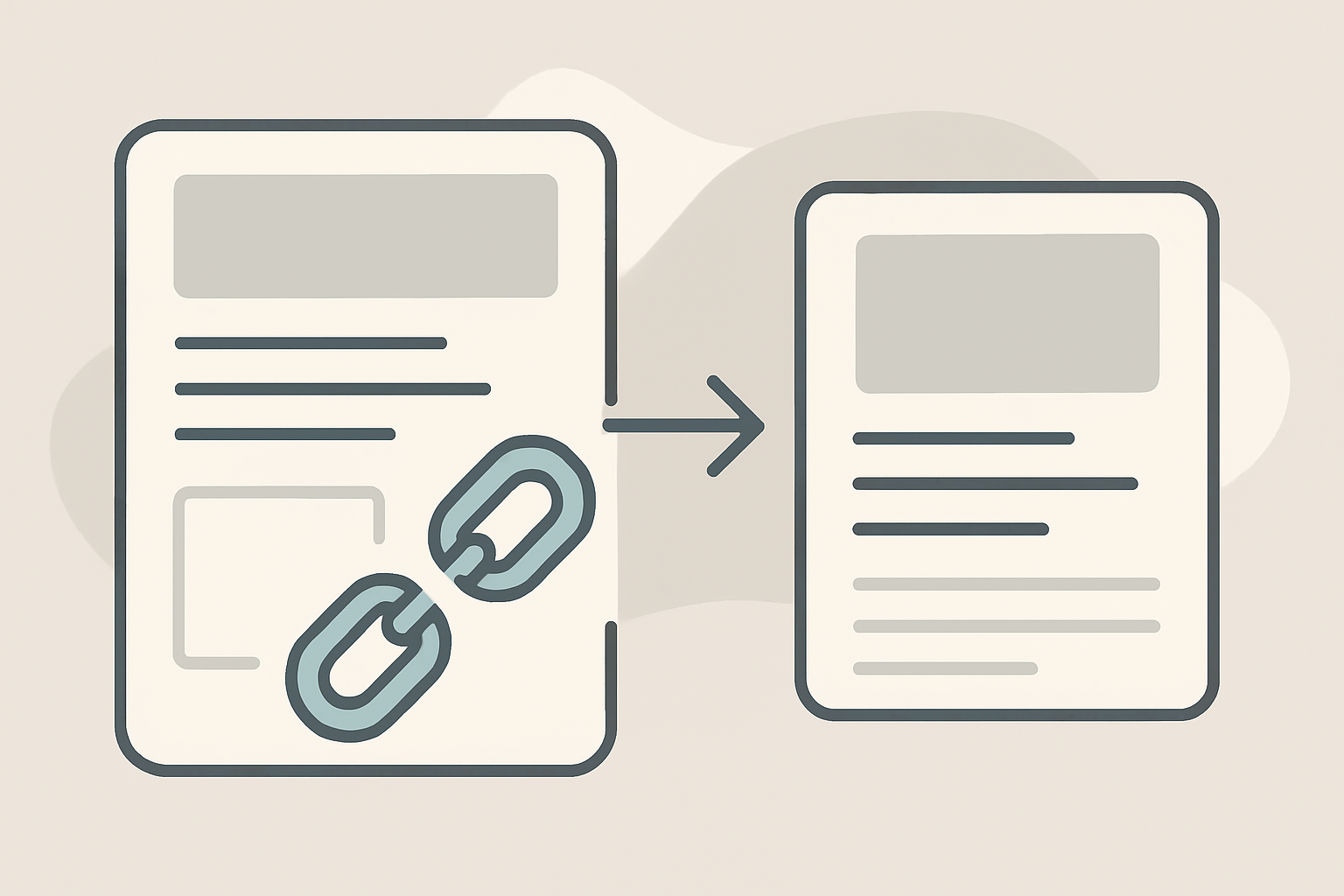
Broken link building works because the publisher has a real maintenance problem. A dead outbound resource frustrates readers and weakens an otherwise useful page.
The workflow is straightforward:
- Find a relevant page with resource links, buyer guidance, or industry references.
- Confirm the break by checking that the old URL genuinely returns a 404 or no longer serves the original resource.
- Study the old page to understand what it offered, using archives where available.
- Match the need with an existing page or create a substantially equivalent, better resource.
- Send one precise note identifying the broken link and your replacement suggestion.
A generic blog post is not a suitable replacement for every dead calculator, dataset, checklist, or technical guide. Match format and intent first. Useful link building tools can surface broken pages at scale, but the editorial evaluation must remain manual.
For teams building a repeatable process, Moz offers a detailed broken link building workflow. Use it to structure your research, not to justify bulk outreach.
6. Build a Link-Worthy Resource Before You Start Outreach
Outreach fails when the destination page gives the publisher no reason to care. Link-worthy content earns attention because it makes an article, roundup, or buyer decision more useful.
For eCommerce brands, strong assets are often close to your customer data and product expertise:
- Original trend data from anonymized customer surveys, returns data, or seasonal demand patterns.
- Practical calculators for sizing, dosage, replenishment, material quantities, or cost comparison.
- Decision guides that explain how to compare products fairly, including trade-offs your own products do not always win.
- Care resources such as maintenance charts, safety explainers, or seasonal checklists that buyers save and share.
- Documented case studies showing a measurable customer or operational lesson, not a self-congratulatory product pitch.
Apply the citation test: would a journalist, buyer-guide writer, blogger, or community contributor have a real reason to reference this page? If the answer is no, improve the utility before you build a prospect list.
Tangential assets can work particularly well. A cookware brand might publish research on household food-waste habits rather than another generic frying-pan guide. Review the research on tangential content and link acquisition for evidence that adjacent topics can attract broader interest when they still serve the brand’s audience.
Need a sharper asset decision? SEO.DIGITAL can identify content gaps and authority opportunities most likely to support high-intent category and product visibility for Shopify and WooCommerce stores, then pair research-backed content with targeted authority building.
7. Pitch Your Resource Where It Improves an Existing Article
“Please link to us” is not a pitch. A useful pitch identifies an editorial gap and shows the publisher exactly how your resource improves the page.
Find articles that already cover a topic adjacent to your asset. Look for an outdated statistic, a missing comparison, a vague explanation, or a recommendation that lacks a practical next step.
Then keep the message short:
- Name the page and show that you read it.
- Point to the gap in a specific paragraph or section.
- Explain the reader benefit of your resource in one sentence.
- Make one request without attaching a sprawling list of links.
A pet retailer, for instance, might pitch a veterinarian-reviewed product-care checklist to a breed guide that explains grooming needs but offers no maintenance routine. That is a credible content marketing contribution. Pitching the same checklist to an unrelated lifestyle blog is not.
8. Contribute Expert Insights and Carefully Chosen Guest Posts
Subject-matter expertise is an asset only when it says something specific. Founders, product developers, merchandisers, and technical specialists can contribute original insight to journalist requests, interviews, podcasts, niche publications, and selective guest posts.
Choose opportunities where your expert can answer a real question with evidence, process knowledge, or a useful point of view. A founder of a skincare store might explain how ingredient sourcing affects shelf stability. A WooCommerce merchant may share practical lessons about managing complex product variants.
Guest blogging can still support high-quality backlinks when the host site has editorial standards, audience overlap, and a clear purpose for the article. It should never become your entire link building strategy, and it should not rely on keyword-stuffed author bios. Review Google guidance context on guest-blog links before treating contributed content as a volume channel.
9. Earn Links Through Helpful Community Participation
Communities notice self-promotion immediately. Reddit, Quora, specialist forums, Slack groups, and professional communities work when you solve the question in front of you before considering whether a link belongs.
Read the norms. Give a complete answer in the post itself, disclose your affiliation where appropriate, and add a resource only when it directly supports the answer.
Many community links carry nofollow or UGC attributes. That does not make thoughtful participation worthless. Relevant referral traffic, product discovery, brand mentions, and relationships with writers can create business value well beyond assumed link equity.
Do not delegate this work to someone who cannot speak credibly about the product or customer problem. Generic replies, copied answers, and promotional comment drops can damage the brand you are trying to build.
10. Claim Lost Links, Image Credits, and Links Pointing to Old URLs
Existing links decay. A site can lose links when publishers update pages, products are discontinued, URLs change, or original visuals circulate without attribution.
Split reclamation into three queues:
- Lost links: Check whether a previously linking page is still live and whether your content changed or disappeared.
- Broken inbound links: Find external pages pointing to your 404 URLs, then restore the best equivalent page or use a relevant 301 redirect when the original URL is permanently gone.
- Uncredited visuals: Use reverse image search to find original charts, product photography, or infographics published without a credit, then request attribution politely.
Do not redirect every expired product URL to the homepage. That creates a poor user journey. Redirect to the closest valid replacement only when the topic and intent align.
Which Simple Link Building Ideas Should You Start With?
The best starting point depends on what your store already has. A brand with 200 strong articles but weak category visibility needs a different link building strategy than a newer store with supplier relationships and no useful resources yet.
| Your current position | Start with | Why it comes first |
|---|---|---|
| Existing content and external authority | Internal links and broken inbound URL fixes | You can improve authority flow and repair value already earned |
| Known brand, products, or partnerships | Unlinked mentions, testimonials, supplier and retailer pages | The relationship lowers the barrier to outreach |
| Useful data or a capable content team | Link-worthy resources and targeted pitching | Original assets give publishers a reason to cite you |
| Strong experts but limited content | Expert contributions and helpful communities | Expertise can create visibility while you build assets |
| Genuine local presence | Credible local listings and regional media | Geographic relevance creates customer value |
Do not start with local link building simply because a directory is easy to find. Use local opportunities only when geography matters to buyers, stockists, events, showrooms, or service coverage. You can use local SEO statistics for context, but the deciding factor is whether the listing helps a real customer.
Track the learning loop. Record which types of prospects reply, what pages earn citations, whether referral visitors engage, and which links support visibility for priority pages. That evidence will make your next month more efficient than your first.
Link Building Ideas to Avoid
Bad links rarely announce themselves as bad. They usually arrive packaged as scale, speed, and certainty.
Avoid these shortcuts:
- Manipulative paid links sold primarily to influence rankings rather than advertise transparently.
- Public link networks and low-quality guest-post sites built to host outbound links.
- Irrelevant directories with no credible audience, review process, or business purpose.
- Forced exchanges where partners, donations, products, or testimonials require a link in return.
- Anchor-text manipulation through repeated exact-match commercial phrases and promotional forum comments.
Google’s standard is clear: links intended to manipulate rankings may be considered link spam. A discussion of Google’s stance on charity links offers a useful reminder that a good cause does not turn a required link into an editorial recommendation.
If a link would not make sense to a real reader, do not pursue it. That rule also keeps you away from risky tiered link building schemes that add complexity without real audience value.
FAQs About Simple Link Building
What are some effective link building strategies?
Effective link building strategies include creating useful content assets, reclaiming unlinked brand mentions, replacing broken resources, earning supplier and partner listings, giving genuine testimonials, contributing expert insights, and making targeted resource pitches. Internal links also matter because they distribute existing authority to priority pages. The best mix depends on your store’s content, relationships, and buyer journey.
Are backlinks still relevant in 2026?
Yes. Backlinks remain an important authority and discovery signal for search engine rankings, but volume alone is not the goal. Relevant editorial context, useful destination pages, trusted brand mentions, and genuine user value determine whether a backlink profile can support sustainable visibility. If you are assessing the wider question, consider whether is link building still relevant to SEO for your specific competitive category and authority gap.
How much does link building typically cost?
Costs vary based on internal research time, content production, outreach depth, digital PR complexity, and agency involvement. Ethical execution costs money because someone must identify fit, create a useful asset, and build a legitimate editorial relationship. Paying directly for a ranking link is different from paying for skilled content, PR, or outreach work, and it carries more risk.
What are some free websites for link building?
There is no free backlink machine. LinkedIn, Reddit, Quora, relevant associations, supplier resources, and Google Business Profile can create valid visibility opportunities when your contribution or listing is authentic. Focus on answering questions, maintaining accurate business information, and serving the audience. Do not post promotional links simply because the platform allows a profile URL.
Build an eCommerce Link Strategy That Supports Revenue, Not Vanity Metrics
The strongest 10 simple link building ideas start with legitimate opportunities already around your brand: pages that need better internal support, partners who can help shoppers, mentions that need context, and expertise that deserves a useful home.
Then build the system. Create assets worth citing, earn high-quality backlinks through targeted outreach and digital PR, protect technical foundations, and measure relevance, referral quality, category visibility, assisted conversions, and organic revenue. Raw link counts alone cannot tell you whether the work is improving buyer traffic or lowering CAC pressure.
SEO.DIGITAL works exclusively with Shopify and WooCommerce stores, combining technical audits, content, digital PR, high-authority link building, and genuine community signals with transparent, revenue-focused reporting. If your brand generates $50k+ MRR and needs a custom authority and site-health roadmap, book a call for a no-obligation deep-dive consultation.