
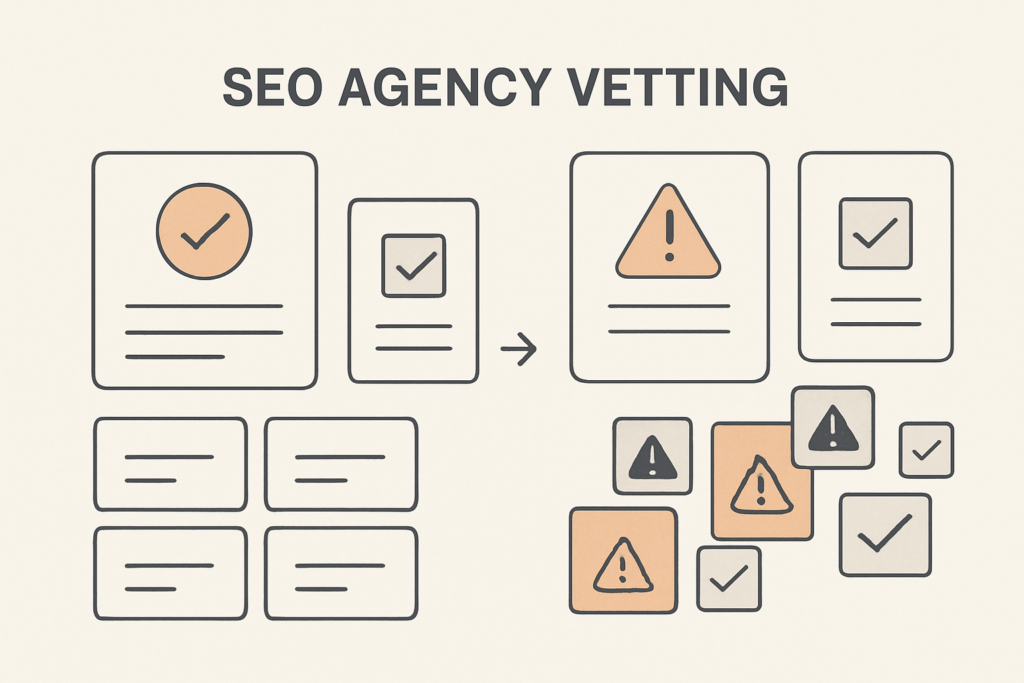

A bad SEO vendor can turn a growth investment into a revenue leak. Avoiding black hat seo company risks means looking past polished sales decks and asking what will actually change on your Shopify or WooCommerce store.
Short-term ranking claims can hide work that conflicts with search engine guidelines: manufactured links, mass-produced pages, misleading schema, or redirects that users never approved. The cost is not limited to a ranking chart. It can hit category visibility, product discovery, conversion opportunities, and your dependence on paid acquisition.
Traditional SEO sales often focus on a promised position. High-performing eCommerce SEO focuses on the pages shoppers need, the technical barriers blocking them, the authority your brand can credibly earn, and the revenue those improvements create. This guide shows you how to spot risky tactics, screen providers, audit inherited work, and build a safer path forward.
What Is Black Hat SEO—and Why Does the Agency You Hire Matter?
Black hat SEO is the use of manipulative tactics intended to improve search engine rankings in ways that violate search engine guidelines. It prioritizes influencing search systems over providing useful, accurate experiences for people.
For a store operator, the issue is rarely an instruction to “break the rules.” It is an agency presenting cheap links, scaled location pages, or a proprietary ranking method as normal SEO services for a website. You remain exposed even when the vendor does the work behind the scenes.
A credible provider can explain the tactic, the page or asset involved, the expected business purpose, and the approval process. If you are still learning what does an seo company do, start with that standard: work should be visible, attributable, and tied to a legitimate improvement.
Black Hat SEO vs. White Hat SEO
The difference is operational, not cosmetic. Black hat techniques seek shortcuts through deception or artificial signals. White hat SEO improves the site and its authority in ways that remain useful after the initial campaign work is done.
| Black hat agency claim | What a trustworthy SEO partner should say |
|---|---|
| “We can get you to #1.” | “We can prioritize opportunities and measure progress, but no one controls Google rankings.” |
| “Our link network is proprietary.” | “We can explain our relevance, editorial, and quality criteria for authority building.” |
| “We publish hundreds of pages fast.” | “We create or improve pages where the shopper and search opportunity justify the investment.” |
| “Schema will guarantee rich results.” | “Structured data must accurately reflect visible page content and eligibility is not guaranteed.” |
White hat SEO is not slow for the sake of slow. It is designed for defensible performance: useful buyer-focused content, crawlable store architecture, accurate structured data, and authority that is earned rather than manufactured. That is the practical meaning of white hat seo for an eCommerce brand.
Why Black Hat SEO Is a Serious eCommerce Risk

A questionable tactic does not stay contained in an agency report. It can affect collection pages that drive non-branded discovery, product pages that capture high-intent searches, and editorial pages that introduce new buyers to your brand.
When organic traffic falls, paid media often has to absorb the gap. That can increase CAC at the exact moment leadership is asking why the store’s supposedly scalable acquisition channel stopped producing.
Low-quality pages create a second problem. Keyword-stuffed copy, fake reviews, and misleading redirects make the shopping experience worse. Even without a formal enforcement action, weak user experience can undermine trust and conversion performance.
Manual Actions, Algorithmic Declines, and Recovery Expectations
A manual action and an algorithmic decline are different diagnoses. A manual action involves a human review finding a guideline issue, while an algorithmic decline can reflect how search systems assess site quality, relevance, or trust signals at scale. Review how Google manual reviews work before treating every traffic decline as the same problem.
Recovery usually requires more than removing one bad link or rewriting one page. Teams may need to correct technical changes, remove deceptive content, clean up link practices, improve legitimate assets, and wait for search engines to reassess the site. There is no credible fixed recovery timeline.
12 Red Flags That Signal a Black Hat SEO Company

The strongest warning signs appear before work begins. Use this checklist during sales calls, proposal reviews, and monthly account reviews.
- Guaranteed #1 rankings. No agency can promise a specific position because it does not control search results.
- Guaranteed organic traffic. A provider can forecast scenarios, not guarantee visitor volume or buyer behavior.
- Instant-result timelines. Fast technical wins can happen, but broad visibility gains take diagnosis, execution, and reassessment.
- Secret methods. Confidential outreach relationships are normal. Refusing to explain the category of work is not.
- Cheap bulk backlinks. High-volume link packages often prioritize quantity over relevance, editorial standards, and real referral value.
- Link counts over quality. A report celebrating hundreds of links without domains, context, or relevance deserves scrutiny.
- Vague deliverables. “SEO optimization” is not a deliverable. Ask which pages, fixes, briefs, and outreach activities are included.
- No link or content visibility. You should be able to review published content and understand the type of sites targeted for links.
- Mass-produced AI pages. Automation can assist research and workflows, but unreviewed thin pages are not a content strategy.
- Schema promises. Accurate markup can support eligibility for enhanced results. Fake ratings or guaranteed rich snippets are a risk signal.
- Restricted data access. Your team should retain access to Search Console, analytics, key accounts, and campaign records.
- Rankings without revenue. Position reports alone ignore qualified traffic, conversions, organic revenue, and the cost of the work.
Shopify and WooCommerce brands should expect clear explanations of tactics, deliverables, approvals, and business impact. That is the transparency standard SEO.DIGITAL applies to every eCommerce campaign.
Promises That Sound Too Good to Be True
A credible agency can forecast the process. It can tell you which categories have the strongest demand, which technical issues are blocking indexation, what content is planned, and how performance will be measured.
It cannot guarantee a #1 ranking, a fixed date for results, or a specific traffic outcome. Those promises usually shift attention away from the real work required for long-term success.
Secrecy, Vague Deliverables, and Unverifiable Link Packages
Ask for a written scope that names the expected technical recommendations, pages to be improved, content briefs, editorial criteria, reporting cadence, and approval requirements. You do not need every journalist contact or outreach email disclosed. You do need to know whether the agency is pursuing relevant editorial coverage or participating in link schemes.
Walk away if the proposal relies on undefined “authority packages,” refuses to explain its link methods, or gives your business no ownership of accounts and assets. A vendor relationship should not force you to guess what is being done in your name.
Black Hat Tactics an SEO Agency May Hide in Its Deliverables
Risky work often arrives disguised as scale, automation, or technical sophistication. The patterns below matter because they create a mismatch between what search engines are asked to reward and what shoppers actually receive.
Keyword Stuffing, Hidden Text, and Cloaking
Keyword stuffing repeats target phrases so often that copy becomes unnatural or unhelpful. On a collection page, that can look like a block of repetitive text added solely to force product terms into the page.
Hidden text is content users cannot reasonably see but search engine crawlers can. Cloaking goes further by showing materially different content to crawlers and people. Neither should be confused with legitimate accessible alt text, content in usable tabs, or normal responsive design.
The safe alternative is straightforward: write category and product-supporting copy that answers shopper questions, uses relevant language naturally, and improves the buying decision.
Duplicate Content, Thin Content, and Doorway Pages
Duplicate content, spun copy, and thin pages are common when an agency is paid for volume rather than value. A store may suddenly gain hundreds of city, product-variant, or keyword pages that say nearly the same thing and funnel visitors to one destination.
Those doorway pages can create a poor search experience. Templated product specifications are not automatically black hat, especially in large catalogs, but unique category pages and editorial pages need a real reason to exist beyond capturing another query variation.
Review samples before publication. Ask who researches the content, who checks product accuracy, and what original information the page adds for the shopper.
Paid Links, Link Schemes, PBNs, and Spam
Relevant editorial links and brand mentions can support visibility because they reflect genuine attention from trusted publications and communities. Buying ranking links, using private blog networks, placing sitewide commercial-anchor links, automating comments, or dropping links into Reddit and Quora threads does not meet that standard.
The warning sign is not simply that money changes hands for marketing. Digital PR, sponsorship, and legitimate advertising exist. The issue is whether links are being acquired primarily to manipulate rankings, without genuine editorial relevance or proper disclosure.
A safer authority strategy earns niche-relevant coverage through useful data, expert commentary, strong product stories, and genuine community participation. It produces fewer shortcuts and more assets your brand can stand behind.
Misleading Structured Data and Sneaky Redirects
Structured data should describe what is visibly present on the page. Marking up reviews that do not exist, ratings that were invented, or product details that differ from the page can mislead search engines and shoppers.
Sneaky redirects send users somewhere materially different from the page search engines evaluated. Legitimate redirects during a platform migration, product retirement, or URL cleanup are normal when they preserve the user’s likely intent. Intent and transparency are the dividing line.
How to Vet an SEO Company Before You Sign
The best time to prevent harmful work is before access is granted. Treat the proposal review as a risk and revenue review, not a presentation to sit through politely.
Questions Every Shopify or WooCommerce Brand Should Ask
Ask these questions and insist on direct answers:
- Which pages first? Ask which collection, product, and informational pages will be prioritized and why.
- How are links earned? Ask for relevance criteria, quality controls, examples of comparable placements, and how sponsored activity is handled.
- Who owns content? Ask who researches, writes, reviews, and approves product claims before publishing.
- What needs approval? Require approval for redirects, structural changes, robots directives, canonical changes, and structured data updates.
- How is revenue measured? Ask how the agency connects work to qualified organic traffic, conversions, and revenue contribution.
Platform experience matters. Shopify and WooCommerce have different themes, plugins, URL behaviors, apps, faceted-navigation risks, and operational workflows. A generic audit checklist is not enough for a revenue-driving store.
What Good SEO Reporting Should Include
Reporting should show what was completed, what changed, what is being monitored, and what happens next. It should connect leading indicators, such as technical issues resolved and pages improved, to lagging indicators including qualified organic traffic, conversions, and revenue.
Rank tracking has a place, but rank screenshots alone do not explain commercial impact. If you need a clearer framework for evaluating the numbers, what is seo reporting is the right question to ask before accepting a dashboard full of proprietary scores.
Look for monthly reporting that includes:
- Completed work tied to specific URLs, tickets, content, or outreach activity.
- Technical health covering crawlability, indexation, redirects, and structured data where relevant.
- Organic performance segmented by important categories, landing pages, and non-branded opportunity.
- Commercial outcomes including conversions, revenue contribution, and next priorities.
What to Do If You Suspect Your Agency Used Black Hat SEO
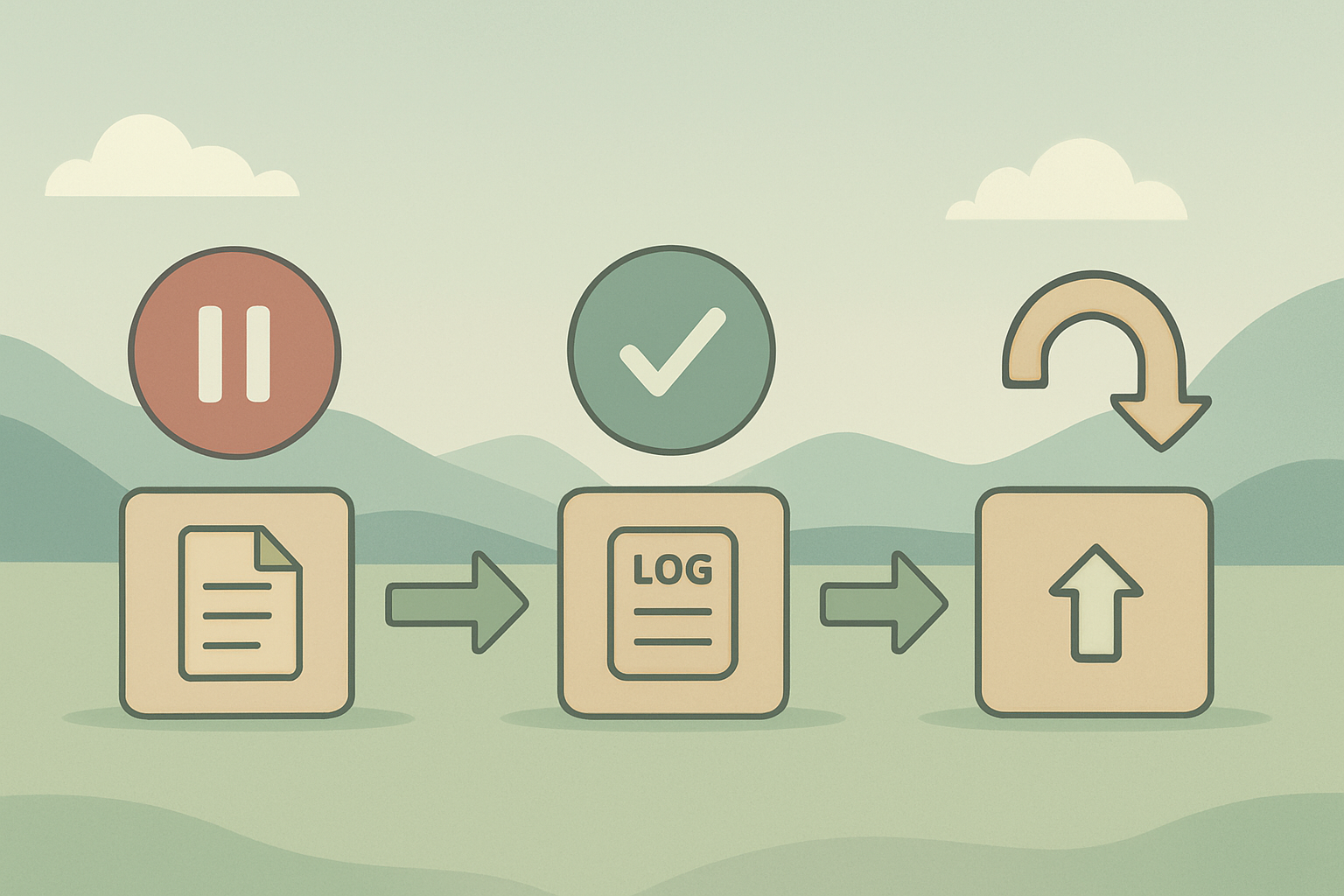
Do not start by deleting pages or disavowing every unfamiliar link. A ranking drop alone does not prove agency misconduct, a manual action, or a negative SEO attack.
Start with a controlled review:
- Pause unapproved work. Stop new link orders, automated publishing, redirect releases, and markup changes until the scope is understood.
- Preserve evidence. Save contracts, invoices, reports, content drafts, change logs, link lists, and agency communications.
- Audit the store. Review content quality, indexation, redirects, canonicals, structured data, backlink patterns, and recent deployment history.
- Correct verified issues. Remove or rewrite deceptive pages, fix misleading markup, reverse harmful redirects, and replace manipulative methods with useful work.
- Monitor reassessment. Track affected URLs, visibility, organic traffic, conversions, and technical signals over time.
If your store inherited opaque agency work or suffered an unexplained decline, request a custom SEO.DIGITAL site-health and risk review. It gives Shopify and WooCommerce teams an evidence-based view of the risks, priorities, and corrective actions before more budget is spent.
Separate a Possible Negative SEO Attack From Normal SEO Change
Suspicious links are not automatic proof of sabotage. Search demand can shift, competitors can improve, site releases can introduce technical faults, and weak content can lose relevance without any outside attack.
Compare timing across analytics, Search Console, deployment records, affected page types, and link patterns. A sudden drop limited to URLs changed during a migration points toward a different investigation than a broad visibility decline after scaled thin content was published.
Use evidence before assigning blame. That approach protects your team from making a rushed fix that creates a second problem.
Build a Safer Long-Term SEO Foundation
The replacement for black hat tactics is disciplined execution. Fix crawlability and indexation barriers, improve revenue-driving category and product pages, publish original buying guidance, maintain accurate structured data, earn relevant authority, and make the store easier to use.
Technical fixes should be prioritized by commercial impact. For store operators, the highest-priority fixes are usually the ones that improve how customers and search engines reach revenue-driving category and product pages, within a documented what is an seo campaign strategy.
A sustainable content plan should help shoppers make better buying decisions while giving your brand assets that relevant publications and communities genuinely want to reference. That is how research-backed copy, digital PR, and legitimate authority building reduce reliance on manufactured signals.
Expect recovery and reranking to take time after corrective work, especially when a site needs to rebuild quality and trust signals. This guidance on recovery and reranking timelines explains why responsible providers avoid promising a date.
Frequently Asked Questions About Avoiding Black Hat SEO Companies
Does Black Hat SEO Still Work?
Some black hat tactics may create short-lived ranking movement. They remain unstable because they create guideline risk and often weaken user trust, quality content, and long-term organic traffic.
Is Black Hat SEO Legal?
Black hat SEO is generally discussed as a violation of search engine guidelines, not as something that is automatically illegal. Related conduct such as phishing, malicious activity, deceptive reviews, or unauthorized access can raise separate legal or security issues, so seek qualified advice for those situations.
What Is the 80/20 Rule in SEO?
There is no formal, universally accepted 80/20 rule in SEO. In practice, prioritize the smaller number of technical, content, and authority issues most likely to improve crawlability, shopper experience, high-intent visibility, and revenue.
What Are Common SEO Mistakes to Avoid?
Common mistakes include choosing agencies on guarantees rather than evidence, accepting opaque link packages, publishing duplicate or thin content, misusing structured data, and ignoring technical issues. Another costly mistake is treating SEO as set-and-forget while reporting only rankings instead of commercial outcomes.
Choose Transparent, Sustainable eCommerce SEO
Avoiding a black hat SEO company means choosing a partner that makes its work inspectable: transparent retainers, zero hidden fees, documented technical priorities, original content, ethical authority building, and reporting that reaches revenue.
SEO.DIGITAL works exclusively with Shopify and WooCommerce brands. Its three-step process starts with a deep-dive consultation, moves into a custom strategy and site-health audit, then executes the technical, content, digital PR, and authority work required to build a durable organic channel.
If your Shopify or WooCommerce brand generates $50k+ MRR, book a call with SEO.DIGITAL for a no-obligation deep-dive consultation to identify organic growth opportunities, assess risk areas, and build a transparent eCommerce SEO roadmap.