
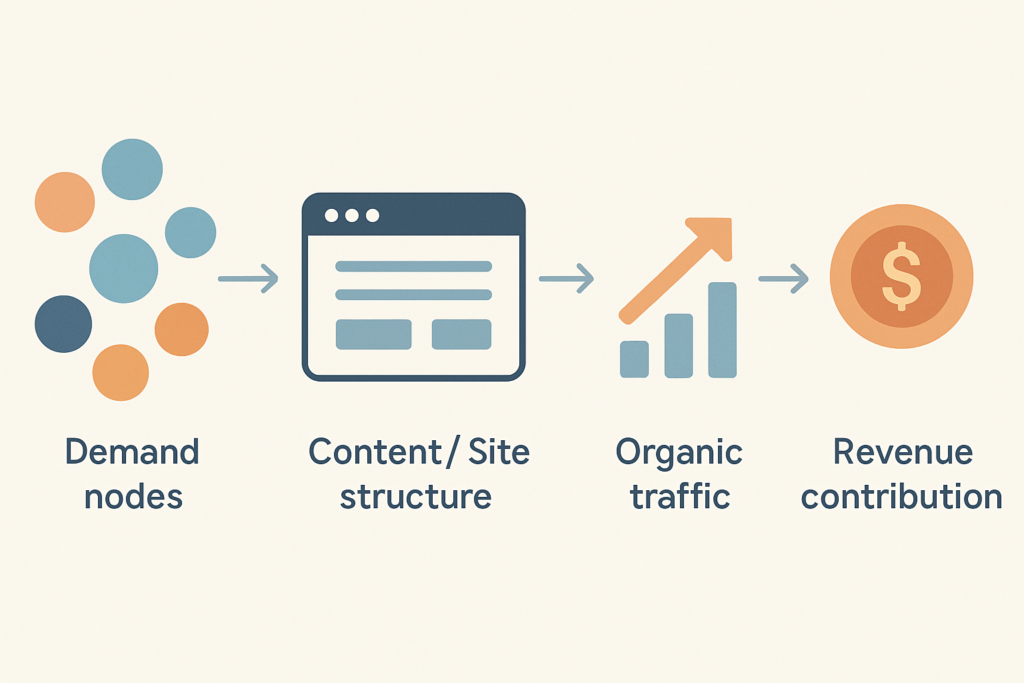

Paid acquisition can fill the top of the funnel quickly, but the moment spend changes, that flow can change with it. The benefits of learning seo start with understanding how to build a second, more durable route to qualified buyers.
For a Shopify store owner, that may mean spotting a collection page that cannot rank. For a marketer, it may mean seeing why a content brief attracts readers but not customers. For a career-minded learner, it means gaining a practical skill that connects research, content, analytics, and commercial outcomes.
The outdated view treats SEO as inserting keywords and waiting for rankings. High-performing teams treat it as a disciplined system for matching real demand with useful pages, sound site architecture, credible authority, and measurement.
Benefits of Learning SEO: Why This Skill Still Matters
Search engine optimization, or SEO, is the work of improving a site’s content, structure, relevance, and accessibility so it can earn stronger placement in unpaid search engine results. Learning it gives you a clearer view of how search engines connect people with pages that address their needs.
That matters whether you run a store, manage a website, write content, or oversee growth. SEO literacy improves business decisions, expands career capability, and helps you separate credible advice from empty promises.
SEO is not a shortcut to guaranteed rankings. It is a long-term practice built on relevance, quality, accessibility, trust, and consistent testing.
What Learning SEO Actually Teaches You
SEO education teaches you how people search, how pages are discovered, and why one result earns attention over another. It also shows you how to measure whether visibility produces meaningful visits and conversion actions.
The core disciplines work together:
- Keyword research identifies the language, questions, and buying signals your audience uses.
- Content optimization makes pages clearer, more useful, and better aligned to search intent.
- Technical SEO ensures search engines can access and understand important pages.
- User experience removes friction that causes shoppers to leave or lose confidence.
- Link building earns relevant third-party references that support credibility.
Beginners can build a solid foundation with free SEO learning resources from Semrush Academy, then apply each concept to a live site. Theory matters. Observing what changes after implementation matters more.
Is It Worth Learning SEO?
Yes, especially if you influence growth, content, eCommerce, or website performance. An SEO course can give you a useful framework, but the return comes from applying it consistently to pages that matter to your target audience.
You do not need to become the person fixing every redirect, writing every article, or earning every link. Basic SEO literacy still makes you better at setting priorities, reviewing reports, briefing specialists, and challenging poor recommendations.
Business Benefits of Learning SEO
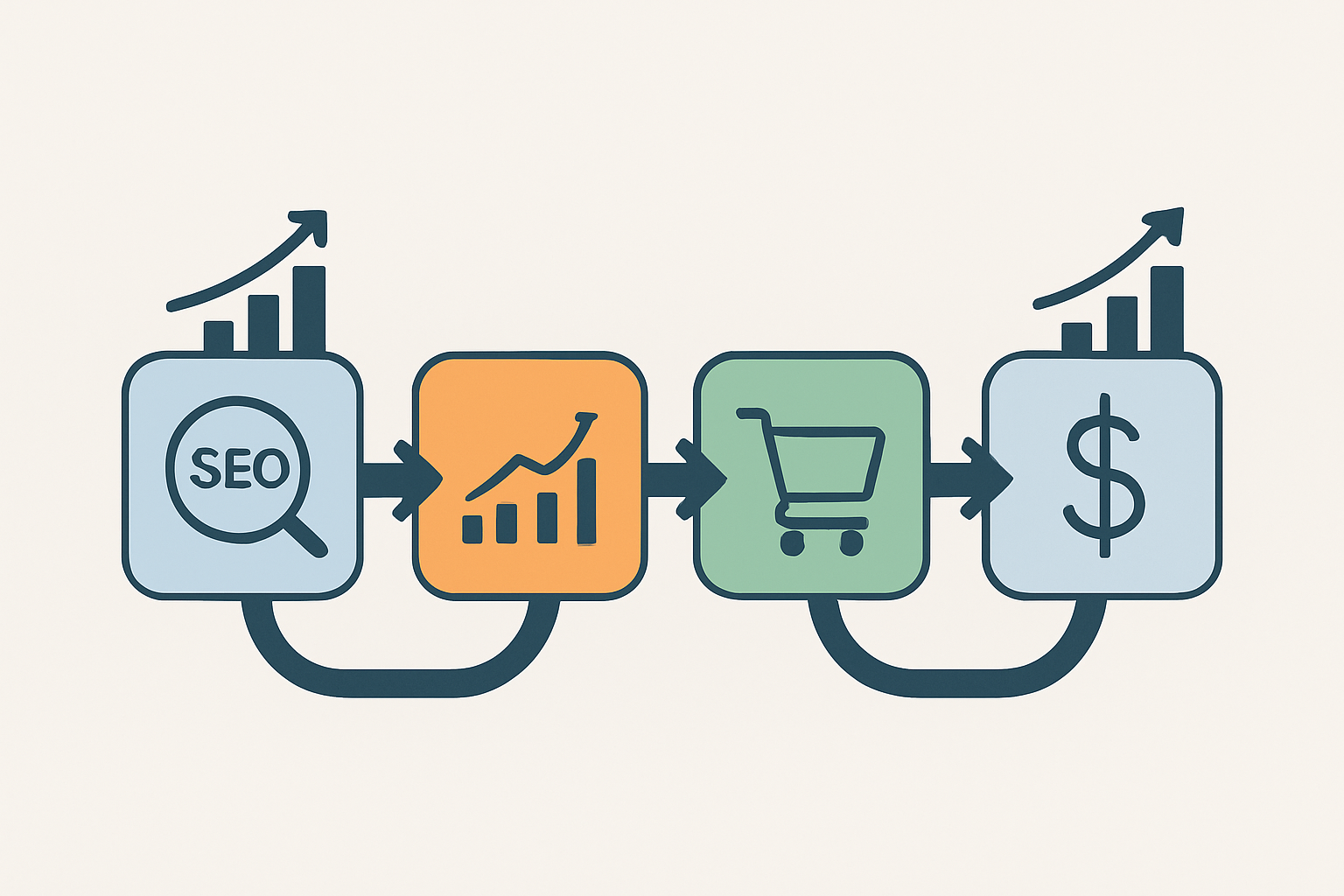
The commercial case is bigger than ranking reports. When SEO knowledge shapes product pages, collection architecture, content priorities, and tracking, it can make organic acquisition more predictable and more accountable.
A useful overview of why SEO is important for business growth starts with visibility, but eCommerce operators should follow the chain further: visibility, qualified visits, stronger shopping journeys, and revenue contribution.
- More qualified discovery. You can target searches from people looking for a category, solution, comparison, or specific product.
- Better page priorities. You learn which collection, product, guide, and comparison pages deserve investment first.
- Lower channel dependency. Organic assets can reduce overreliance on paid advertising over time.
- Stronger customer insight. Search data exposes the language and objections shoppers use before purchase.
- Clearer performance scrutiny. You can assess traffic, conversions, assisted revenue, and customer acquisition cost rather than celebrate rankings alone.
More Relevant Organic Traffic and Higher Search Visibility
Traffic volume can mislead. A thousand visits from people who will never buy are less valuable than a smaller stream of visitors actively comparing products, researching use cases, or looking for your category.
For Shopify and WooCommerce brands, strong SEO can improve the discoverability of collection pages, product comparisons, buying guides, care instructions, and category-level content. Each page should match a distinct job: purchase, compare, validate, or learn.
Ranking position affects opportunity, but click behavior varies by query, device, result layout, and brand recognition. The organic search click-through rate study is a useful reminder that search engine rankings are not the finish line. The page still has to earn the click and satisfy the visitor.
Lower Reliance on Paid Advertising Without Calling SEO “Free”
Paid campaigns can capture demand immediately. SEO generally takes longer because pages need to be improved, discovered, evaluated, and supported by real authority signals.
Organic traffic is not free. It requires expertise, content production, technical maintenance, testing, and, often, credible outreach or digital PR. But a useful collection page or buying guide can continue attracting relevant visitors after the initial work is complete.
That makes SEO a resilience channel, not an automatic replacement for paid media. Paid search can test offers and capture urgent demand; SEO can build a durable library of high-intent entry points. If you are evaluating investment, start with how to evaluate SEO ROI through revenue, margins, conversion quality, and the time horizon, not a generic traffic forecast.
Shopify and WooCommerce teams that understand the opportunity but lack capacity can use an eCommerce-focused partner such as SEO.DIGITAL to turn technical work, buyer-intent content, and authority building into a transparent, revenue-focused growth program.
Better Brand Awareness, Trust, and Customer Experience
Repeated visibility for relevant searches can make a brand more familiar before a shopper is ready to buy. Familiarity is useful, but rankings alone do not create trust.
A faster, clearer storefront helps shoppers and search engines evaluate page usefulness. Clear navigation, honest product information, mobile usability, accessible images, useful policies, and credible reviews do more to support confidence than a keyword repeated ten times.
This is also where content earns its keep. A helpful guide can answer a sizing concern, explain materials, or clarify a product comparison before a shopper reaches the product page. If you are assessing content investment, ask a practical question: does blogging help seo when the article answers a real pre-purchase need and connects naturally to a relevant product or collection? Often, it can.
Stronger Decisions Across Content, Merchandising, and Paid Media
Keyword research is customer research in disguise. It shows what people call a product, which features they compare, what problems they need solved, and where uncertainty blocks a purchase.
Search-query data can reveal the product questions and comparisons shoppers make before buying. That insight can shape collection copy, product descriptions, email topics, paid-ad messaging, and content planning without assuming every keyword deserves a new page.
Learning why seo is important helps teams avoid a common mistake: publishing content in isolation from merchandising and conversion goals. The strongest SEO strategy connects search demand to products you can sell profitably and serve well.
Career Benefits of Learning SEO
SEO is valuable because it sits at the intersection of customer research, writing, technical judgment, and analytics. That makes it useful well beyond a single job title.
The skill supports career opportunities in content strategy, digital marketing, growth, eCommerce, analytics, and consulting. Entry-level familiarity is not the same as senior specialist capability, but both can improve how you contribute to a marketing team.
A Transferable Skill for Modern Marketing Roles
SEO knowledge strengthens the work of SEO Specialists, Content Strategists, Digital Marketers, Growth Marketers, Search Managers, Web Optimization Specialists, and freelance consultants.
The durable skills are highly practical:
- Audience research to understand the target audience and its language.
- Analytical thinking to distinguish patterns from isolated fluctuations.
- Clear writing that serves readers and supports commercial intent.
- Prioritization that focuses limited resources on high-value pages.
- Reporting discipline that connects activity to outcomes.
Independent Work, Freelancing, and Better Business Judgment
SEO can support freelance work, consulting, personal projects, and entrepreneurship because almost every business needs to be found online. It is also a useful skill for people launching a niche store or building a portfolio site.
Completing an SEO course is not proof of expertise. Credibility is earned through ethical practice, applied work, honest reporting, and evidence that you can improve visibility or website traffic without resorting to spam.
The SEO Skills That Deliver the Most Value
SEO is a connected system, not an isolated ranking trick. The table below gives beginners a practical mental model and gives decision-makers a way to evaluate whether an SEO strategy covers the work that actually affects outcomes.
| Skill area | What it involves | Why it matters commercially |
|---|---|---|
| Keyword research | Finding relevant queries and interpreting search intent | Prioritizes demand that can lead to qualified visits and sales |
| Content optimization | Improving clarity, structure, usefulness, internal links, and next steps | Helps pages satisfy searchers and move them toward action |
| Technical SEO | Fixing crawlability, indexation, speed, duplication, and site architecture | Ensures important store pages can be found and understood |
| User experience | Reducing friction across mobile, navigation, and product information | Supports confidence, engagement, and conversion potential |
| Authority building | Earning credible links, mentions, and PR coverage | Reinforces brand credibility and online visibility |
Keyword Research and Search Intent
Keyword research finds how a target audience searches. Search intent identifies what that person is trying to accomplish with the query.
A store selling ergonomic office equipment might map a category search such as “standing desk,” a comparison search such as “best standing desk for tall people,” and an informational query such as “how high should a standing desk be.” These searches should not all lead to the same page.
The right page meets the right expectation. A category page supports shopping; a comparison page helps evaluation; a guide answers a question and can introduce relevant products where appropriate.
Content Optimization and High-Quality Content
High-quality content is not content that is merely long or polished. It is content that answers the searcher’s need accurately, clearly, and with enough evidence to help them act.
Content optimization improves headings, page flow, internal connections, visuals, product context, and calls to action. It also removes redundant copy and unsupported claims that make a page harder to trust.
A useful buying guide can support shoppers before they are ready to purchase. It can explain trade-offs, help them choose a product type, and send them to the most relevant collection rather than forcing a sale too early.
Technical SEO and User Experience
Technical SEO means making sure search engines can access and understand your important pages. For a store with hundreds or thousands of URLs, that includes managing site structure, duplicate-content risks, broken pages, internal links, structured data, mobile usability, and load performance.
Shopify and WooCommerce stores often create complexity through filters, variants, collection logic, plugins, themes, and expired products. Learning the basics helps you identify whether a visibility problem is a content issue, an authority issue, or a technical barrier.
You do not need coding skills to ask sharper questions: Can search engines reach this collection? Is the page indexed? Are important products buried too deeply? Does the mobile experience make buying harder?
Link Building, Brand Mentions, and Authority
Links and mentions are signals that other sites recognize your brand or resource as relevant. Quality matters far more than raw quantity.
Ethical link building can include digital PR, expert commentary, niche-relevant editorial coverage, useful tools, and genuinely helpful participation in relevant communities; whether outbound links help SEO depends on their relevance and usefulness to readers. Buying low-quality links or dropping links into comment sections creates risk without building lasting authority.
This matters in AI-influenced search experiences as well. Brands are better positioned when their information is clear, technically accessible, useful, and supported by credible third-party references.
SEO vs. Paid Advertising: Why Smart Brands Use Both
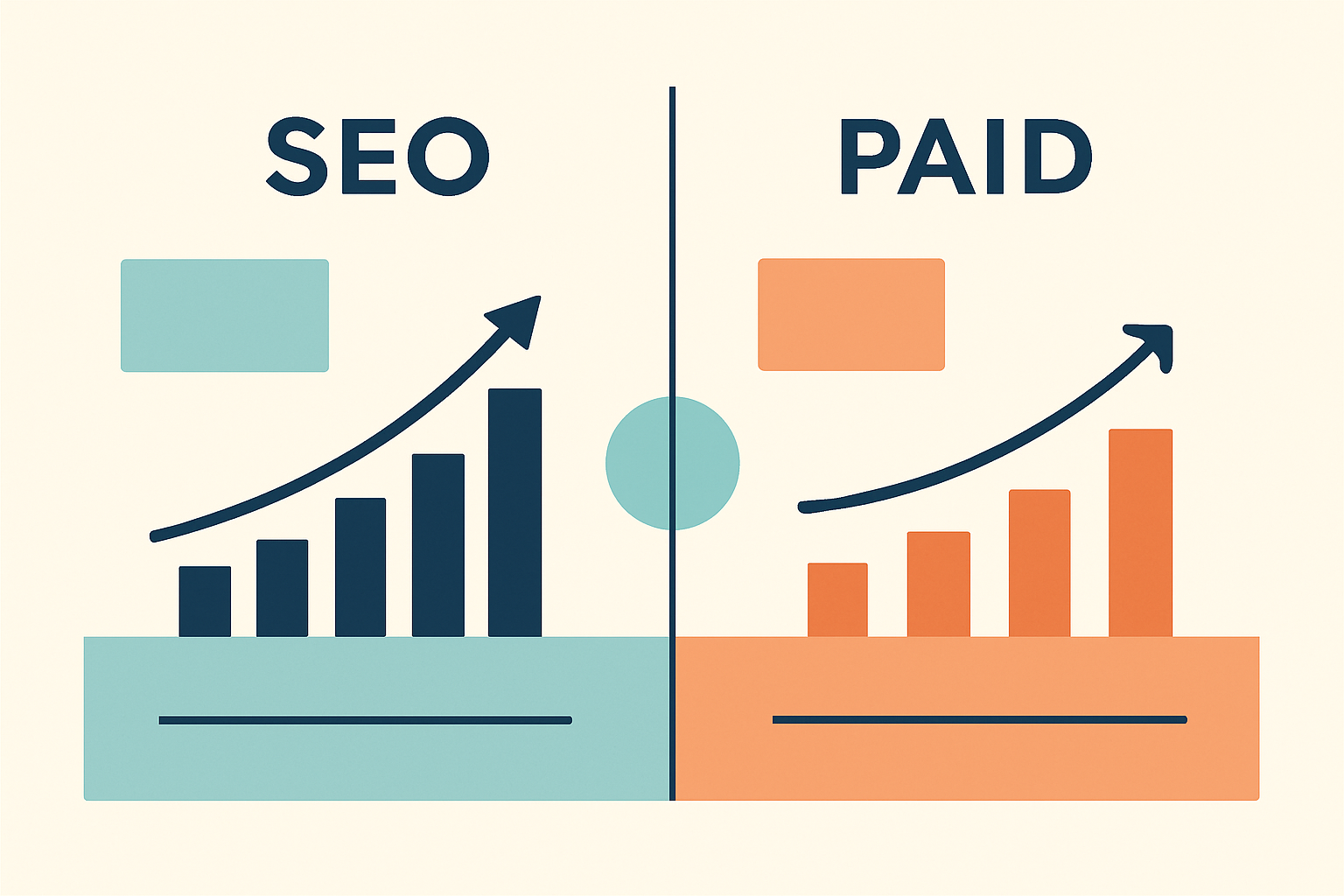
SEO and paid advertising solve different operational problems. One builds organic search assets over time; the other can create immediate visibility, controlled targeting, and rapid testing.
| Factor | SEO | Paid advertising |
|---|---|---|
| Speed | Usually gradual | Can begin producing traffic quickly |
| Cost profile | Upfront and ongoing work in content, technical health, and authority | Spend continues for each campaign and click opportunity |
| Durability | Strong pages may keep attracting visitors over time | Traffic usually stops when spend stops |
| Best use | Building discoverability around lasting search demand | Testing offers, launching products, and capturing immediate demand |
| Measurement value | Reveals long-term search demand and organic conversion paths | Delivers fast feedback on audiences, offers, and creative |
When SEO Is the Better Strategic Investment
SEO is often a strong investment when your catalog maps to real search demand, your margins benefit from lower customer acquisition cost over time, and you have the capacity to improve the technical and content foundation.
It is particularly useful when shoppers research categories, compare options, or need education before purchase. Competition, site condition, existing authority, and execution quality will determine the pace and scale of results.
For brands expanding internationally, the benefits of international seo can add another layer of complexity: language, country targeting, regional search behavior, catalog availability, and localized trust signals all need deliberate handling.
When Learning SEO Is Not the Same as Doing Everything Yourself
Learning SEO makes you a stronger operator. It does not mean your founder or marketing manager should personally manage a technical audit, a high-volume content operation, digital PR, and authority acquisition.
Internal literacy is valuable for prioritizing work, reviewing reports, and rejecting risky tactics. Specialist execution may still be the efficient choice when the opportunity is large and the work requires focused expertise.
SEO.DIGITAL uses a three-step growth architecture for qualified eCommerce brands: a no-obligation deep-dive consultation, a custom strategy and site-health audit, then execution across technical SEO, content, authority, and transparent reporting. The point is not to outsource understanding. It is to pair informed leadership with disciplined delivery.
Is SEO Still Worth Learning in 2026?
Yes. Search interfaces, result formats, and AI features will continue changing, but people still look for products, comparisons, answers, and solutions.
The durable value lies in understanding customers, creating useful high-quality content, making sites accessible, measuring performance, and earning trust. Those are sound marketing disciplines even when the layout of search engine results changes.
What Changes and What Does Not
Algorithms change. Result pages change. New answer formats can alter how clicks are distributed.
What remains stable is the need to match user intent, offer useful information, maintain technical accessibility, build credible authority, and measure commercial relevance. Avoid rebuilding your entire SEO strategy around every update or short-lived tactic.
Avoid the SEO Practices That Create Risk
Shortcuts create fragile results. Keyword stuffing, thin pages, misleading metadata, fake reviews, low-quality link schemes, and guaranteed-ranking promises are warning signs, not growth strategies.
Ethical SEO puts users first and protects long-term visibility. No responsible provider can guarantee a number-one ranking or instant first-page placement because search engines, competitors, and search behavior are outside any agency’s control.
How to Start Learning SEO: A Practical 90-Day Framework
The fastest route to real understanding is a controlled practice project. Use a store, portfolio site, or small business website where you can observe search visibility and improve actual pages.
Days 1–30: Learn the Fundamentals and Audit the Starting Point
Learn the basics of search engine optimization, search intent, on-page elements, technical foundations, and analytics access. Set up or review Google Search Console and GA4 so you can see impressions, clicks, landing pages, and conversion actions.
For eCommerce, list the pages that matter most: product pages, collection or category pages, comparison content, and informational guides. For a career project, choose a site with enough focus to research and improve without getting lost in scale.
Days 31–60: Publish, Optimize, and Improve User Experience
Improve a small number of high-value pages instead of publishing dozens of weak ones. Start with the search intent, then tighten the title tag, heading structure, body copy, internal links, imagery, product context, and clear next step.
Check the mobile journey. A page that earns website traffic but hides key details, loads poorly, or makes products difficult to compare has not solved the full problem.
Days 61–90: Measure Organic Results and Prioritize Next Actions
Review impressions, clicks, rankings, organic sessions, engagement, conversion actions, and revenue where available. Look for patterns across page types and queries rather than reacting to one daily ranking movement.
Use a guide to tracking organic conversions to improve the link between search activity and commercial outcomes. Revenue-first reporting is more useful than a dashboard full of vanity metrics.
Frequently Asked Questions About the Benefits of Learning SEO
Is It Worth Learning SEO?
Yes. SEO is worth learning for business owners, marketers, content professionals, and career learners who need to understand how customers find pages through search engines. The greatest benefit comes from applying the knowledge to real pages, measuring results, and refining your approach over time.
Is SEO Still Worth It in 2026?
Yes. AI features and changing search engine results may alter how people discover information, but businesses still need useful, trustworthy, accessible pages to earn online visibility. The fundamentals of customer understanding, technical quality, and credible content remain valuable.
What Are the Benefits of SEO?
SEO can improve website visibility, attract more relevant organic traffic, strengthen brand awareness, improve user experience, and reveal useful customer insight. Its long-term value depends on consistent, ethical execution rather than quick fixes or ranking guarantees.
What Are the 3 C’s of SEO?
There is no single universal 3 C’s framework in SEO. A practical version is Content, Crawlability, and Credibility: useful pages for people, accessible pages for search engines, and trusted signals from credible sources. It is a helpful simplification, not a substitute for a complete SEO strategy.
Final Takeaway: Learn SEO to Make Better Growth Decisions
The benefits of learning seo extend beyond rankings. You learn how customers search, which pages can create demand, where technical friction suppresses visibility, and how organic traffic contributes to growth.
That knowledge can strengthen career opportunities and make every marketing decision more grounded. For eCommerce leaders, it also creates the clarity to know when internal learning is enough and when focused execution is the better commercial move.
If you run a Shopify or WooCommerce brand generating $50k+ MRR, book a call with SEO.DIGITAL for a no-obligation deep-dive consultation. We will identify technical barriers, buyer-intent content opportunities, authority gaps, and the clearest roadmap for transparent organic revenue growth.