

A polished Shopify or WooCommerce store cannot sell to shoppers who never discover it. To bring traffic to your website profitably, you need more than a spike in sessions. You need qualified people arriving on pages built for the action they are ready to take.
The old approach treats every click as progress and every channel as equally valuable. High-performing eCommerce teams work differently: they match demand to the right destination, measure revenue after the visit, and build channels that keep producing after a campaign ends.
Paid ads can create visits this afternoon. Search visibility, useful content, email permission, and earned authority take longer, but they create an acquisition base that does not vanish the moment you reduce spend.
Start With the Right Goal: Qualified Traffic, Not Just More Visits
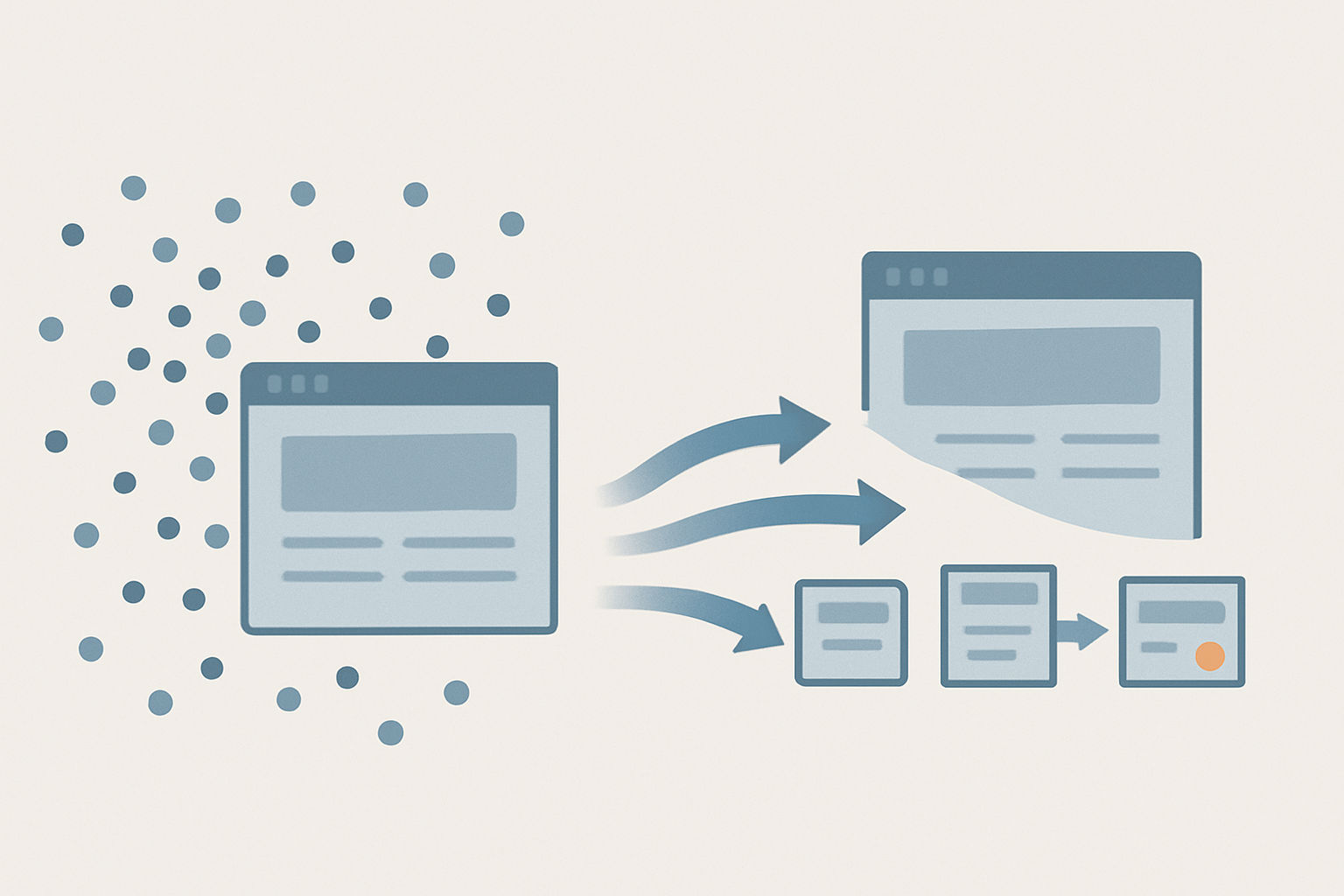
Raw website traffic is an input, not an outcome. A thousand sessions from people who bounce after a vague social post can be less valuable than 100 category-page visits from shoppers comparing products in your price range.
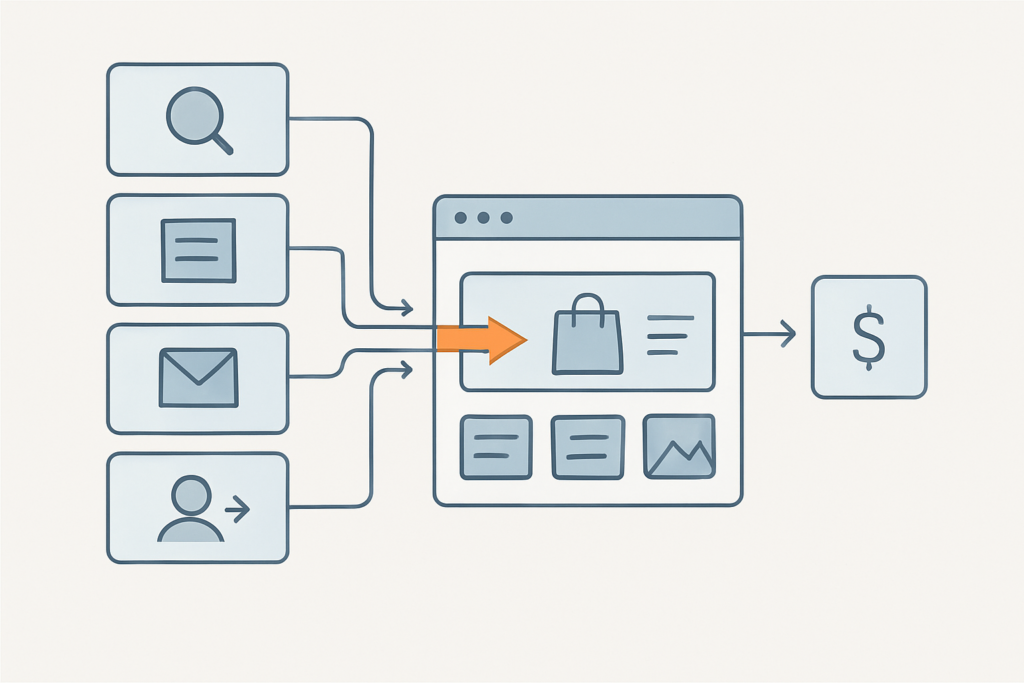
To bring traffic to your website means attracting people from search engines, social media, email, referrals, communities, and paid ads to relevant pages on your site. For eCommerce brands, the goal is not maximum visits. It is qualified traffic that can lead to sales, subscribers, and repeat customers.
Set the commercial outcome before selecting a channel:
- New-customer sales: Prioritize product, collection, comparison, and problem-solution searches.
- Email-list growth: Send research-stage visitors to a useful guide, calculator, fit tool, or early-access offer.
- Repeat purchases: Use email and retargeting to bring prior buyers back at the right replenishment or launch moment.
- Category visibility: Build collection-page relevance and supporting content around a product category.
- Launch demand: Combine a dedicated landing page with controlled paid campaigns, creators, and email.
Choose a Traffic Goal Before You Choose a Channel
Channels do different jobs. Paid ads can validate an offer quickly. Email can reactivate people who already know the brand. Organic traffic can capture non-branded demand from shoppers who have never heard of you.
Every campaign needs an intent-matched destination. A TikTok product demonstration may deserve a focused product page; a search for “best running vest for marathon training” needs a comparison or buyer’s guide before a hard product pitch.
The practical standard is simple: define the visitor, their immediate question, the page that answers it, and the revenue event you expect to track. That is how you get traffic to your website without paying for attention that never becomes demand.
Build the SEO Foundation That Lets Search Engines Send Traffic

Search engines cannot send meaningful organic traffic to pages they cannot crawl, understand, index, or trust. For established stores, SEO is less about chasing a single ranking and more about removing the structural friction that suppresses hundreds of category, product, and editorial opportunities.
A strong SEO strategy combines buyer-intent keyword research, useful website content, clean architecture, fast mobile performance, internal links, and credible authority signals. AI search optimization still depends on strong SEO fundamentals, because citation-worthy content still needs a sound technical and relevance base.
Find Buyer-Intent Keywords and Long-Tail Opportunities
Broad keywords can look attractive in a spreadsheet and disappoint in a revenue report. A shopper searching “skincare” is early and ambiguous; someone searching “fragrance-free moisturizer for rosacea-prone skin” has stated a problem, product constraint, and likely buying context.
Build keyword clusters around four commercial patterns:
- Category demand: “women’s trail running shoes” for a collection or category page.
- Use-case demand: “trail running shoes for muddy conditions” for a guide that links to suitable products.
- Comparison demand: “carbon plate vs daily trainer” for evaluators weighing options.
- Problem demand: “how to prevent blisters on long runs” for helpful content with relevant product paths.
Long-tail keywords generally attract fewer searches individually, but they often produce a closer match with the target audience. Map each cluster to one primary page rather than creating several near-duplicate articles that compete with one another in search results.
When a guide answers a buyer’s next question, point them to the most relevant supporting resource instead of leaving them to restart their search. Use the same discipline when planning how to get traffic to your website: content should create a clear next step into collections, product pages, or a conversion asset.
Improve Technical SEO, Speed, and Mobile Usability Before Scaling Traffic
More acquisition amplifies your existing store experience. If a collection page is slow, a mobile menu is difficult to use, or product variants fail to load, extra organic traffic and paid clicks simply make the leakage more expensive.
Review these fundamentals before increasing content production or media budget:
- Crawl and indexation: Find blocked pages, broken canonical tags, duplicate variants, redirect chains, and orphaned collections.
- Mobile purchase path: Check navigation, filters, product imagery, sticky add-to-cart controls, forms, and payment steps on real devices.
- Page weight: Compress and size images correctly, reduce needless app scripts, and watch third-party tags.
- Broken journeys: Repair 404s, discontinued-product links, empty collection pages, and out-of-stock dead ends.
Half of online shoppers may abandon a site that takes longer than three seconds to load, based on a Digital.com survey cited in industry reporting. Mobile behavior makes this even more consequential, as mobile commerce traffic trends show how heavily eCommerce discovery now occurs on handheld devices.
A Shopify or WooCommerce store with recurring crawlability, indexation, or internal-linking problems often needs a specialist technical SEO review before it invests heavily in more content. Publishing into a broken architecture creates assets that shoppers and search engines may never properly find.
Use Internal Links, Metadata, and Schema to Earn More Clicks
A collection page should not be an isolated shelf of products. It should connect to use-case guides, comparison pages, compatible products, and useful subcategories, while those resources link shoppers back to the most relevant buying path.
Write unique title tags and meta descriptions that state the category, differentiator, and customer benefit without vague marketing language. Then add valid Product structured data to product pages, and use FAQ or Article markup only where it accurately reflects visible content.
The Schema.org structured-data vocabulary helps search engines interpret page entities and relationships. Before deployment, use a validator to catch implementation errors instead of assuming markup is correct.
Create Content That Attracts Searchers, Links, and AI Citations
Content is the asset layer behind sustainable acquisition. It gives Google pages to rank, social teams material to distribute, email teams a reason to contact subscribers, and publishers a resource worth mentioning.
The standard is not “publish more blog posts.” Create content your store can answer better than a general publisher: buying guides shaped by product knowledge, care advice from real support questions, original comparisons, fit guidance, seasonal planning, or first-party data.
Research on when AI Overviews appear reinforces an important reality: informational searches face more answer-box competition than commercial and transactional queries. That makes clear product architecture, useful commercial content, and memorable brand expertise especially valuable.
Publish Content Your Store Is Credible Enough to Own
Thin articles written around a keyword rarely earn durable attention. Search engines, buyers, and AI systems have no shortage of generic summaries. They need specific information, supported by experience and clear evidence.
Add information gain through product testing, expert input, original photography, sizing or compatibility data, customer objections, pricing context, and candid trade-offs. A cookware retailer can explain how a pan performed after repeated use. A supplements brand can clarify ingredient sourcing and intended use without making unsupported health claims.
That work supports Experience, Expertise, Authoritativeness, and Trust. It also gives third parties a reason to reference your pages rather than another interchangeable article.
Match Content Formats to the Customer Journey
Different intent requires different website content. Sending every visitor to a blog post is as wasteful as sending every research-stage searcher to a product detail page.
Use this matrix to match the page format with the next commercial action.
| Search intent | Best page format | Visitor needs | Primary next action |
|---|---|---|---|
| Browse a category | Collection or category page | Selection, filters, price context | View products |
| Compare options | Comparison page or buyer’s guide | Trade-offs and recommendations | Visit matched products |
| Solve a problem | How-to guide or use-case article | Education and practical steps | Explore relevant collection |
| Evaluate a product | Product page with proof | Specs, reviews, delivery, returns | Add to cart |
| Seek ongoing help | Tool, checklist, or fit guide | Confidence before buying | Subscribe or shop |
Content clusters work best when category pages own the commercial term and supporting articles answer the long-tail questions around it. That structure builds organic traffic without forcing one page to satisfy every stage of the customer journey.
Distribute Content on the Social Media Platforms Your Audience Uses
Social media distribution is not a broadcast schedule. It is a demand-capture and trust-building function that works when the creative matches both the platform and the buying context.
The priority is not being active everywhere. It is earning attention from the target audience on one or two social media platforms where your team can consistently demonstrate products, answer questions, and turn interest into a relevant store visit.
Pick Channels Based on Product Fit, Not Popularity
Visual, demonstrable products tend to earn discovery on Instagram, TikTok, and Pinterest. YouTube supports deeper demonstrations, product education, reviews, and comparison content. LinkedIn can work for B2B retail buyers, complex products, and founder-led expertise.
Reddit and Quora are different. They reward useful problem solving and punish obvious promotional behavior. Treat them as places to learn customer language and contribute a real answer, not places to drop links.
Global user counts are not a channel strategy. Global social networks by user base can inform reach assumptions, but your own customer interviews, referral data, and creative capacity should decide where you invest.
Turn Social Attention Into Store Visits
A high-performing social post does not always include a link. Some posts earn the attention and trust that make later product-focused posts, profile visits, branded searches, and creator referrals more effective.
Build a simple operating rhythm:
- Demonstrate use: Show the product solving a recognizable problem.
- Use customer proof: Feature UGC, reviews, before-and-after context where appropriate, and real questions.
- Match the link: Send clicks to the exact product, collection, or landing page featured in the post.
- Track the source: Apply UTM parameters so social traffic does not disappear into an ambiguous analytics bucket.
Creator-led shopping has made social proof more commercially meaningful, as social commerce and creator-led shopping trends illustrate. Still, optimize for qualified website visitors and revenue, not reach alone.
Earn Referral Traffic Through Communities, Partnerships, and Authority
Authority is built when trusted people and publications have a genuine reason to mention your brand. The strongest links and referrals are a byproduct of useful assets, credible expertise, product stories, and relationships that make sense for your niche.
Spammy guest-post placements, irrelevant directories, and mass link packages create noise, not defensible demand. They also pollute reporting and can weaken the trust signals your business needs to build over time.
Use Community Participation as Customer Research First
Recurring community questions reveal what keyword tools often miss: exact objections, phrases customers use, product misconceptions, and the edge cases that stop someone from buying.
Listen first. Save recurring threads, group questions by theme, and turn them into better product copy, FAQs, support content, or guides. When you participate, disclose your connection where appropriate, follow each community’s rules, and link only when the resource genuinely resolves the question.
This approach produces better content even when it produces no direct referral click. It turns community work into customer intelligence rather than transactional promotion.
Build Links and Mentions Worth Earning
Relevant backlinks matter because they can send referral visitors and strengthen the credibility of pages competing in organic search. The question is not simply how many links exist. It is how many backlinks should a website have relative to the search competition, page type, niche, and commercial opportunity.
Create assets that are difficult to replicate: original product testing, category data, a genuinely useful tool, expert commentary, a distinctive founder story, or a visual resource a journalist can use. Pair that work with selective digital PR, niche newsletters, credible affiliate relationships, and non-competing brand partnerships.
For established Shopify and WooCommerce stores: SEO.DIGITAL combines buyer-intent content, digital PR, and high-authority link building to grow qualified organic demand. Explore how a focused eCommerce authority system can improve rankings, referrals, and the quality of traffic reaching your store.
Use Email Marketing to Create Repeat Traffic You Own
Email gives you a direct route back to people who have already asked to hear from you. Search algorithms change, social reach fluctuates, and paid media costs rise. Permission-based email remains an owned audience channel.
The practical goal is not a larger list at any cost. It is a list segmented enough to send useful visitors to relevant landing pages, products, and educational resources.
Give Visitors a Worthwhile Reason to Subscribe
Discounts can work, but they are not the only reason someone should subscribe. Match the opt-in to the hesitation or ambition that brought the visitor to the page.
A useful opt-in works best when it solves the exact uncertainty that prevented the visitor from buying or subscribing today. If you are comparing acquisition costs, understanding the cheapest way to drive traffic to a website can help frame when owned-audience investment beats another round of low-intent clicks.
Strong opt-ins include fit guides, care checklists, replenishment reminders, calculators, early-access lists, product education, and back-in-stock notifications. Put the offer where it supports the journey rather than interrupting it before a shopper has seen the value.
Segment Campaigns by Behavior and Buying Intent
A generic campaign treats a recent buyer, a cart abandoner, and a first-time content reader as if they need the same message. They do not.
Segment by browsing behavior, product interest, purchase history, purchase frequency, location, and engagement. Measure click rate, conversion rate, AOV, repeat purchase behavior, and revenue per recipient. Opens can help diagnose deliverability, but they are not the business result.
Use Paid Ads for Fast, Controlled Traffic, Then Build Beyond Them
Paid acquisition is the fastest way to bring targeted visitors to a new page. It is also the channel most likely to become expensive when account structure, creative, landing-page relevance, or measurement is weak.
Use paid traffic for launches, demand validation, seasonal pushes, and retargeting. Then use what you learn to improve product messaging, category pages, content clusters, and email flows that can continue attracting buyers without perpetual media spend.
Use Search Ads for High-Intent Demand
Search ads work best when a shopper is actively looking for a product, category, or solution. Target commercial queries, build tight ad groups, and ensure the landing page mirrors the promise in the ad.
Do not send “waterproof hiking boots” clicks to a generic home page. Send them to a filtered collection with relevant inventory, shipping information, product proof, and an easy route to purchase.
Set budget limits and judge performance by contribution margin, CAC, and revenue, not click-through rate alone. A cheap click that attracts the wrong visitor is still expensive.
Use Paid Social and Retargeting to Re-Engage Interested Visitors
Paid social is useful when creative can create demand before a shopper searches. Retargeting is useful when a visitor viewed a product, read a guide, or abandoned a cart but needs more proof or a relevant reason to return.
Use product-specific creative, creator-style demonstrations, dynamic retargeting where appropriate, and exclusions for recent purchasers. Keep the offer and landing page aligned with the audience’s prior behavior.
Avoid optimizing solely for cheap traffic. Low-cost clicks from broad targeting can make dashboards look healthy while producing weak conversion rates and no repeat customer value.
Measure Which Traffic Actually Produces Revenue

You cannot improve traffic quality from a sessions report alone. A revenue-first view shows which channels attract buyers, which pages leak demand, and where spend or effort should move next.
Google Analytics 4 shows what visitors do after they arrive. Google Search Console shows the queries, impressions, clicks, and pages generating Google search results. Shopify Analytics connects activity to store orders and revenue.
Use Google Analytics and Search Console Together
Review acquisition and landing-page reports in Google Analytics alongside Search Console performance data. Look for three high-leverage patterns:
- High impressions, low CTR: Improve titles, descriptions, relevance, or rich-result eligibility.
- High traffic, low conversion: Check intent mismatch, page speed, merchandising, price clarity, and the purchase path.
- Strong conversion, low traffic: Expand the keyword cluster, internal links, authority signals, and paid testing around that page.
Do not treat organic traffic as one number. Separate branded from non-branded demand, product and collection visits from editorial visits, and first-time orders from repeat-customer activity.
Tag Every Campaign and Review Traffic by Channel Quality
Use consistent UTM parameters for email marketing, paid ads, creators, affiliates, partner placements, and organic social campaigns. Without a naming standard, attribution becomes guesswork precisely when the team needs to decide what is working.
Your weekly dashboard should include:
- Source and landing page for sessions and engaged sessions.
- Conversion rate and AOV by channel and campaign.
- CAC and ROAS for paid acquisition.
- Assisted conversions for research content and upper-funnel channels.
- Repeat purchase behavior for acquired cohorts.
A lower-volume channel with stronger AOV, conversion performance, or repeat purchasing can beat a high-volume source. That is the difference between reporting traffic and managing profitable demand.
A 90-Day Plan to Bring Traffic to Your Website
A focused 90-day plan creates momentum without pretending every channel moves on the same timeline. Paid tests and email campaigns can produce immediate visits. SEO, content, and authority building need repeated execution before they compound.
Days 1–30: Fix Barriers and Find Demand
Audit crawlability, indexation, mobile UX, performance, internal links, metadata, collection architecture, conversion paths, and analytics setup. Build keyword clusters around priority categories, products, comparisons, use cases, and customer questions.
Choose a small number of high-value pages to improve first. A collection page with existing impressions and poor conversion potential often deserves more attention than a new article with no clear commercial path.
Days 31–60: Publish, Promote, and Capture Demand
Publish the first buyer-intent content cluster and improve supporting collection and product pages. Launch an opt-in relevant to the cluster, distribute the asset through your strongest social channel, and begin value-first community participation.
Run paid tests only where the offer, audience, creative, and landing page are ready. Use those results to learn which objections, benefits, and product angles belong in your organic pages.
Days 61–90: Scale What Produces Qualified Visitors
Review channel quality, not volume. Refresh pages with high impressions and weak click-through rates, expand successful keyword clusters, strengthen internal links, and pursue authority opportunities connected to proven commercial topics.
Reduce activity that produces weak sessions. Increase investment in content, pages, partnerships, and campaigns that show stronger conversion, AOV, assisted revenue, or repeat customer behavior.
Frequently Asked Questions About Bringing Traffic to Your Website
What Does It Mean to Drive Traffic to Your Website?
To drive traffic means attracting website visitors through search engines, social media, email, referrals, communities, and paid ads. For an eCommerce store, the priority is visitors with relevant purchase intent, not the highest possible session count.
How Do I See Traffic to My Website?
Use Google Analytics to review channels, landing pages, engagement, conversions, and revenue. Use Google Search Console to see the search queries and pages earning impressions and clicks, then compare that data with Shopify Analytics for order performance.
How Do You Get Traffic That Buys to Your Website?
Target commercial-intent keywords and send each visitor to a page that matches their need, such as a collection, product page, comparison, or conversion-ready landing page. Measure conversion rate, AOV, CAC, and repeat purchase behavior by source so you can invest in traffic that produces revenue.
How Can You Get 1,000 Website Visitors Per Day?
There is no universal formula because search demand, niche competition, conversion paths, budget, and existing authority vary widely. Build toward that volume through multiple sources: priority SEO pages, buyer-intent content, email growth, relevant referrals, community credibility, and controlled paid acquisition.
The Best Way to Bring Traffic to Your Website Is to Build a System
The best eCommerce traffic strategy is not a single channel or a one-time campaign. It is a connected system: technically sound collection and product pages, buyer-intent content, credible authority, useful email flows, audience-led social distribution, and paid acquisition disciplined by revenue data.
That system reduces dependence on expensive paid media because it creates more ways for high-intent shoppers to find and trust your store. It also makes driving web traffic measurable against the metrics that matter: revenue, CAC, AOV, and repeat purchase behavior.
Shopify and WooCommerce brands generating $50k+ MRR can book a call with SEO.DIGITAL for a no-obligation deep-dive consultation. You will receive a custom strategy and site-health audit roadmap identifying the highest-impact opportunities to grow high-intent organic traffic, reduce wasted ad spend, and improve revenue attribution.