
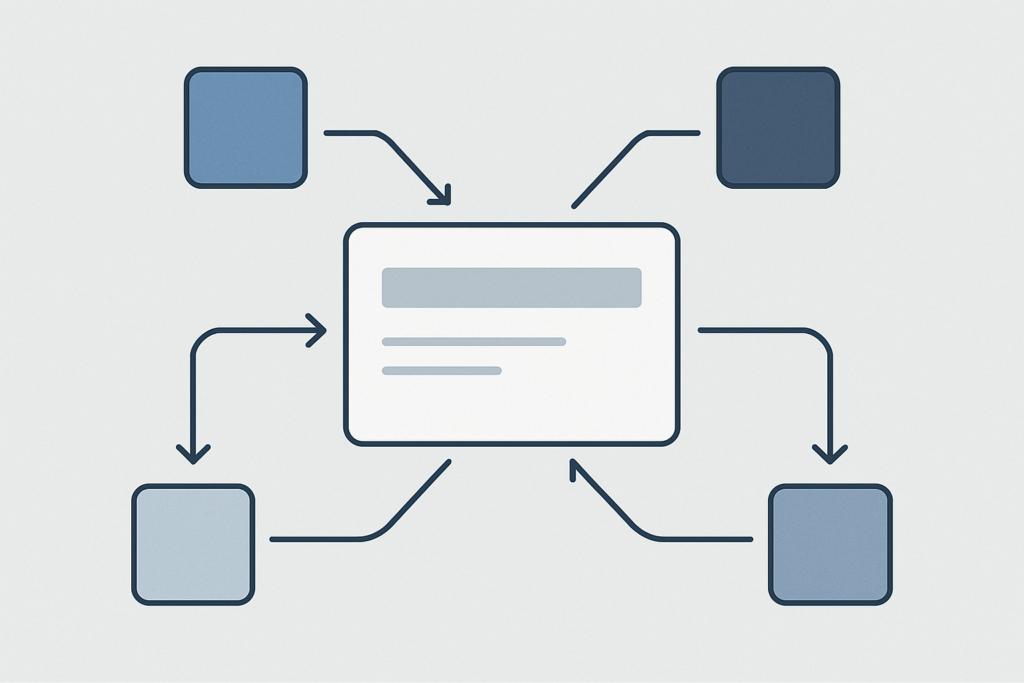

Most eCommerce SEO teams lose ground because authority lands on the homepage while the category and product pages that produce revenue remain buried. Page rank factors explain part of that problem: links help Google understand the relative importance and relationships of web pages, but PageRank is only one component of Google Search.
The old view was simple: get more backlinks and rankings follow. High-performing Shopify and WooCommerce stores take a more disciplined approach. They earn relevant editorial authority, preserve it through clean technical foundations, and create clear internal paths to the pages where buyers convert.
This guide separates original PageRank mechanics from modern SEO realities, then turns both into practical priorities for commercial sites.
What Are Page Rank Factors?

PageRank is a link-analysis algorithm developed by Larry Page and Sergey Brin to estimate a web page’s relative importance. It evaluates the link graph of the web: pages that receive links from important pages can accrue more relative value than pages with few or weak incoming links.
Google’s historical explanation of how PageRank evaluates links described the system as considering both the number and quality of links to a page. That remains a useful foundation, provided you do not mistake it for a complete formula for modern search results.
PageRank Is a Link Analysis System, Not a Complete Ranking Formula
Links reveal relationships. They can help a search engine identify which pages are cited, connected, and potentially authoritative within a topic.
They do not make a page relevant to a query, useful to a shopper, or technically eligible to rank. A heavily linked collection page can still underperform if it is duplicate, blocked from crawling, thin on useful content, or poorly aligned with buyer intent.
Google uses many ranking systems to evaluate individual pages. Content quality, query relevance, accessibility, freshness where appropriate, and spam protections operate alongside link analysis.
The Most Important Distinction: PageRank vs. Rankings
Confusing these concepts leads to bad reporting and worse prioritization. Use PageRank as a framework for understanding link relationships, not as a vanity target.
| Concept | What it evaluates | What you can measure |
|---|---|---|
| PageRank | Relative importance within a link graph | Google does not expose its internal PageRank values |
| Organic rankings | How well a page serves a specific query under Google’s broader systems | Rankings, impressions, clicks, and conversions |
| Third-party authority metrics | A tool provider’s estimate of link strength | Useful directional proxies, not Google PageRank |
Google Toolbar once displayed a public score on a 0 to 10 scale. That display is gone, and a page rank checker can only estimate link strength using its own crawl and model.
How the PageRank Algorithm Works
The original model is elegant because it does not count every link equally. It repeatedly calculates the relative importance of pages based on who links to whom.
In simplified terms, a page receives value from incoming links. Each linking page distributes part of its available value across its outbound links, and the calculation repeats until the values stabilize.
Incoming Links, Link Quality, and Authority
One credible editorial mention from a relevant industry publication can be more meaningful than dozens of weak, unrelated placements. The reason is not a visible PageRank score. It is that the referring page may itself be well-linked, topically connected, and placed in a genuine editorial context.
Assess high-quality links through practical questions:
- Topical relevance: Does the referring page serve an audience that would plausibly care about your products?
- Editorial purpose: Is the link a genuine reference, citation, recommendation, or useful resource?
- Page-level strength: Is the specific linking page discoverable and supported, rather than merely sitting on a large domain?
- Placement quality: Is the link in relevant main content rather than hidden boilerplate?
This is why link building should support real brand visibility. Digital PR, original research, expert-led buying guides, and useful resources create reasons for relevant sites to cite you.
Why Outbound Links Affect Link Distribution
In the original PageRank formula, a source page’s value is divided among its outbound links. If Page A links to two pages, each receives a larger simplified share than if Page A links to 200 pages.
That principle does not mean you should hoard links or avoid citing useful sources. It means navigation and contextual linking need a purpose. Every link should help a shopper or search engine reach a logical next page.
For your own site, authority flow is a useful metaphor, not a measurable Google metric. The operational question is whether valuable pages have clear, crawlable paths from the pages that already earn attention and links.
The Random Surfer and Damping Factor Explained
The random surfer model imagines someone moving around the web by following links. The more likely that hypothetical surfer is to reach a page, the higher that page’s relative PageRank could be in the original model.
A simplified PageRank formula is often represented as:
PR(A) = (1-d) / N + d × Σ(PR(linking page) / outbound links on linking page)
The damping factor, commonly represented as 0.85, means the surfer follows a link about 85% of the time and jumps elsewhere about 15% of the time. This prevents closed loops and dead ends from absorbing all the value in the model.
Google’s live implementation is private and far more complex than this classroom formula. The formula is useful because it explains why source quality, link paths, and outbound-link distribution matter.
A Simple Page Rank Factors Example
Consider four pages: A, B, C, and D. Page A earns strong external links and links to B and C. Page B links only to D, while Page C links to D plus nine other URLs.
D can receive a more concentrated share through B than through C because B has fewer outbound links in this simplified example. If A becomes stronger, B and C may benefit, then D can benefit through those internal pathways.
The takeaway is not to calculate a private PageRank score by hand. It is to avoid leaving priority pages isolated while your best-linked content, homepage, or category hubs point elsewhere.
Does Google Still Use PageRank?
Yes. Google Search Central states that PageRank continues to be part of Google’s core ranking systems.
That statement does not reveal the current formula, exact weighting, or how Google values every type of link. It does establish that link relationships remain meaningful, even though PageRank is not the sole explanation for why a page ranks.
What Google Confirms—and What It Does Not
The right operating model is evidence first, inference second, speculation last.
| Confirmed | Reasonable operational takeaway | Not publicly known |
|---|---|---|
| PageRank remains part of Google’s core ranking systems | Relevant links and coherent site architecture deserve ongoing investment | Exact weights, calculations, and page-level values |
| Google uses systems that understand page relationships | Important commercial pages need crawlable internal support | The precise value of any individual link |
| Google uses many systems and signals | Links alone cannot fix irrelevant or inaccessible pages | How current proprietary modifiers work together |
Patents and industry observations can inform testing, but they are not a window into a live ranking formula. Treat claims about exact link value, seed-site distance, or leaked field names with restraint.
Why Google Toolbar PageRank Is Not a Modern SEO KPI
Google Toolbar’s PR0 to PR10 display was a historical public approximation, not a reliable operating dashboard for modern SEO. Google retired it, so there is no official public Google page rank score to check.
Third-party URL-level metrics can help you compare pages, investigate broken-link opportunities, or spot an underlinked section. They cannot tell you what Google’s internal PageRank value is.
Measure the outcomes that matter: non-branded visibility, indexation of commercial URLs, qualified organic sessions, conversion rate, and organic revenue. A rising proxy score without better commercial-page performance is not progress.
The Page Rank Factors That Matter Most for Modern SEO
No published checklist reveals Google’s private formula. The priorities below are practical implications of PageRank principles, broader Google ranking systems, and off page factors in SEO, built for teams responsible for revenue rather than theoretical scores.
1. Relevant, High-Quality Incoming Links
Volume is a poor substitute for relevance. A link profile full of generic directories, paid placements, and low-quality blogs may create activity in a spreadsheet while doing nothing durable for commercial search visibility.
Prioritize links earned through credible publisher relationships, specialist coverage, useful research, product expertise, and digital PR. Strong links should make sense to a real reader before they ever reach a crawler.
Link quality cannot be judged from a spreadsheet alone. For stores that need a clear view of authority gaps suppressing commercial pages, SEO.DIGITAL’s eCommerce-focused link and technical audit can turn disconnected data into a prioritized roadmap.
2. Contextual Internal Links to Priority Pages
Internal links are the authority lever you control. A strong buying guide, educational article, or category hub can point shoppers and search engines toward the next relevant collection, category, or product page.
Use descriptive, natural anchors that explain the destination. A guide to trail running shoes, for example, can link to a trail-running collection where the reader can compare suitable products.
Sitewide footer links are not a substitute for meaningful contextual routes. This discussion of why Google may value prominent editorial links differently from sitewide footer links reinforces the practical point: put links where they help the reader complete the task.
3. Crawlable Architecture, Canonicals, and Redirects
Authority cannot reliably support a URL Google cannot discover, crawl, or understand as the preferred version. This is where eCommerce templates often create quiet losses.
Product variants, collection filters, parameterized URLs, pagination, and duplicate category paths can fragment signals. Weak canonicals can compound the problem by giving Google unclear instructions about which page should represent the product or collection.
Audit these areas regularly:
- Canonical alignment: Preferred indexable URLs should use consistent canonical signals.
- Internal link targets: Navigation and body links should point to preferred live URLs.
- Broken paths: Repair internal 404s and remove unnecessary redirect chains.
- Crawl access: Ensure priority pages are not blocked, noindexed, or dependent on inaccessible navigation.
4. Link Placement and the Reasonable Surfer Concept
Not every visible link serves the same user purpose. A link embedded in a helpful paragraph about a product category is more likely to be noticed than a repeated utility link in a crowded footer.
The reasonable surfer concept is often used to explain why prominence and click likelihood may matter. Google does not publish a modern weighting formula for placement, so avoid false precision.
Put relevant links in main content, near the decision or explanation they support. Do not rely on mass footer linking, as evidence on Google’s treatment of footer and sitewide links suggests those links may be treated differently from prominent editorial links.
5. Helpful, Link-Worthy Content
Content quality is not mechanically interchangeable with PageRank. It matters because useful pages earn citations, satisfy search intent, and create credible internal routes to commercial destinations.
For eCommerce brands, the strongest assets often include original product research, comparison pages, category education, expert buying guides, and answers to high-friction pre-purchase questions. These assets should not end as traffic-only blog posts. They should route informed shoppers to the appropriate next step.
A well-planned content cluster gives every guide a role in moving readers from research to the most relevant commercial destination, supported by strong search engine optimization ranking factors rather than random internal links.
6. Natural Link Attributes and Spam Avoidance
Link attributes provide context. rel="sponsored" identifies paid or sponsored placements, rel="ugc" identifies user-generated content, and rel="nofollow" signals that a link should not be treated as a standard editorial endorsement.
Do not use nofollow to sculpt internal PageRank. Google has changed how it handles nofollow over time, and artificial sculpting is not a stable strategy.
Avoid paid links intended to manipulate rankings, private blog networks, automated comment links, hidden keyword-rich links, and excessive reciprocal exchanges. Those tactics create risk without building the trust your brand needs.
How Shopify and WooCommerce Stores Should Apply PageRank Principles

A store can have excellent products and still lose organic revenue because its authority architecture is backwards. The homepage and editorial content collect attention while collection, category, and product pages remain several clicks deep with little contextual support.
The goal is a site structure where external authority enters through strong pages, then reaches relevant revenue pages through useful internal links and clean technical signals.
Build Authority Paths From Content to Collections and Products
Start with the shopper journey. An educational guide should answer a research question, lead naturally to a relevant collection or category, and let that hub guide shoppers toward individual products.
A skincare brand might publish a guide on choosing products for sensitive skin, link to its sensitive-skin collection, then use category copy and filters to help customers find the right formulation. The internal link serves a real decision, not a quota.
This approach is stronger than forcing exact-match anchors into every paragraph. Use language that accurately describes the next destination, and ensure that destination earns its place with useful copy, product selection, and clear merchandising.
Fix Orphaned, Deep, and Underlinked Revenue Pages
Orphaned pages have no crawlable internal links pointing to them. Deep pages may technically exist in your sitemap but receive little discovery support or shopper traffic because they sit too far from meaningful navigation and content.
Run this workflow for priority categories, collections, products, and seasonal landing pages:
- Define revenue pages using margin, demand, stock availability, and organic opportunity.
- Find weakly linked URLs with a crawl and compare them with your priority list.
- Add contextual paths from relevant guides, category hubs, and adjacent commercial pages.
- Improve navigation selectively where a page belongs in a persistent shopper journey.
- Validate the route by crawling again and reviewing indexation in Google Search Console.
Authority-flow review: Years of products, collections, filters, and content can hide where authority is trapped or diluted. SEO.DIGITAL can map those paths and build a Shopify or WooCommerce-specific internal-linking roadmap focused on commercial-page visibility.
Prevent Authority Loss During URL Changes
Discontinued products, renamed collections, platform migrations, and merchandising changes create URL churn. Leaving old URLs broken wastes useful paths and frustrates shoppers who arrive from search, bookmarks, or external links.
Use a 301 redirect when a closely matching replacement or successor exists. If there is no relevant replacement, do not send every retired URL to the homepage. Assess whether the page should return a proper unavailable status, remain useful as editorial information, or redirect to the nearest genuinely relevant category.
When the replacement is not obvious, the decision should follow a documented off page seo ranking factors and redirect-mapping process rather than a blanket homepage redirect. Keep canonicals, sitemaps, internal links, and redirects aligned with the intended live URL.
A Practical Page Rank Factors Checklist for eCommerce Teams
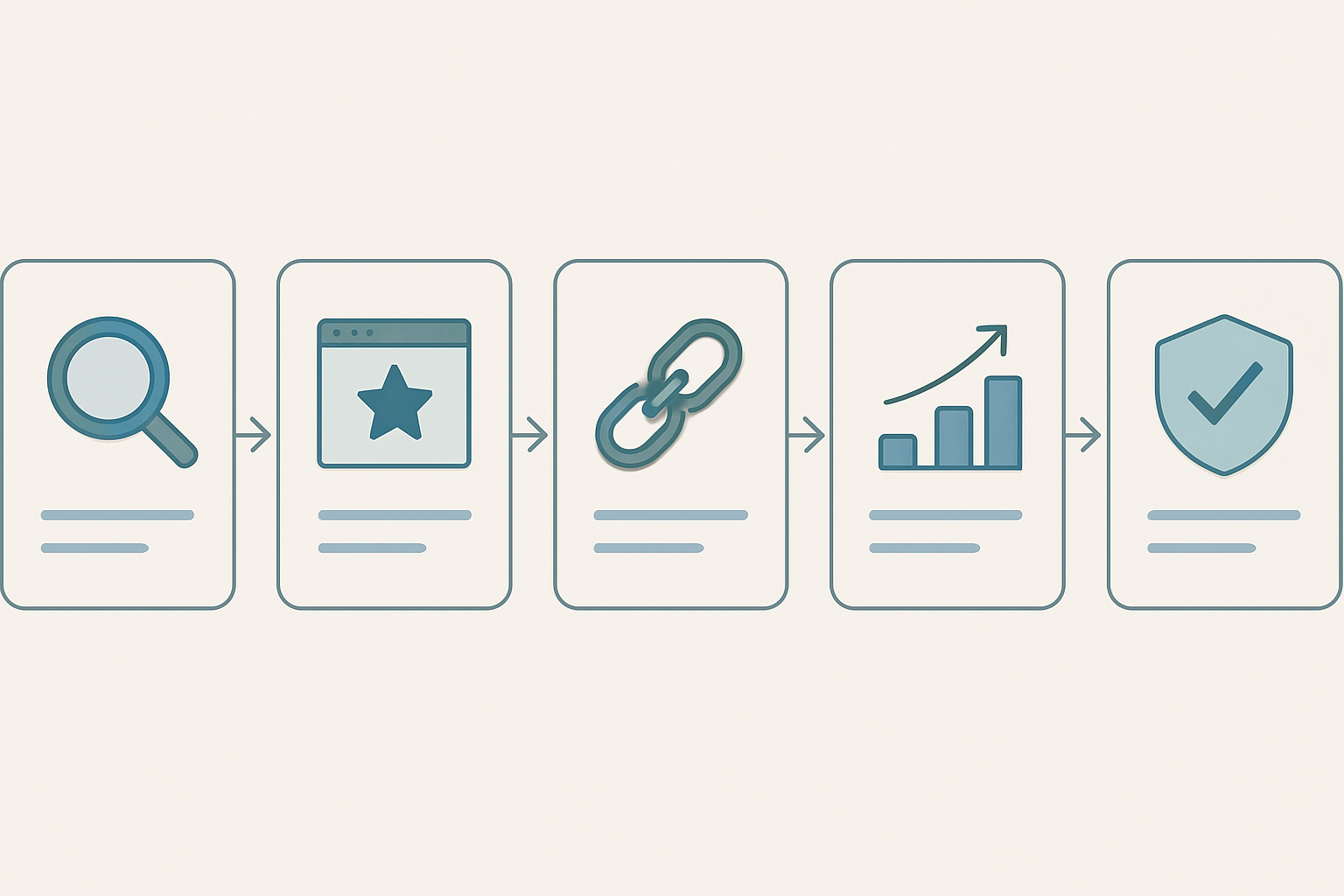
Authority work becomes manageable when it is folded into operating routines. Use this checklist in quarterly planning, content production, and technical maintenance.
Link Acquisition Checklist
- Review relevance before pursuing a placement. Prioritize trusted audiences and adjacent topical coverage.
- Inspect the referring page rather than relying on domain-level scores alone.
- Create reference-worthy assets such as research, expert guides, and genuinely useful comparison resources.
- Keep anchors natural and reject manipulative, keyword-stuffed placements.
- Track commercial impact from earned links, not merely total referring domains.
Internal Architecture Checklist
- Identify high-value pages by revenue, margin, demand, and search opportunity.
- Find orphaned URLs and pages that receive few internal links.
- Add contextual links from related editorial and commercial pages.
- Audit click paths so priority collections are not buried behind unnecessary layers.
- Maintain canonicals and redirects when URLs, products, or collection structures change.
Your internal architecture should reinforce the same commercial priorities covered in top seo ranking factors, not distribute links evenly to every URL regardless of value.
Measurement Checklist
Monitor organic revenue by landing page, non-branded rankings, indexation coverage, crawl errors, internal-link coverage, referring-domain relevance, and organic conversion rate. Review category and product pages separately from top-of-funnel content so strong blog traffic does not conceal weak commercial performance.
Do not promote a third-party authority metric to a core KPI. Use it as one diagnostic input, then judge success through search visibility, qualified traffic, and revenue.
Frequently Asked Questions About Page Rank Factors
How Do You Determine PageRank?
In the original model, PageRank is calculated from the relative PageRank of pages linking to a page, divided across each linking page’s outbound links and adjusted with a damping factor. Google does not publish its exact modern implementation, so public calculations are educational approximations rather than Google scores.
What Are the Top 3 Ranking Factors in Google?
Google does not publish one fixed top-three list that applies to every query. In practice, prioritize helpful and relevant content, technically accessible pages that satisfy search intent, and trusted relevant links that help Google understand authority and page relationships.
Does Google Still Use PageRank?
Yes. Google Search Central says PageRank remains part of its core ranking systems, but it is one component among many systems and signals used to rank pages. Google’s internal PageRank values are not public.
What Does PageRank Mean?
PageRank is a link-analysis method that estimates a web page’s relative importance from the number and quality of pages linking to it. Modern rankings also depend on relevance, helpfulness, technical accessibility, and other Google systems.
Final Takeaway: Build Authority That Supports Revenue Pages
Page rank factors matter because links still help Google understand relationships and relative importance across the web. The commercial objective is not to chase a hidden score. It is to earn relevant external authority, protect it from technical leakage, and route it intelligently to the pages that drive qualified organic revenue.
For Shopify and WooCommerce brands generating $50k+ MRR, SEO.DIGITAL provides a no-obligation deep-dive consultation, custom strategy, and site-health assessment to identify authority leakage, content opportunities, and scalable high-quality link-building priorities. Book a call to build a crawlable, conversion-oriented authority system that can reduce reliance on paid acquisition.