
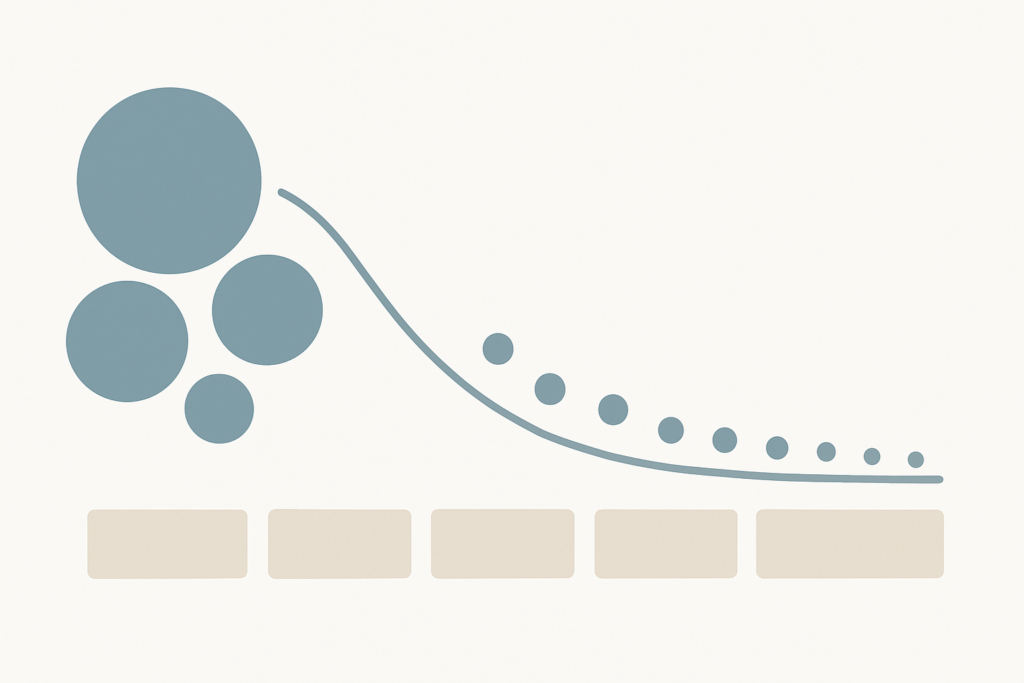

Search volume can make a weak keyword look irresistible. A search demand curve exposes the trade-off: the biggest query is rarely the only, or even the best, route to profitable organic acquisition.
Most teams still treat keyword research as a popularity contest. High-performing Shopify and WooCommerce brands treat it as demand allocation, matching each search to the page, product range, and buying stage most likely to produce revenue.
That shift matters when paid acquisition costs keep pressuring margins. A balanced demand map gives your team a defensible way to decide what to build, optimize, test with paid search, and measure.
What Is a Search Demand Curve?
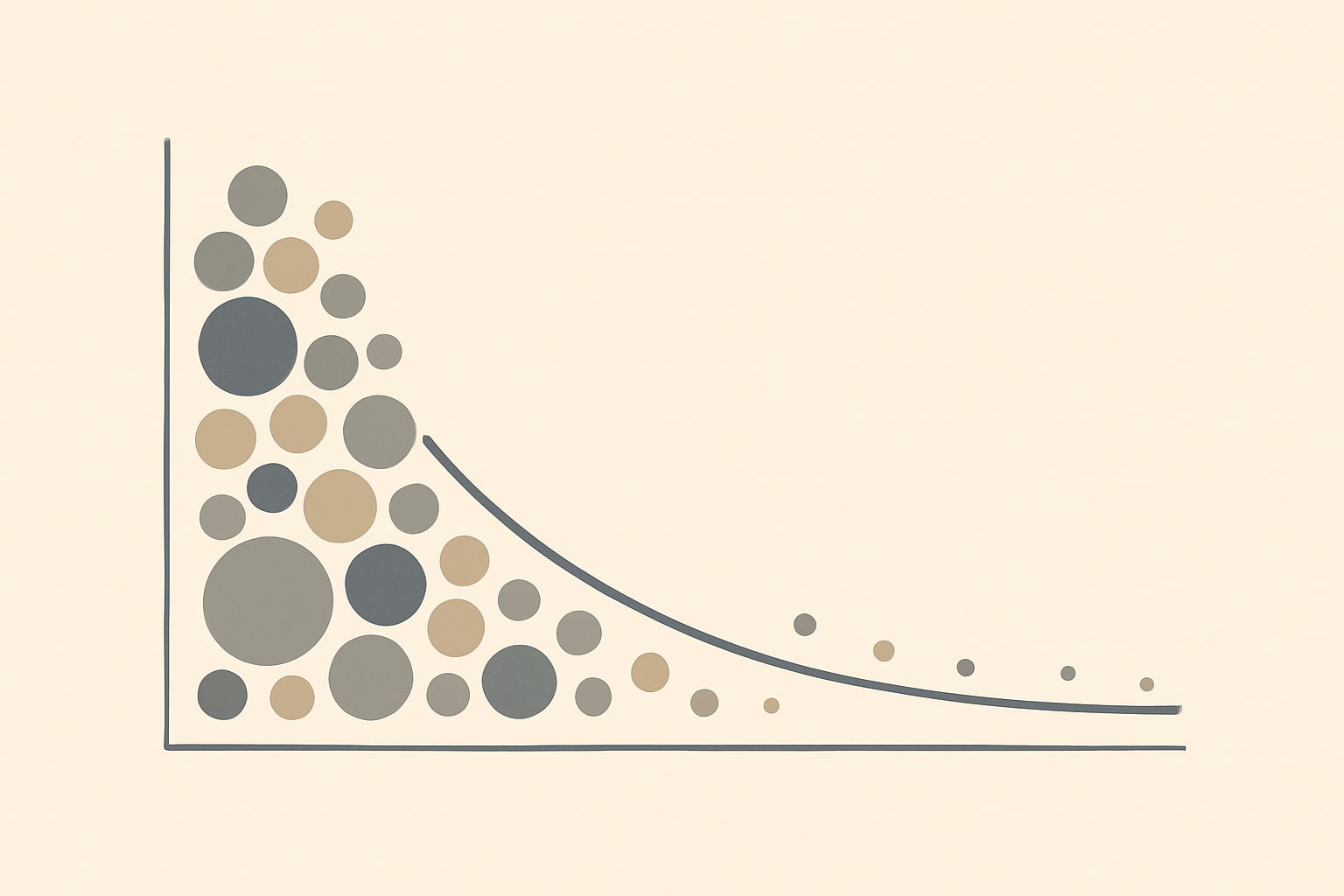
A search demand curve is a visual model of how demand is distributed across search queries. It typically moves from a small number of broad, high-volume keywords to a far larger number of specific searches with lower individual volume.
This is the SEO and search-behavior model, not Demand Curve the agency. You can analyze the curve through search volume, query specificity, keyword popularity, and how demand changes over time.
The Simple Search Demand Curve Definition
A search demand curve shows how searches are distributed across broad, high-volume keywords and more specific, lower-volume queries. It helps marketers compare where demand is concentrated, how search terms become more specific, and which search results they need to satisfy.
The point is not to admire the shape of the graph. It is to identify the commercially relevant demand your store can credibly serve.
What the Curve Does—and Does Not—Tell You
The curve can reveal concentration, gaps in your keyword strategy, and seasonal shifts in search volume. It does not prove that a term will rank, convert, or generate profit.
Every opportunity still needs validation against intent, competition, business relevance, product availability, margin, and conversion rate. A keyword with 20,000 monthly searches can be less valuable than one with 500 searches if the latter sends qualified buyers to a strong page.
How the Search Demand Curve Works
Search demand is uneven. A few short-tail keywords attract substantial individual search traffic, while countless specific queries sit further along the curve.
Broad demand
running shoes
Chunky middlewomen's running shoes
Specific demandwomen's white running shoes for flat feet
The curve slopes because people refine searches as their needs become clearer. The same shopper may begin broadly, compare features, then search for a precise product fit before buying.
Fat-Head Keywords: High Volume, Broad Intent
Fat-head keywords are broad, high-volume keywords, often one to three words long. “Running shoes,” “protein powder,” and “office chairs” are typical short-tail keywords.
These terms usually belong on robust category or collection pages. They can create major visibility, but search intent is broad: visitors may be researching, comparing brands, or looking for a product type your assortment does not cover.
Competition is also intense. Winning often requires strong technical foundations, clear category architecture, useful copy, internal links, and authority beyond one optimized page.
The Chunky Middle: Where Relevance Starts to Increase
The chunky middle is where modifiers begin qualifying the search. Gender, material, feature, budget, use case, or audience can turn a generic query into a clearer demand signal.
“Women’s trail running shoes,” “leather office chair,” and “vegan protein powder for smoothies” all sit here. These search terms often fit subcollections, use-case pages, or deliberately built filtered collections when there is genuine demand and a crawlable page experience.
This is frequently where keyword research becomes commercially useful. Demand may be lower than the head term, but relevance rises and the SERP often makes the required page type clearer.
Long-Tail Keywords: Specific Demand With Stronger Context
Long-tail keywords are detailed search queries with lower individual search volume. Product attributes, problems, audiences, and comparisons create this part of the curve.
Specificity can reveal clearer context, not guaranteed purchase intent. “Best running shoes for flat feet” may require an editorial buying guide, while “women’s white running shoes for flat feet size 8” may be better served by a product or collection page.
Collectively, long-tail keywords can produce meaningful search traffic. A strong content strategy captures related questions without manufacturing a thin page for every wording variation.
Why Search Demand Curves Matter for eCommerce SEO
Customers do not search one way. They browse categories, compare alternatives, check sizing, evaluate materials, seek reassurance, and then look for a product that fits a specific need.
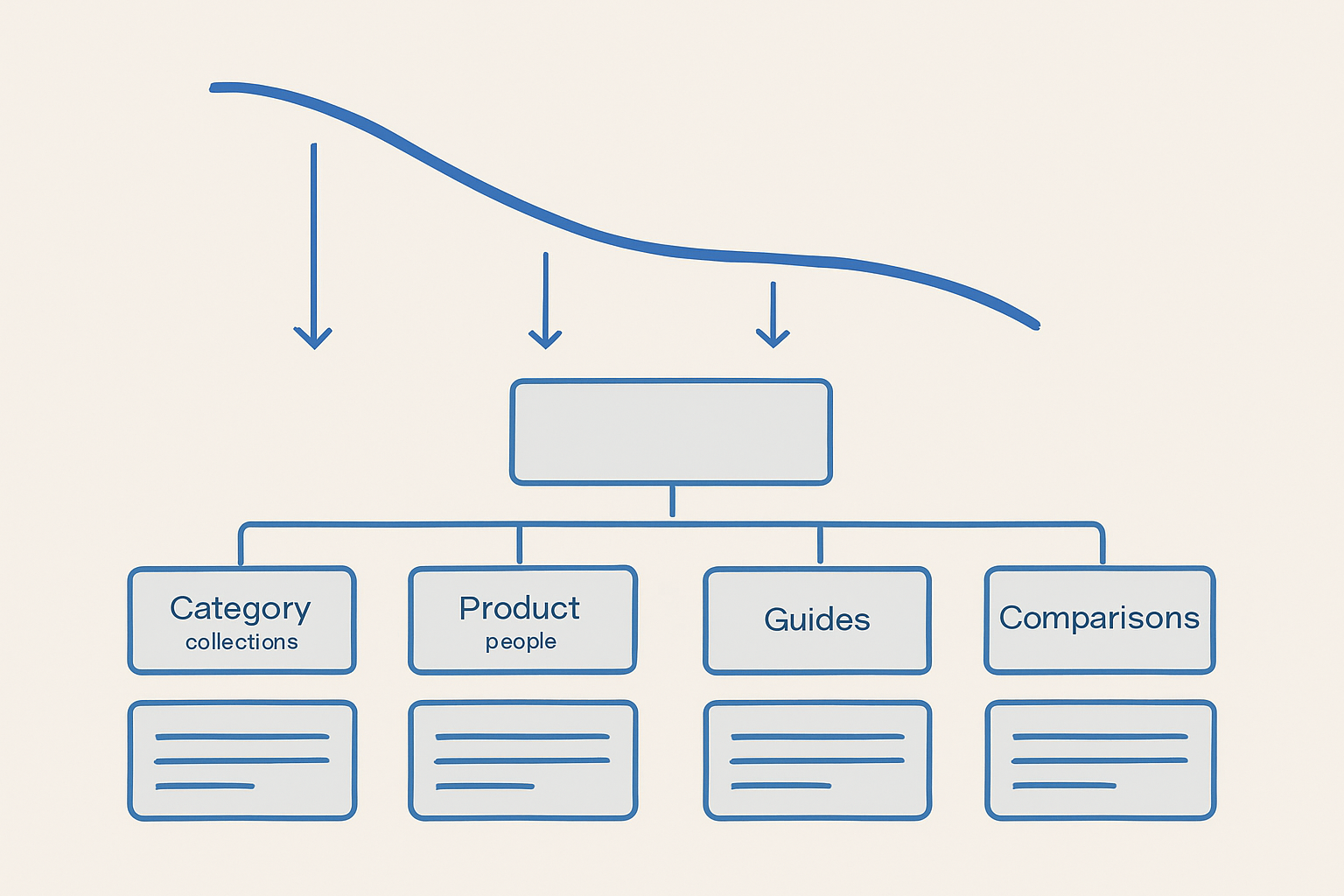
A search demand curve turns that behavior into a revenue architecture. Instead of a disconnected list of blog topics, it becomes a map for collections, products, guides, comparisons, technical priorities, and paid-search tests.
Map Broad Demand to Category and Collection Pages
High-volume keywords usually deserve strong category and collection pages, not a 1,200-word blog post trying to rank for a transactional term. The page needs useful unique copy, intuitive navigation, relevant internal links, and a product range that genuinely meets the query.
Faceted filters require control. If every color, size, and sort combination becomes indexable, Shopify and WooCommerce stores can create duplicate or low-value URLs that dilute crawl efficiency.
Map Specific Demand to Product, Guide, and Comparison Content
Specific commercial searches can fit product pages, subcollections, buyer’s guides, comparisons, and FAQs. The rule is simple: one search intent should lead to one best-fit page experience.
A single well-built guide can rank for many closely related long-tail keywords when the underlying need is the same. Teams that understand the types of search intent avoid forcing every query into a product page or creating duplicate articles for minor phrasing changes.
Store architecture, content, authority, and technical SEO must work together. SEO.DIGITAL helps Shopify and WooCommerce brands turn demand data into a revenue-focused SEO roadmap, so page priorities are tied to qualified traffic rather than vanity impressions.
Use the Curve to Balance SEO and Paid Search
Paid search captures urgent demand and tests product messaging quickly. Search engine marketing data can show which terms convert, which offers resonate, and where a category has enough commercial value to justify deeper SEO investment.
SEO builds a durable acquisition asset, while paid search can fill gaps or validate demand. Compare paid conversion rate, margin, and customer quality with organic opportunity before shifting budget, rather than assuming either channel should replace the other.
How to Find a Search Demand Curve
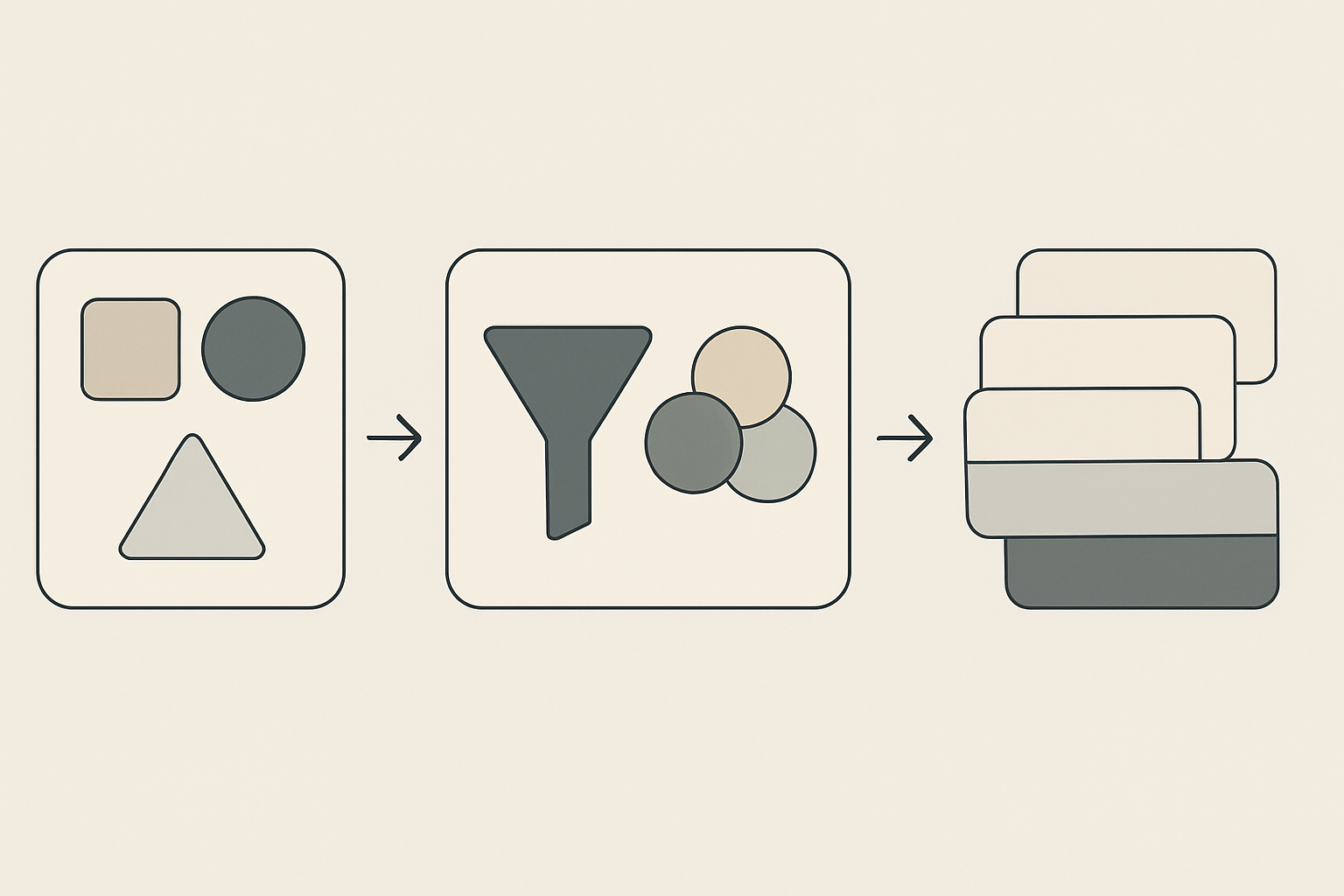
A useful demand curve starts with real customer language, then moves through validation and page mapping. The deliverable should be a prioritized action list, not a spreadsheet that nobody uses.
Step 1: Start With Product, Category, and Customer-Language Seeds
List category names, product attributes, materials, problems, use cases, audiences, and comparisons. Pull language from on-site search, customer reviews, sales calls, support tickets, and paid-search query reports.
Then expand those seeds in Google Keyword Planner, Semrush, Ahrefs, or similar keyword research tools. Internal terminology is often wrong for the market, so customer wording must lead.
Step 2: Measure Search Volume, Intent, and Competitive Context
Gather monthly search volume estimates, then inspect the live SERP. Note whether search results are dominated by retailers, collection pages, editorial guides, shopping listings, marketplaces, or comparison content.
Use a compact scorecard before prioritizing:
- Demand: Is there enough search volume or collective cluster demand?
- Intent: Does the query match a browsing, evaluation, or buying need?
- Business relevance: Can your assortment, price point, and margin support it?
- Competition: Can your current authority and page quality compete?
- Trend and conversion: Is demand durable, and can it contribute to revenue?
Step 3: Check Trends Before You Commit Resources
Monthly volume is an estimate, not a forecast. Demand can rise, decline, peak seasonally, or vary sharply by region.
Use Google Trends Trending Now data to spot emerging interest, but interpret it correctly. Trends shows relative interest, whereas keyword tools estimate absolute volume, so a spike is not automatically a scalable commercial opportunity.
Check the date range, geography, inventory position, and buyer intent before committing content or campaign resources.
Step 4: Cluster the Terms and Assign Each Cluster to a Page
Group semantically similar search terms by intent, not by tiny wording differences. Map each cluster to an existing or planned collection, product page, buying guide, comparison, FAQ, or editorial resource.
Avoid separate pages for “white running shoes for flat feet,” “flat feet white running shoes,” and “white shoes for runners with flat feet” when one strong collection or guide can satisfy the same need. Consolidation improves content quality and reduces internal competition.
Step 5: Track Revenue, Not Rankings Alone
Rankings and search traffic are leading indicators. Organic revenue, assisted conversions, conversion rate, average order value, and CAC impact show whether the work is producing commercial contribution.
Use a focused set of search engine optimization KPIs to distinguish visibility from value. A category page that moves from position 14 to position 5 matters only if qualified sessions and revenue follow.
Need expert prioritization? Qualifying Shopify and WooCommerce stores can request a custom demand-and-site-health review from SEO.DIGITAL. It identifies technical blockers, high-intent gaps, and the next actions that deserve investment before a DIY keyword spreadsheet becomes a backlog.
Search Demand Curve Examples for Shopify and WooCommerce Stores
The curve becomes useful when it changes what your team builds. Consider a retailer selling running shoes across multiple brands, fits, colors, and terrains.
Example: From “Running Shoes” to a Purchase-Ready Search
“Running shoes” is a short-tail keyword with broad intent and likely high competition. It belongs on a strong top-level collection page with clear brand, gender, terrain, and fit pathways.
“Women’s running shoes” provides more context. A dedicated subcollection can combine relevant products, filters, fit guidance, and internal links to related use cases.
“Women’s white running shoes for flat feet” is a long-tail keyword with a narrow need. It may warrant a filtered collection if inventory and technical controls support it, or a guide that directs shoppers to suitable products if the SERP favors editorial content. This is a methodology, not a universal ranking rule.
Example Demand Map: Category Pages, Product Pages, and Content
The right page type changes as demand becomes more specific. This table helps teams assign a cluster before writing copy or changing templates.
| Query type | Likely intent | Search volume pattern | Recommended page type | Primary KPI | Common mistake |
|---|---|---|---|---|---|
| Broad category | Browse and compare | High individual volume | Category or collection page | Non-branded organic traffic | Publishing a blog post instead |
| Subcategory or use case | Narrow options | Moderate volume | Subcollection or use-case page | Qualified collection sessions | Indexing every filter combination |
| Product-specific | Evaluate or buy | Lower volume | Product page | Conversion rate and revenue | Sending users to a generic category |
| Problem or question | Research | Fragmented long tail | Buyer’s guide or FAQ | Assisted conversions | Writing shallow, isolated posts |
| Brand comparison | Evaluate alternatives | Moderate to low volume | Comparison page | Referral-to-purchase rate | Avoiding the comparison entirely |
How AI Search Changes the Search Demand Curve
AI search expands the practical long tail because shoppers can express needs as full conversations. They may ask ChatGPT, Perplexity, or Gemini for a product recommendation with budget, fit, material, delivery, and use-case constraints in one prompt.
That does not erase the curve. It makes topic coverage, product detail, entity clarity, and trustworthy third-party validation more important.
AI Prompts Are Often Longer and More Specific
Evertune reports that traditional search queries average 3.4 words, while its EverPanel data shows a 19-word median AI prompt. The same source reports that more than 80% of AI queries are unique, compared with 15% in traditional search.
The operational implication is not to chase every possible prompt. Build useful topic ecosystems that answer recurring buyer needs, state product limitations clearly, and connect categories, products, guides, and proof points.
SEO Is Still Relevant—But Keyword-Only Planning Is Not Enough
SEO is not dead with AI. Search engine optimization still determines whether product and category pages are technically accessible, useful, understandable, and credible enough to earn discovery.
Keyword research remains a demand signal, but AI search also requires prompt mapping, comprehensive content, clear positioning, structured data where appropriate, and credible mentions across the web. Organic traffic may arrive through different interfaces, yet the underlying need for useful information and trusted brands remains.
Monitor Emerging Demand Without Mistaking a Spike for Strategy
Live trends can expose a new product language, feature, or cultural moment before it appears clearly in monthly keyword datasets. Google Trends TV’s live trend visualization can help teams observe those shifts.
Validate the signal against inventory, margin, audience fit, and search engine marketing data. A trend without commercial relevance is noise, not a keyword strategy.
Common Search Demand Curve Mistakes to Avoid
The curve is only valuable when it prevents poor allocation decisions. These mistakes usually waste content budget, developer time, or paid spend.
Chasing Search Volume Without Checking Intent
A large-volume phrase can deliver low-quality sessions when your products, price point, or page experience do not match the search. Review the live search results before creating or optimizing a page.
If the SERP is filled with educational articles and your page is a collection, you may need a guide. If it is filled with retailers and your site only offers a thin blog post, the page type is wrong.
Treating Every Long-Tail Keyword as a Separate Page
Thin pages built around minor keyword variations create duplication, weak user experiences, and internal competition. Cluster terms with the same intent, then build one genuinely useful page that can serve the full family of queries.
This approach makes content strategy more maintainable and gives each page a clearer commercial role.
Ignoring Technical SEO and Authority Requirements
Even a strong keyword opportunity cannot produce organic revenue if collection pages are blocked, duplicated, poorly linked, or difficult for search engines to index. A technical SEO audit and crawlability fixes are foundational steps in how to increase search engine traffic sustainably.
When competitive head terms require more than on-page improvements, brands also need credible mentions and links from sources their customers and search systems trust. That is where authority building, digital PR, and relevant link acquisition create leverage, often with support from experienced search engine optimisation consultants.
SEO.DIGITAL applies that work specifically to Shopify and WooCommerce stores: technical audits, buyer-intent copy, authority links, digital PR, and genuine community signals that support traditional and AI-search visibility.
Search Demand Curve FAQ
How Do You Find a Demand Curve?
Build a search demand curve by gathering relevant search terms, measuring search volume, grouping queries by specificity and intent, and checking trend direction. Then map each cluster to the page type that best satisfies the search, so the output becomes a page-priority plan rather than an academic chart.
Is SEO Dead Now With AI?
No. AI search changes how people phrase demand and where they may discover answers, but it does not remove the need for technically accessible pages, useful content, relevant product information, and trusted brand signals. SEO remains the discipline that helps brands earn organic visibility across those systems.
What Are the 3 C’s of SEO?
There is no universally accepted industry definition of the 3 C’s of SEO. For a search demand curve, use this article-specific lens: Customer intent, Content fit, and Commercial contribution. It keeps keyword decisions anchored to what shoppers need, what the page delivers, and whether the work produces revenue.
Is SEO Still Relevant Today?
Yes. Modern SEO connects keyword strategy, technical health, useful content, authority, and revenue measurement. AI search increases the value of being a credible, comprehensive source, but it does not make discoverability or search traffic irrelevant.
Turn Search Demand Into a Profitable Growth Plan
A search demand curve gives eCommerce teams a better operating model: identify demand, validate intent, assign the right page type, measure revenue, and refine as market behavior changes.
For Shopify and WooCommerce brands generating $50k+ MRR, SEO.DIGITAL provides a no-obligation deep-dive into technical barriers, high-intent demand gaps, AI-search opportunities, and practical ways to reduce paid-acquisition dependence. Book a call to turn your demand map into a profitable organic growth plan.