
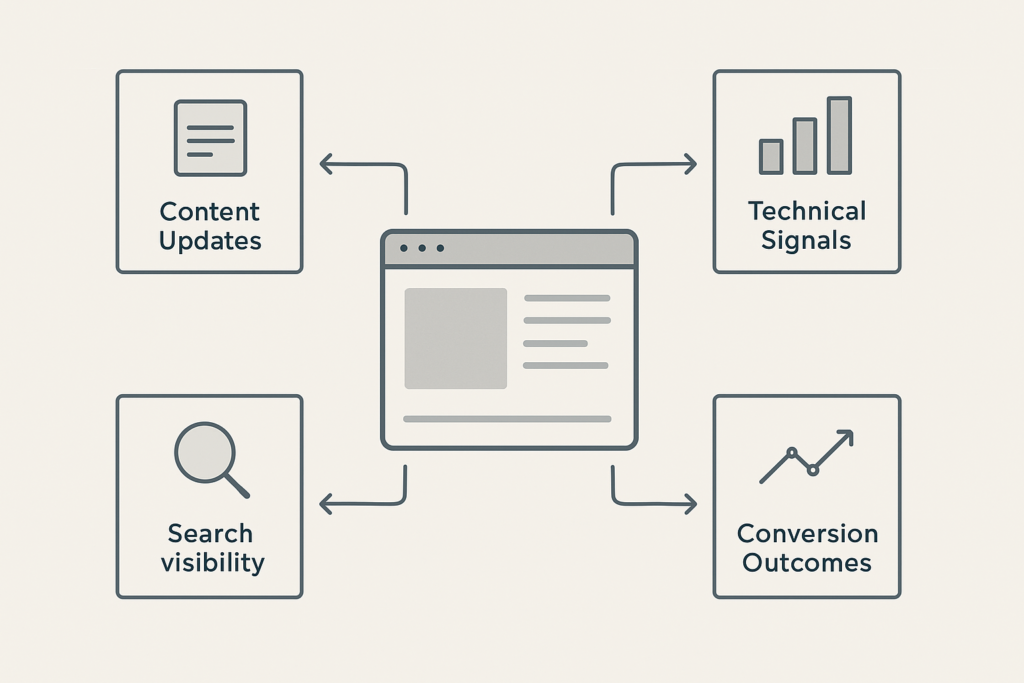

Unplanned edits to a revenue page can erase the relevance your store spent months building. Seo changing content is not a publishing chore for Shopify and WooCommerce teams. It is a controlled operation that can protect organic revenue, improve buyer journeys, and strengthen visibility in search results.
The old approach treated SEO content as static until traffic fell, then rewrote it quickly. High-performing retailers work differently: they document the baseline, make a specific improvement, validate the technical release, and measure commercial impact before changing the page again.
That discipline matters even more as search engines surface direct answers, shopping results, and AI-generated summaries. Your pages still need to earn clicks and conversions, but they also need to be clear enough for systems to understand, trust, and reference.
What “SEO Changing Content” Means for eCommerce Brands
Content changes extend far beyond rewriting a blog introduction. A merchandising update can alter category headings, product availability, internal links, filter URLs, structured data, and the route a shopper takes to checkout.
For an eCommerce business, SEO changing content can include:
- Refreshing copy on category, collection, product, and editorial pages.
- Updating metadata such as title tags and meta descriptions.
- Consolidating overlap between competing guides, collections, or product finders.
- Changing URLs or links when products are discontinued or site architecture changes.
- Correcting structured data to reflect visible products, pricing, availability, and breadcrumbs.
The operational question is not whether a page can change. It is what should change, why it should change, what existing value must remain, and how the team will know whether the change worked.
The Short Answer: Can Changing Content Hurt SEO?
Changing content does not inherently hurt SEO. Strategic updates that improve accuracy, search intent alignment, usefulness, and technical quality can improve performance. Random, frequent, or topic-changing edits can reduce visibility, especially on pages that already earn rankings, conversions, backlinks, or strong internal-link support.
Risk rises when a team mistakes activity for content optimization. Replacing a focused category page with broad lifestyle copy, deleting sections that answer high-value queries, or shifting a URL into a different topic can remove the signals Google Search already associates with that page.
Why This Matters More for Shopify and WooCommerce Stores
A collection page is not merely an article with products attached. It can be a search landing page, a merchandising surface, an internal-link hub, and a direct revenue source at the same time.
Changes often involve several owners. Marketing adjusts copy, merchandising changes assortments, developers modify templates, and an app updates structured data. Without a shared process, one routine release can weaken user experience, create duplicate filter URLs, break internal linking, or leave unavailable products in prominent discovery paths.
Treat important URLs as commercial assets. Coordinate changes across the people who own content, inventory, development, and reporting.
How SEO Is Changing: From Page Rankings to AI-Powered Visibility
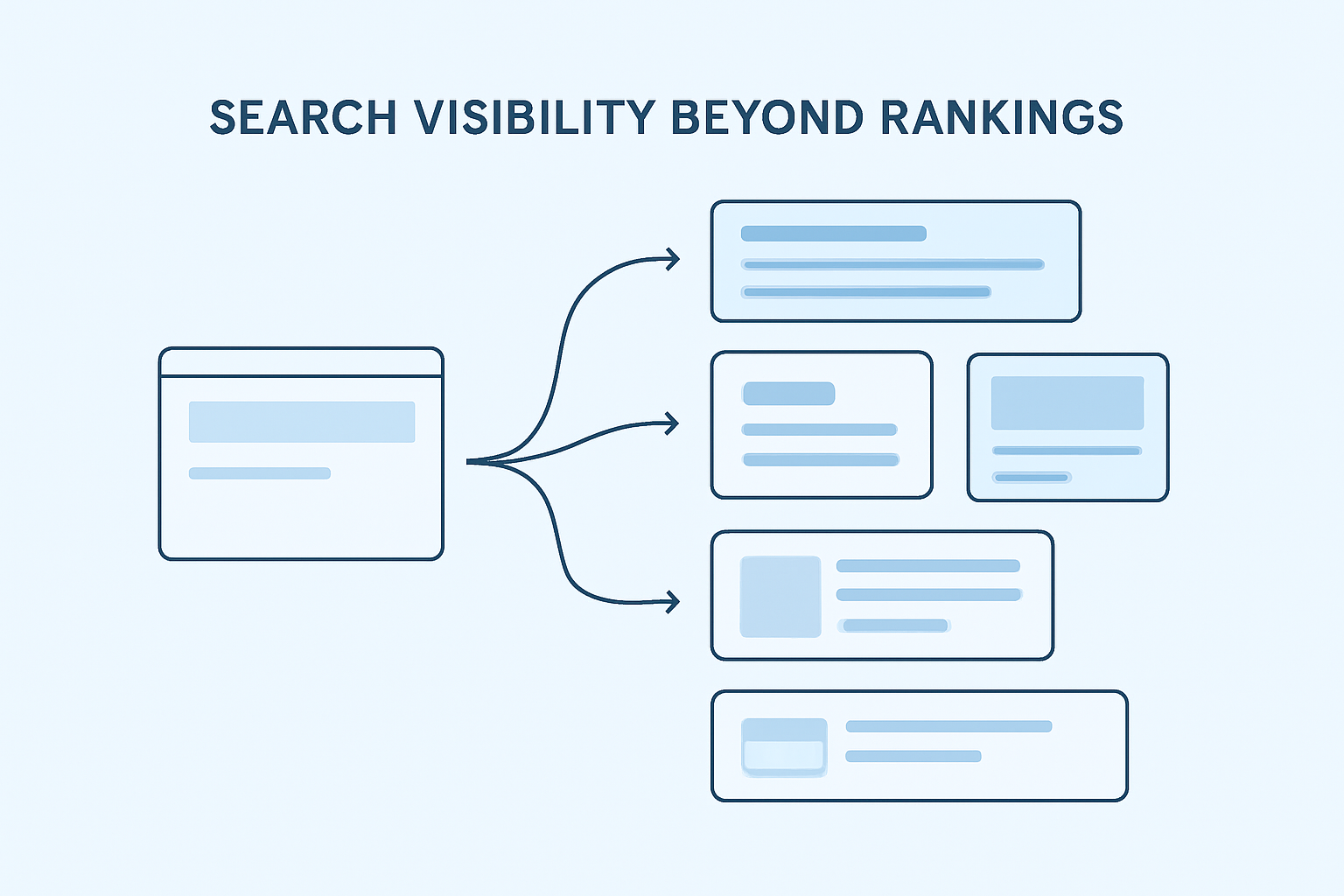
Rankings remain valuable, but blue-link position alone no longer describes the whole opportunity. AI-powered search, product results, featured snippets, video surfaces, and zero-click search can shape discovery before a shopper reaches your site.
Research on how AI search engines are changing search behavior reinforces a practical point: brands must be understandable wherever customers research, not only where they click. That does not make conventional SEO obsolete. Crawlable pages, useful answers, technical accessibility, and credible brand signals remain the foundation.
What Still Matters—and What Has Changed
Keyword repetition and generic publishing volume were never durable advantages. Search engines have become better at evaluating whether a page resolves the user’s task, whether its claims are credible, and whether the site provides a coherent path to the next useful answer.
The enduring standard is high-quality content with clear intent, genuine expertise, accurate information, and sound architecture. The change is that a brand may now be represented through a summary, citation, product comparison, or conversational answer before it receives a visit.
That raises the bar for topic authority and brand authority. A retailer needs consistent category language, useful buyer guidance, accurate product data, visible expertise, and relevant external validation. AI visibility is an extension of this work, not a substitute for it.
Why Zero-Click Search Changes the KPI Conversation
An informational search may end in the results page. That is a real friction point, particularly for broad early-stage queries where an AI answer or rich result satisfies the immediate question.
Do not respond by treating every impression as revenue. Measure qualified organic traffic, non-branded visibility, branded search demand, add-to-cart behavior, assisted conversions, organic revenue, and customer acquisition efficiency. Where tools make it possible, monitor citations and brand mentions as directional visibility signals rather than proof of commercial return.
Before You Change a Page: Assess Risk, Intent, and Revenue Value

The expensive mistake is editing first and investigating later. Before a major update, capture the page’s current role in your SEO strategy and its contribution to revenue.
Use Google Search Console to record target queries, impressions, clicks, click-through rate, and average position. Use GA4 to record engaged sessions, product views, add-to-cart activity, leads, transactions, and assisted revenue. Then inspect backlinks, internal links, seasonality, inventory status, canonical tags, and the live search results for the page’s primary query.
The following matrix separates a sensible update from a risky one. It also gives marketing, merchandising, and development a shared decision standard.
| Strategic content update | Risky content change |
|---|---|
| Improves accuracy while preserving the page’s core intent | Pivots an established URL to an unrelated topic or audience |
| Adds missing buyer questions, proof, imagery, or comparison help | Deletes ranking sections because they appear old or lengthy |
| Updates discontinued items with relevant replacements and redirects | Removes a discontinued URL without a redirect plan |
| Tests one documented hypothesis with a measurement window | Changes copy, navigation, schema, titles, and CTAs at once |
| Strengthens contextual links to relevant next-step pages | Replaces useful links with arbitrary keyword-rich anchors |
High-revenue URLs deserve a pre-change review, not a hurried rewrite. Teams planning large Shopify or WooCommerce changes can use SEO.DIGITAL’s technical and content-risk review to identify crawlability, canonical, duplication, and conversion risks before a major refresh goes live.
Classify Each Planned Change: Refresh, Expand, Consolidate, Replace, Redirect, or Retire
Every proposed edit needs a classification. It prevents teams from applying a cosmetic fix to an architecture problem, or deleting a page that needs a better successor.
- Refresh improves freshness, accuracy, examples, imagery, or clarity while keeping the same core intent.
- Expand adds genuinely missing sections, FAQs, proof points, media, or product-selection help.
- Consolidate combines overlapping pages that compete for the same query and buyer need.
- Replace rebuilds a weak page when its URL and commercial intent remain valid.
- Redirect sends a discontinued or merged URL permanently to its closest relevant replacement.
- Retire removes obsolete, low-value content when no useful replacement exists.
A blog article competing with a profitable category page is often a consolidation issue, not a reason to stuff more keywords into both URLs. A discontinued product usually requires a redirect decision. A seasonal landing page may need a controlled refresh that retains its established purpose and URL.
Preserve the Elements Already Carrying SEO Value
A page can improve without freezing every element. The discipline is knowing what currently carries relevance, authority, or conversion value before you touch it.
Review and document the URL, primary search intent, H1, major H2s, title tag, meta description, ranking copy, structured data, image alt text, product or category context, internal-link sources, internal-link destinations, backlinks, and conversion path. Change any of them when the evidence supports it, but never casually.
Structured data deserves particular care. It should match what users can see and what the page actually offers. How structured data helps search engines interpret content is useful context, but markup cannot compensate for thin copy, inaccessible pages, or inaccurate product information.
A Safe Step-by-Step Process for Updating SEO Content
Important pages need a repeatable release process. The aim is not to slow the team down. It is to stop one successful change from being obscured by five undocumented ones.
Maintain a central change log with the URL, owner, classification, hypothesis, baseline metrics, exact edits, publish date, QA status, and review date. This record turns SEO changing content into a measurable operating system rather than a sequence of opinions.
Step 1: Set One Measurable Hypothesis
One page update should answer one business question. For example: “Will adding product-comparison guidance to this category page increase qualified organic sessions and add-to-cart rate for shoppers researching material options?”
Avoid making untracked changes to headlines, body copy, filters, schema, navigation, and CTAs simultaneously on a priority URL. If performance changes, you will have no credible way to identify the cause.
Start with keyword research, but validate intent in the live results. If the result set favors buying guides, product comparisons, and collections, a short opinion post is unlikely to satisfy the task, even if it repeats the target phrase.
Step 2: Update for People First, Then Validate for Search
A useful page answers the immediate question quickly and anticipates the next one. On a category page, that could mean material comparisons, sizing guidance, use cases, delivery details, and a clear route to relevant products.
Use direct headings, concise answers, accurate product information, original operational insight, credible evidence, and visual support that makes a decision easier. Voice search and AI-powered search both reward clear language, but human shoppers remain the audience that matters.
AI can speed up research, outlines, and editing. It cannot replace subject-matter review, fact-checking, product knowledge, customer insight, or accountable editorial judgment. Use guidance for using AI assistants to generate blog content as a workflow reference, then require a human owner to verify every substantive claim.
Step 3: Improve the Technical and Structural Signals
A strong editorial update can fail if the released page is slow, blocked, duplicated, or incorrectly canonicalized. Technical QA belongs inside the content workflow, not after it.
Check mobile rendering, Core Web Vitals, crawlability, indexability, canonical tags, XML sitemap inclusion, descriptive URLs, image context, redirects, and schema validation. Confirm that product availability and prices match visible page content.
Use Product, Article, FAQPage, Breadcrumb, Organization, or HowTo markup only where the page qualifies and the markup accurately describes it. Structured data clarifies meaning for search engines. It is not a shortcut to rankings or citations.
Step 4: Strengthen Contextual Internal Links
Internal links tell users and search engines how your content, collections, products, and commercial decisions fit together. The best links resolve a real next question.
A shopper should be able to move from an educational guide to a relevant collection, category, comparison, or product decision page without restarting research. That is the working standard behind seo driven content: each page contributes to a connected buying journey rather than competing in isolation.
Use descriptive anchors that set accurate expectations. If a visitor needs the operational framework behind your content strategy for seo and editorial decisions, content strategy and seo is a natural next resource, not a forced phrase added for its own sake.
Step 5: QA, Publish, and Give Search Engines Time
Pre-publish QA should catch broken links, redirect errors, incorrect canonicals, missing metadata, rendering problems, mobile issues, invalid structured data, stale availability details, and blocked conversion paths. Assign named owners for each check.
Publish dates matter. Google states that changes can take from hours to several months to appear in search results and recommends waiting a few weeks before assessing whether work helped. Do not rewrite a priority page again after three days because a ranking graph has not moved.
Step 6: Measure What Changed—and Decide the Next Action
Set a review window that reflects the page’s traffic, crawl frequency, sales cycle, and seasonality. Compare the baseline with impressions, clicks, CTR, ranking distribution, engagement, add-to-cart rate, leads, conversions, and revenue.
Separate correlation from causation. A seasonal demand swing, stock issue, template release, paid campaign, or competitor change can influence results. The change log gives your team the context to make a better decision: retain, iterate, expand, consolidate, redirect, or roll back.
Need a prioritized execution plan? SEO.DIGITAL offers a custom Shopify and WooCommerce site-health and content-opportunity audit for retailers that need technical clarity, high-intent page priorities, and revenue-focused reporting before committing resources to major changes.
What to Change on High-Performing Pages—and What to Treat Carefully
High-performing pages are not untouchable. They are simply expensive to guess with.
Use this comparison to decide which improvements can move forward quickly and which require stronger evidence, staging, and QA.
| Generally safe to improve | Change only with clear evidence and QA |
|---|---|
| Current data, references, quotes, and images | The URL or page’s primary search intent |
| Readability, scannable sections, and missing FAQs | Successful H1s and major headings tied to ranking queries |
| Buyer-focused comparison details and useful CTAs | Large blocks of ranking content or backlink targets |
| Relevant internal links and page-speed improvements | Canonicals, redirect destinations, and internal-link targets |
| Accurate schema that matches visible content | Product or category intent replaced with generic editorial copy |
Usually Safe Improvements
Start with gaps that make the page more useful without changing its core job. Update stale product details, clarify eligibility or sizing, add missing long-tail keywords through useful questions, improve images, and tighten weak explanations.
Better internal linking can also improve the customer path. A mattress collection could link to firmness guidance, a comparison page, and compatible accessories when those links help a buyer choose. The objective is relevance, not link volume.
High-Risk Changes That Need a Stronger Business Case
Changing a URL, deleting substantial content, removing successful headings, altering internal-link destinations, or merging pages without redirect mapping can interrupt established signals. A high-authority backlink pointing to a retired product page does not retain its value if the replacement is irrelevant or the redirect is missing.
Do not force a topic pivot because a keyword has higher volume. If the page needs to target a distinct query or intent, create a separate page and link the two where that helps the shopper. Preserve the commercial purpose of category and collection pages instead of turning them into generic editorial articles.
Build Content That Can Rank, Convert, and Be Understood by AI
Content needs to do more than mention a topic. It needs to prove that the retailer understands the buyer’s decision, explains it clearly, and offers a credible route to action.
Build pages around direct answers, first-hand experience, accurate entity details, descriptive headings, source-backed claims, original analysis where possible, and a clear buyer pathway. This improves search visibility while giving AI-powered search systems cleaner material to interpret.
Write for Search Intent and Follow-Up Questions
Intent determines the right page type. Informational queries need educational guidance. Commercial queries need a collection, product finder, or comparison. Evaluation queries need decision support. Transactional queries need a friction-light product page with accurate availability and purchasing details.
Consider a retailer selling standing desks. “How high should a standing desk be?” calls for an informational guide. “Best standing desk for tall people” needs a comparison or filtered collection. “Buy electric standing desk” belongs on a commercial category or product page.
An informational buyer guide should route ready shoppers to a comparison, category, or product-selection resource. That is how do you integrate seo into your content in practice: connect each answer to the next decision without interrupting the reader’s task.
Use E-E-A-T and Brand Consistency as Editorial Requirements
Trust becomes visible through details. Show who wrote or reviewed important content, draw on genuine product and customer experience, state claims accurately, explain updates, and keep product terminology consistent across the site.
E-E-A-T is a quality framework, not a standalone ranking factor. Still, the underlying behaviors matter: expert review, transparent ownership, source quality, reliable information, and a brand that says the same truthful thing on its collection pages, product pages, and editorial content.
Use Structured Data to Clarify, Not Manipulate
Accurate markup can help machines distinguish a product page from an article, understand breadcrumbs, and associate FAQs with the visible questions they answer. It supports page comprehension when technical foundations and content quality are already strong.
Misleading schema, hidden claims, or markup for content users cannot access creates risk. Keep the visible page as the source of truth, then use structured data to describe it precisely.
Common SEO Mistakes to Avoid When Changing Content
Most ranking losses after an update are process failures, not proof that content should remain untouched. Avoid these predictable errors:
- Random rewrites without a documented purpose, baseline, or owner.
- Topic pivots that turn a ranking category or guide into a different page type.
- Keyword stuffing instead of clearer answers and useful long-tail coverage.
- Generic AI copy that lacks original expertise, fact-checking, or product knowledge.
- Broken technical signals including missing redirects, incorrect canonicals, invalid schema, and broken internal links.
Neglecting mobile user experience and measuring rankings without conversions belong on the same list. Traffic that cannot find products, load a page, or complete a purchase does not improve the business.
What Is SEO Manipulation?
SEO manipulation is an attempt to mislead users or search engines rather than provide useful, accurate content. Examples include keyword stuffing, copied or scraped copy, misleading structured data, unnatural link practices, and excessive promotion that prevents the page from answering its stated query.
Sustainable SEO improves clarity, accessibility, relevance, and trust. Manipulation looks for a loophole. It rarely produces durable brand authority or profitable organic traffic.
The 80/20 Rule in SEO: How to Use It Responsibly
The 80/20 rule is an informal prioritization heuristic, not an official Google rule. It suggests that a small group of pages, queries, categories, and technical issues may account for a disproportionate share of visibility or revenue opportunity.
Use it to focus effort where it matters. Start with category pages that drive sales, product lines with demand, content near page-one visibility, duplicate URLs harming crawl efficiency, and technical defects blocking high-value pages. Do not use it as permission to ignore the rest of the site indefinitely.
Is SEO Dead Now With AI?
No. SEO is not dead with AI. Search behavior and visibility formats are changing, but eCommerce brands still need crawlable pages, accurate product and category experiences, buyer-focused content, technical health, authority, and conversion-ready destinations.
AI can reduce clicks on some broad informational searches while increasing the importance of being a trusted, clearly understood source. Traditional search engines still handle most desktop searches in the supplied SparkToro research, while AI tools represent a much smaller share. The practical response is not panic. Build the content, technical foundation, and authority that support both discovery models.
For retailers, the work remains tangible: improve collection architecture, resolve duplicate filter URLs, publish useful decision support, earn relevant mentions, and report against revenue rather than vanity metrics.
FAQs About SEO Changing Content
Is SEO Dead Now With AI?
No. AI-powered search changes how people discover answers and how brands gain visibility, but it does not remove the need for SEO. Retailers still need accessible pages, relevant content, technical quality, trustworthy product information, and strong destination pages that convert visitors when they are ready to buy.
What Is the 80/20 Rule in SEO?
The 80/20 rule in SEO is a prioritization principle, not a formal Google standard. It helps teams focus on the smaller group of high-opportunity URLs, queries, categories, and technical issues most likely to influence organic traffic, search visibility, and revenue.
What Is SEO Manipulation?
SEO manipulation means using deceptive tactics to influence search engines or users rather than improving the page. Keyword stuffing, scraped content, misleading schema, unnatural links, and hidden promotional intent are common examples. Useful SEO makes pages clearer, more reliable, and easier for shoppers to use.
What Are Common SEO Mistakes to Avoid?
Avoid random content edits, keyword stuffing, generic AI-generated copy, broken internal links, weak mobile experiences, and duplicate pages without correct canonical handling. Also avoid reporting on rankings or traffic alone when conversions, assisted revenue, and buyer behavior reveal whether the change created business value.
Your 90-Day Ecommerce Content-Change Roadmap
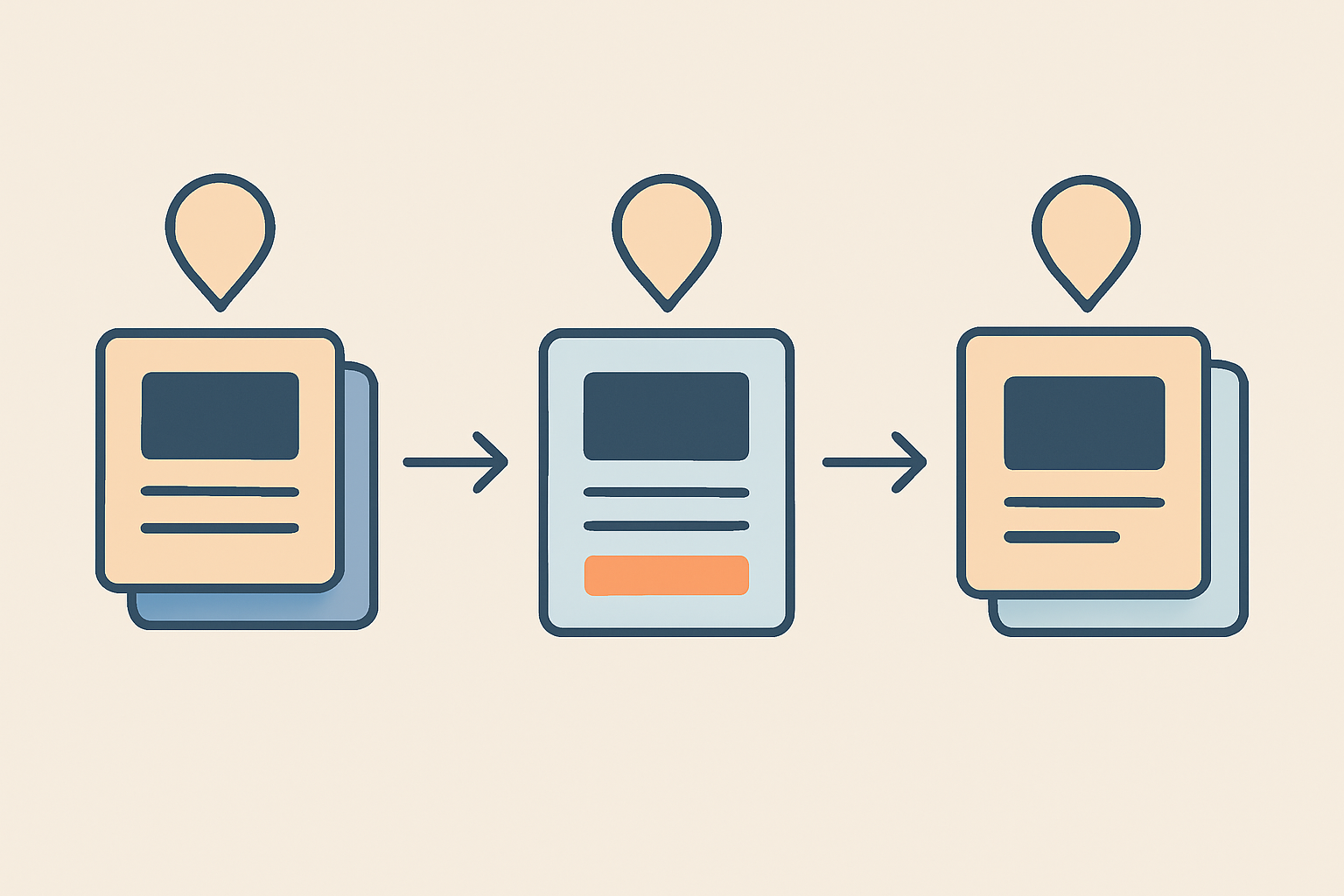
A 90-day plan creates momentum without turning the store into a permanent test environment. Work in phases, protect high-value pages, and review each release against a commercial objective.
Days 1–30: Establish control. Inventory priority URLs, capture performance baselines, identify crawlability and indexation issues, flag duplicate or cannibalizing pages, and create a shared change log. Set ownership rules for merchandising, content, and development releases.
Days 31–60: Improve priority pages. Refresh revenue-driving collections and product-led guides, resolve obvious internal-link gaps, strengthen buyer pathways, and implement accurate structured data where appropriate. Focus on changes that improve a verified intent gap.
Days 61–90: Validate and compound. Review performance against qualified sessions, conversion behavior, and organic revenue. Consolidate weak overlap, redirect obsolete URLs, publish original supporting content, pursue relevant authority-building opportunities, and refine reporting around the outcomes leadership actually needs to see.
For Shopify and WooCommerce retailers generating $50k+ MRR, book a call with SEO.DIGITAL for a no-obligation deep-dive consultation. Get a custom view of technical health, high-intent content opportunities, authority building, AI visibility, and the organic revenue opportunity your store can pursue next.