
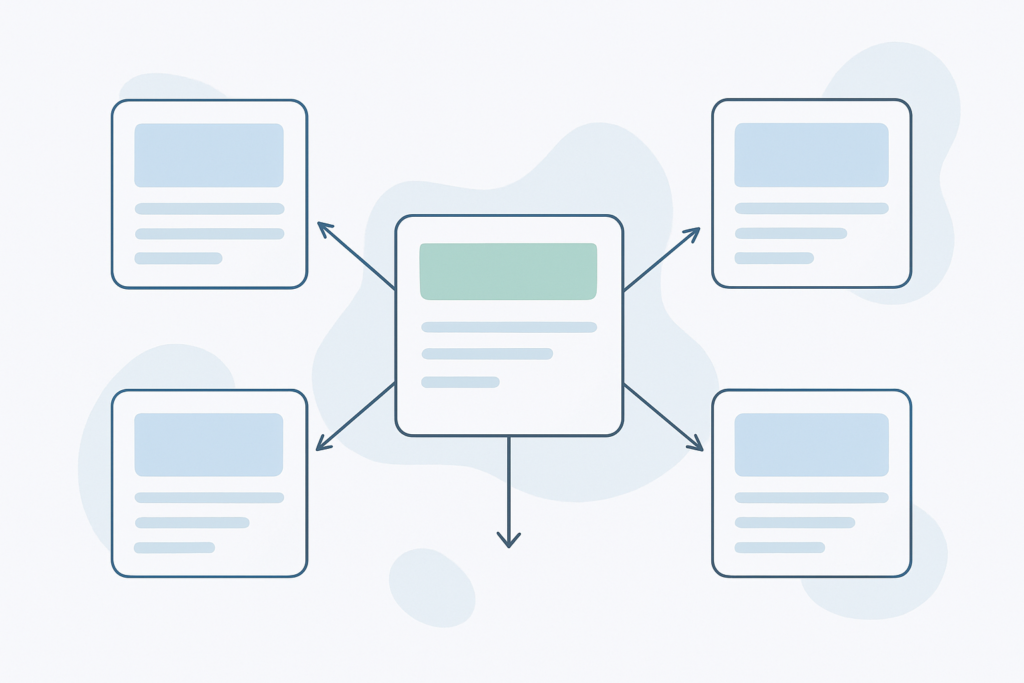

Duplicate URLs quietly drain organic performance long before they trigger an obvious alarm. SEO duplicate sites can mean multiple URLs inside one store, live HTTP and HTTPS versions, www and non-www versions, or substantially copied content across domains.
Accidental duplication rarely results in a direct duplicate content penalty. The real risk is losing control over which URL search engines index, rank, and send shoppers to.
A weak approach treats every duplicate as a canonical-tag problem. A high-performing eCommerce team identifies the purpose of every URL, protects shopper functionality, consolidates signals, and fixes the clusters that put category traffic and organic revenue at risk.
What Are SEO Duplicate Sites?
SEO duplicate sites occur when the same or substantially similar content can be reached through multiple URLs on one domain or across different domains. Search engines usually group those versions and select one representative URL to show in search results.
The important point is simple: search engines evaluate URLs, not your database records. One Shopify product may be one SKU in your catalog but exist at multiple crawlable URLs through collection paths, filters, campaign parameters, or product variants.
Exact duplicates contain materially identical content. Near duplicates share most of their copy, layout, metadata, and intent, with only small differences such as a color name, sort order, or location reference.
Thin content is different. A thin page may be unique but offer too little useful information to deserve visibility. Duplicate pages may be detailed and commercially valuable, yet still compete because their signals point to the same search purpose.
Internal vs. External Duplicate Content
Internal duplicate content lives on your own domain. Common examples include one product available through /collections/shoes/products/model-x and /products/model-x, or filter URLs that reproduce the same collection with a different parameter order.
External duplicate content appears on another domain. That can include manufacturer-supplied product descriptions, a syndicated buying guide, an unauthorized scrape, or a cloned site using your copy and images.
The remedy depends on who controls the pages. Internal duplicate content is usually an architecture, template, or content-governance problem. External duplicate content calls for more distinctive content, proper attribution and canonical requests for approved syndication, or documented escalation when a scraper is impersonating your brand.
Is Duplicate Content Bad for SEO—or Does Google Punish It?
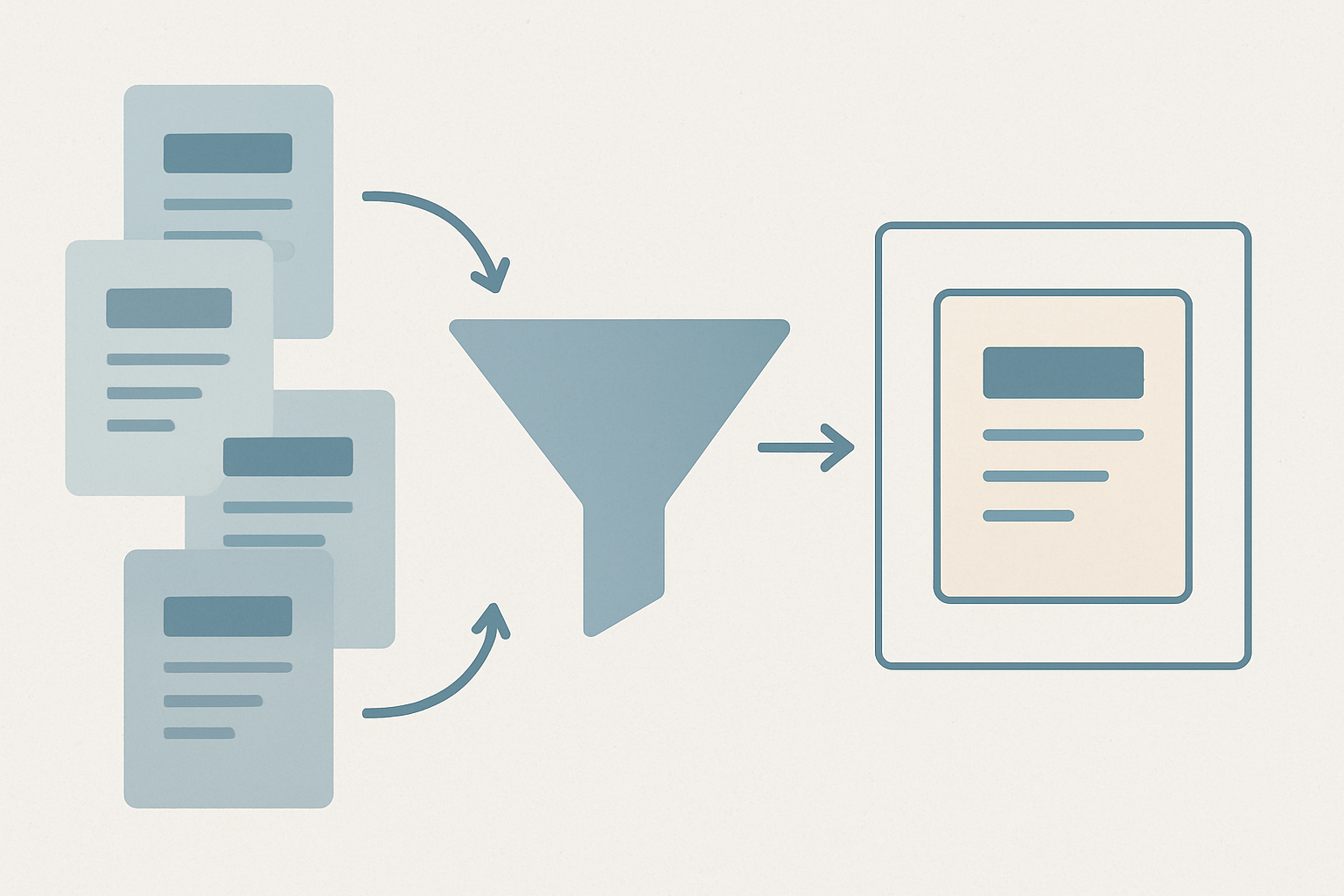
Most accidental duplicate content does not result in a manual penalty. Search engines generally cluster similar URLs, select a canonical version, and filter alternatives from search results.
That reassurance should not produce complacency. If your intended canonical is ignored, a low-value filtered URL, outdated product page, or wrong protocol version can become the version that receives impressions and links.
Serious risk increases when duplication is deceptive or scaled to manipulate results. Doorway pages, scraped pages published at volume, and copied content with no independent value are quality and spam concerns. That is distinct from a legitimate store whose platform generates too many URL variations.
The Real Risks: Wrong URLs, Lost Visibility, and Split Authority
Duplicate content SEO is a signal-management issue. The damage is rarely one dramatic event. It is a collection of smaller losses that become material across a 5,000-product catalog.
- Wrong-page selection: Search engines can rank a filtered, tagged, or legacy URL rather than your core collection or product page.
- Fragmented link equity: External links and internal links may point to competing versions instead of strengthening one canonical URL.
- Wasted crawl budget: Crawlers can spend time discovering parameter combinations instead of new products, priority collections, and updated inventory.
- Intent overlap: Similar category or editorial pages can compete for the same commercial query and weaken each page’s relevance.
- Poor landing experiences: A shopper may arrive on an old page, a filtered state, or a URL with no useful navigation context.
The visibility mechanics are not hypothetical. How featured-snippet deduplication changed duplicate-result visibility illustrates why URL selection and result filtering matter when more than one version appears eligible.
Does Duplicate Content Affect the Whole Site or One Page?
A few low-value duplicate pages will not automatically suppress an entire domain. Impact depends on scale, crawlability, internal-link exposure, and whether the duplicate cluster touches revenue-driving pages.
A duplicate blog post with no links is a cleanup task. Thousands of crawlable filter URLs, a fully indexable staging environment, or both HTTP and HTTPS site versions can create a much broader indexation and crawl-management problem.
Prioritize with four questions:
- How large is the cluster? Count URLs, not just templates.
- What value is exposed? Check affected organic sessions, revenue, backlinks, and top-category demand.
- What signals conflict? Compare canonicals, sitemaps, redirects, and internal links.
- Can crawlers keep generating URLs? Unlimited parameters demand a structural fix, not page-by-page cleanup.
Common Causes of Duplicate Sites on Shopify and WooCommerce
Shopper-friendly functionality often creates search-unfriendly duplication. Filters, variants, search pages, collection paths, and campaigns can all be useful to customers while adding no independent search value.
This is why generic duplicate-content advice often fails eCommerce teams. The correct action is not “remove every alternate URL.” It is to preserve pages that help people buy while making one intentional indexable URL the clear search result.
| Cause | Typical risk | Correct action |
|---|---|---|
| Product variants | Near-identical URLs for color, size, or pack options | Keep useful variants accessible; consolidate to the preferred product URL when variants lack separate search intent |
| Collection paths | One SKU reachable from multiple collections | Select one canonical product URL and align internal links to it |
| Filters and sorting | Crawlable facets and sort states multiply duplicate pages | Index only facets with proven search demand; control low-value parameter patterns |
| Internal search and tag archives | Utility pages appear as weak duplicate content pages | Use noindex,follow where pages must remain accessible but should not rank |
| Manufacturer copy | Retailer pages offer the same description as competing stores | Add original buyer guidance, benefits, comparisons, and usage evidence |
Product Variants, Collection Paths, Filters, and Sorting URLs
URL parameters are the quiet source of most large-catalog duplicate URLs. A collection can produce separate URLs for size, color, price, availability, brand, and sort order, then multiply them through every combination.
Not every facet should be blocked from organic visibility. A “women’s waterproof hiking boots” filter may serve real demand and deserve a focused, curated landing page. A URL combining six filters and sort_by=best-selling usually does not.
Canonical tags can consolidate ranking signals from alternate pages. They do not stop crawlers from discovering unlimited parameter combinations when internal links, filter widgets, or external links keep exposing them.
Product variants require the same judgment. A separate product URL may be justified when a variation has distinct demand, content, images, stock, and buyer intent. If the page differs only by a dropdown state, it rarely needs to compete as an independent organic landing page.
Sitewide URL Variations and Indexable Utility Pages
Sitewide duplicates are expensive because they repeat every page. HTTP versus HTTPS, www versus non-www, trailing slashes, URL casing, and index-file variations should resolve cleanly to one preferred version with 301 redirects.
Campaign tracking can create alternate URLs as well. UTM parameters should normally preserve the canonical URL of the underlying page. Session IDs require special attention because they can create effectively unlimited duplicate URLs.
Check these high-risk areas during every technical review:
- Internal search pages that expose thin result sets to crawlers.
- Print and archive pages that reproduce core content without a separate search purpose.
- WordPress taxonomies and comment pagination on WooCommerce sites.
- Staging environments that need authentication and explicit indexation controls before launch.
Manufacturer Descriptions, Syndication, and Scraped Content
Manufacturer descriptions make merchandising faster, but they leave your product page indistinguishable from dozens of retailers. Search engines have little reason to prefer a copied specification block when another store has original guidance, proof, and stronger authority.
A stronger product page combines original benefit-led copy, buyer guidance, and evidence that helps shoppers choose with confidence. Improving duplicate product descriptions seo is often less about adding adjectives and more about answering purchase questions the manufacturer copy ignores.
Add fit notes, material context, care instructions, comparisons, compatibility details, original FAQs, and images that show the product in use. Prioritize top-selling SKUs, high-margin products, and collection pages that already earn impressions.
Approved syndication needs clear attribution and, where appropriate, a request for a canonical reference to the original. Serious scraping is different. Record the copied URLs, timestamps, screenshots, and ownership evidence before pursuing platform, hosting, legal, or DMCA escalation.
Large catalogs with overlapping product, collection, and parameter URLs often need a dedicated Shopify or WooCommerce technical audit to separate harmless shopper functionality from indexation issues that cost organic revenue.
How to Find Duplicate Content and Duplicate Websites
You cannot fix duplicate content issues from a random list of URLs. Build clusters first, then record which URL should win and why.
Start with free search-engine signals. Follow with a crawl that inventories templates and URL patterns at scale. For every cluster, track the duplicate URL, preferred URL, issue type, page group, organic value, backlinks and internal links, recommended action, owner, and validation status.
Check Google Search Console for Canonical and Indexing Signals
Google Search Console shows where your intent and Google’s selection diverge. Review duplicate-related indexing statuses, especially “Duplicate without user-selected canonical,” “Duplicate, Google chose different canonical than user,” and “Duplicate, submitted URL not selected as canonical.”
Use URL Inspection on priority pages. Compare the user-declared canonical URL against the Google-selected canonical, then inspect whether the page is in your sitemap and how internal links point to it.
Treat these reports as evidence, not a complete inventory. They show what search engines have processed, but they do not replace a crawl of parameterized URLs, orphaned pages, legacy paths, and template outputs.
Use Site Searches and a Full Crawl to Build Duplicate Clusters
Run a quoted search for a distinctive sentence from a product description or editorial page. Add the site: operator to spot internal duplication, then remove it to identify external copies.
A full crawl gives you the operational view. A duplicate content checker or crawler can surface exact and near duplicates, duplicate titles, repeated meta descriptions and H1s, canonical tags, meta robots directives, redirect chains, status codes, and parameterized URLs.
Review clusters manually before changing templates. Similar products can hold legitimate shopper value, and an aggressive rule can remove pages that deserve their own search engine rankings.
Before changing canonical logic or noindex rules across a catalog, document the affected URL patterns and validate the likely revenue impact. The principles behind seo for large ecommerce sites are especially relevant here: template-level changes need controlled implementation, not assumptions.
How to Fix SEO Duplicate Sites: Choose the Right Remedy
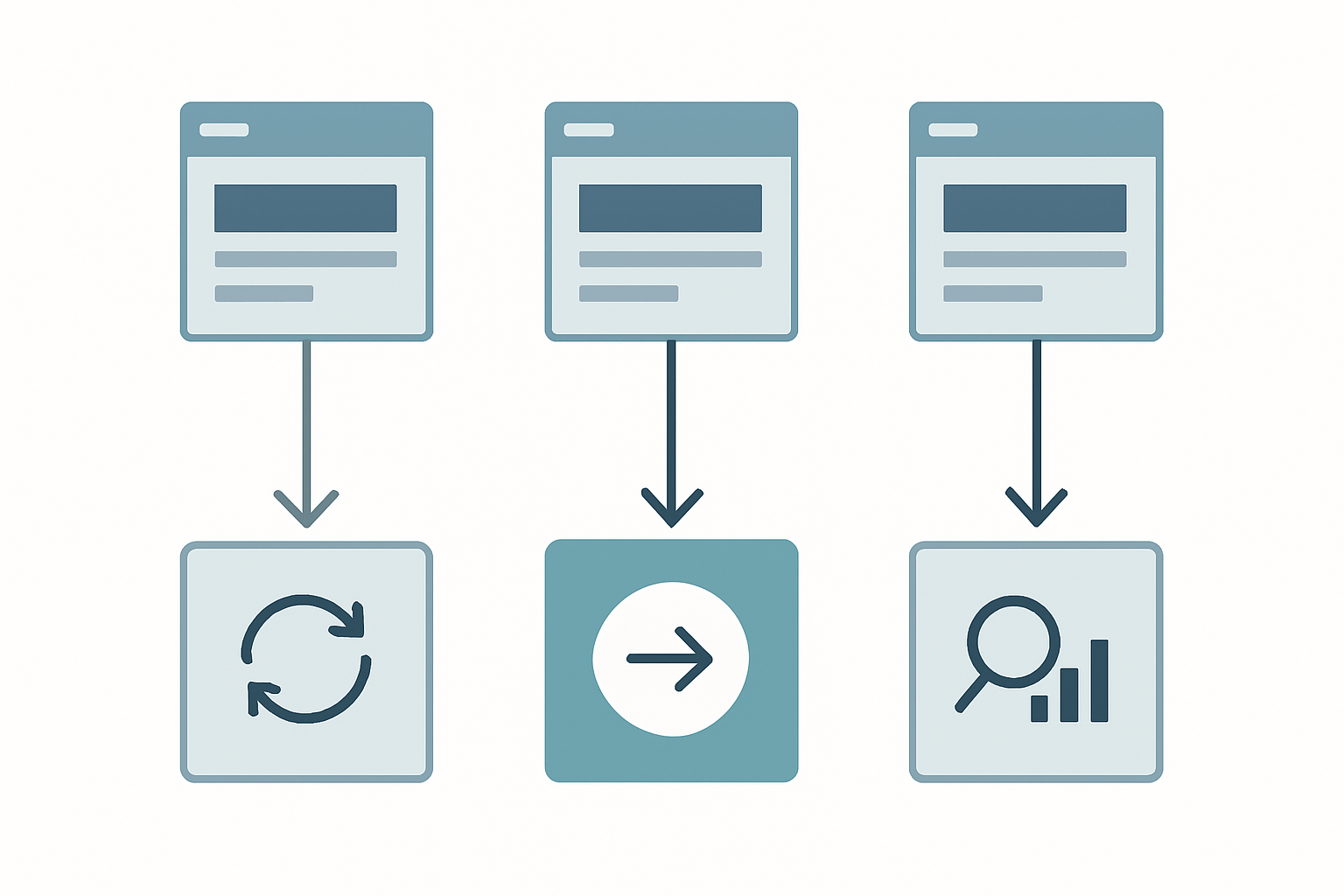
Fix selection starts with purpose. Decide whether the alternate URL should disappear, remain accessible without competing in search, or become a genuinely distinct page.
The following matrix prevents the common mistake of applying canonical tags to every duplicate page.
| Remedy | Use it when | Do not use it when |
|---|---|---|
| 301 redirect | The duplicate URL is obsolete and no longer needs to exist | Shoppers need the alternate view, variant, or filter URL |
| Canonical tag | Multiple versions must remain accessible but one should receive primary indexing signals | The duplicate page should be removed or has a different valid search intent |
| Meta robots noindex | A low-value utility page must work for users but should not appear in search results | You need to consolidate links from an obsolete URL |
| Rewrite | Pages should independently rank but currently share the same intent and copy | Small wording changes are the only planned difference |
| Consolidate | Several pages target one intent and one stronger resource would serve users better | Each page addresses a distinct buyer need |
Need a fix decision, not another report? SEO.DIGITAL can audit the duplicate clusters affecting your Shopify or WooCommerce store’s indexation, rankings, and organic revenue, then map redirects, canonicals, noindex rules, consolidation, and rewrites to the right URL groups.
Use 301 Redirects for Permanent Consolidation
Use 301 redirects when a duplicate URL has no continuing job. This includes HTTP-to-HTTPS consolidation, www or non-www normalization, retired duplicate products, merged collections, and superseded editorial pages.
A redirect tells users and search engines that the destination is the permanent replacement. It also helps consolidate link equity that would otherwise remain split across redundant URLs.
Avoid redirect chains. Update internal links, navigation, product feeds, and XML sitemaps directly to the final canonical URL rather than relying on multiple hops.
Use Canonical Tags When Multiple URLs Must Stay Available
A canonical tag tells search engines which URL you prefer among similar accessible pages. It is useful for tracking URLs, filtered views, print pages, and some product-variant situations.
A standard implementation looks like this: <link rel="canonical" href="https://example.com/products/model-x/">. The business instruction behind that code is clear: keep alternate views usable, but consolidate organic signals around the primary product URL.
Use one absolute canonical URL. Add a self-referencing canonical on the preferred page, keep internal links and sitemaps pointed to that preferred URL, and remove contradictory redirects or indexing directives.
Canonicalization is a strong hint, not a substitute for clean architecture. If your platform keeps creating millions of low-value combinations, solve the discovery and linking pattern too.
Use Meta Robots Noindex for Low-Value Pages That Must Exist
Use noindex,follow for pages shoppers may need but that should not compete in search results. Common candidates include internal site search, thin tag archives, placeholder pages, and certain paid-campaign landing pages.
The noindex instruction must be crawlable for search engines to see it. Do not block a URL in robots.txt and expect that block alone to communicate noindex.
Keep this remedy focused. Noindexing a page removes it from organic opportunity, so do not apply it to a valuable collection or product page simply because similar pages exist elsewhere.
Rewrite or Consolidate Similar Pages That Target the Same Intent
Canonical tags cannot create distinct value. If two collection guides, blog posts, or category pages target the same buyer query, choose whether each deserves a clearly different role.
Rewrite pages when you can give each one a unique search intent, product set, value proposition, and evidence. Merge them when one page can satisfy the demand better, then redirect the weaker URL to preserve relevant link equity.
This is frequently the right approach for seo duplicate content product pages where category paths, copied descriptions, and minor product variations mask a single underlying search intent.
Validate the Fix and Prevent Duplicate Issues From Returning
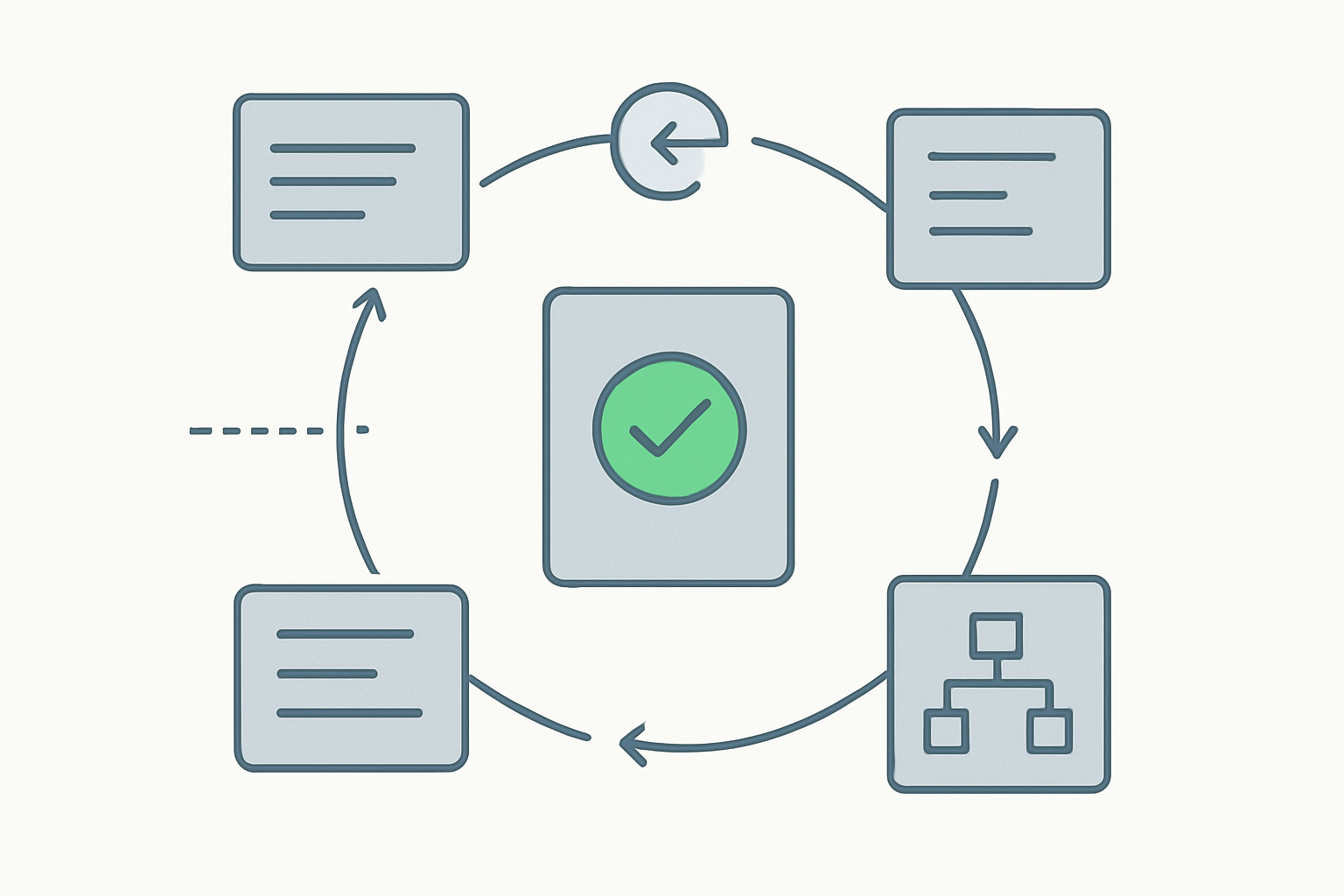
Implementation is not the finish line. Search engines need time to recrawl, process signals, and update canonical selection, so validation must happen before and after deployment.
Use this release sequence:
- Recrawl the affected patterns and confirm status codes, canonical output, meta robots, and redirect destinations.
- Check internal links to ensure menus, breadcrumbs, related products, and content links reinforce the preferred URL.
- Clean XML sitemaps so they list canonical, indexable URLs only.
- Inspect priority URLs in Google Search Console and monitor Google-selected canonical status over time.
- Track commercial outcomes including indexed-page quality, impressions, organic sessions, and revenue for affected categories.
Keep Canonicals, Internal Links, and Sitemaps Consistent
Mixed signals weaken your preferred URL. A canonical tag can point to one page while the sitemap submits another and internal navigation repeatedly promotes a third.
For every indexable page type, maintain one preferred URL across these signals:
- Canonical tag points to the preferred URL.
- Internal links use the preferred URL rather than parameter or path variants.
- XML sitemap includes only the preferred, indexable URL.
- Redirects consolidate obsolete alternatives.
- Hreflang annotations reference the correct regional canonical where relevant.
Clean URLs and genuinely unique content also make your site easier for every discovery system to interpret. That is sensible technical hygiene, without assuming every AI answer system processes canonical signals in the same way.
Add Duplicate-Content Checks to eCommerce Release QA
Most duplicate URLs return after a release, import, app installation, or theme change. Treat duplicate-content checks as launch criteria, not as an annual emergency project.
Require QA for product launches, collection edits, filter updates, migrations, merchandising imports, campaign templates, and staging deployments. Test URL patterns before release and confirm that manufacturer imports do not overwrite original product copy.
A practical checklist includes:
- Test URL generation for filters, sort orders, tracking parameters, and variant selection.
- Verify template output for canonicals, indexability, pagination, and internal links.
- Review sitemap changes after app, theme, or platform updates.
- Protect unique copy during catalog imports and product-information-management syncs.
- Monitor regressions with scheduled crawls and Google Search Console reviews.
FAQ: SEO Duplicate Sites and Duplicate Content
Is Duplicate Content Bad for SEO?
Accidental duplicate content is not usually a direct penalty. It can still harm search engine rankings indirectly when search engines select the wrong URL, filter useful alternatives, split link equity, or crawl large groups of low-value duplicate pages.
What Is the 80/20 Rule in SEO?
The 80/20 rule is a prioritization concept, not a Google duplicate-content threshold. Focus first on the URL patterns, products, collections, and technical errors responsible for the largest share of crawl budget waste, organic opportunity, or revenue risk.
How Do You Find Duplicate Websites?
Use Google Search Console, URL Inspection, site: searches, quoted-text searches, and a full-site crawl. A duplicate website can mean a cloned domain, an HTTP/HTTPS or www duplicate, duplicate URLs within one store, or external duplicate content copied onto another domain.
Does Google Punish Duplicate Content?
Google does not normally punish accidental duplicate content. Stronger action is more likely when duplication is deceptive or intended to manipulate search results; for legitimate stores, the routine risk is poor canonical selection and diluted SEO signals.
Take Control of Duplicate URLs Before They Cost Organic Revenue
SEO duplicate sites are manageable when you treat them as a revenue and architecture problem rather than a penalty scare. Identify the duplicate clusters, choose one preferred URL per indexable intent, apply the remedy that matches the page’s purpose, align every technical signal, and validate the result in Google Search Console.
SEO.DIGITAL works exclusively with Shopify and WooCommerce brands, connecting deep technical audits to indexation, high-intent traffic, and organic revenue rather than vanity metrics. Qualified brands generating $50k+ MRR can book a call for a no-obligation deep-dive consultation and receive a custom roadmap for duplicate URLs, crawlability, indexation, content, and sustainable organic growth.