


AI can produce hundreds of keyword clusters, title tags, and product-copy drafts in minutes. But will ai replace seo for the eCommerce brands that need qualified traffic, lower CAC, and profitable organic revenue? No.
AI will replace parts of SEO work. It will not replace the discipline of deciding what your store should own in search, validating whether a recommendation is safe, or taking responsibility when traffic rises but conversion rate falls.
The old view treats SEO as a production line of keywords and copy. High-performing Shopify and WooCommerce brands treat it as a commercial system: technical access, buyer intent, product truth, authority, and measurement working together.
The Short Answer: AI Will Change SEO, Not Eliminate It
AI will not eliminate search engine optimization. It will automate repetitive SEO tasks and change the presentation of search results, while making human strategy and quality control more valuable.
SEO is still the work of making your products and information discoverable, understandable, relevant, and useful. Search engines and AI answer tools need accessible pages, clear entities, credible evidence, and signals that your brand deserves attention.
Machine learning has shaped search results for years. What changes now is the workflow: AI tools can process more information faster, while your team must make sharper decisions about priorities, quality, and commercial return.
Why SEO Still Matters When Search Results Include AI Answers
AI-generated summaries do not appear from nowhere. They depend on web pages that search systems can crawl, interpret, compare, and trust.
That means product pages, collection pages, guides, and support content still need clean internal links, useful structure, accurate information, and evidence that separates your store from interchangeable competitors. If a page is difficult to render, blocked from indexing, or buried behind weak architecture, it is less likely to support rankings or AI citations.
For leadership teams evaluating the advantages and disadvantages of seo, this is the durable benefit: organic visibility is an owned business asset, not a rented media placement that disappears when spend stops.
What AI Can Automate in Search Engine Optimization
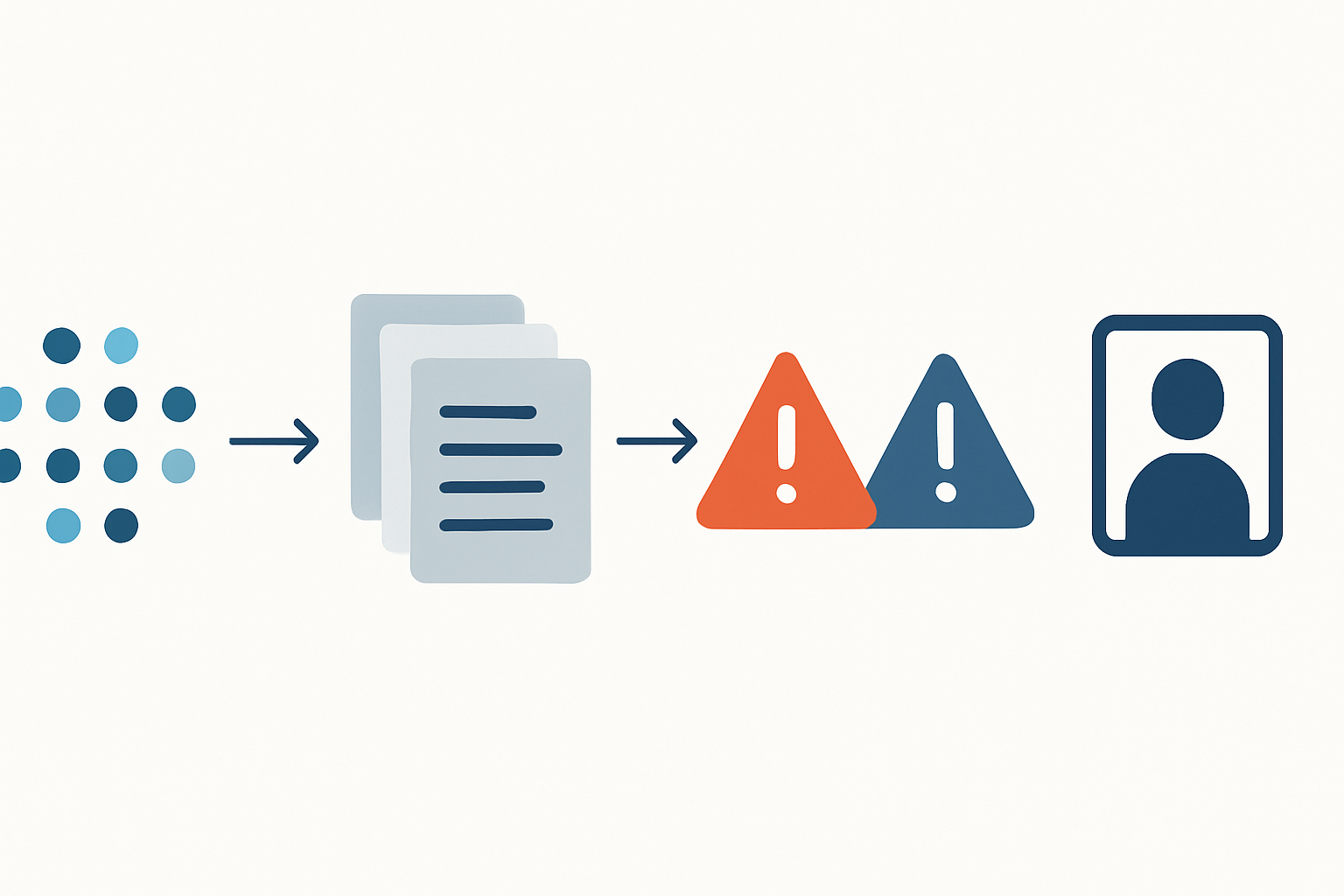
AI is excellent at pattern recognition and preparation. It can reduce the hours your team spends sorting data, producing first drafts, and locating possible problems.
That speed matters. It becomes expensive when a team mistakes a fast output for a verified decision.
AI Is Strong at Repetitive, Data-Heavy SEO Tasks
Generative AI and other AI tools can help your SEO professionals work through large inputs before expert review. Useful applications include:
- Keyword grouping: Cluster large query lists by themes, modifiers, and likely intent.
- Draft production: Create title-tag options, meta descriptions, content outlines, and first-pass product copy.
- Pattern detection: Flag duplicate copy, missing fields, broken internal-link patterns, or unusual performance changes.
- Report summaries: Turn Search Console, analytics, and rank-tracking data into questions worth investigating.
- Research preparation: Summarize review themes, competitor page structures, and recurring customer objections.
The output is a starting point. AI does not know whether a high-volume query conflicts with your pricing, inventory, brand promise, or best conversion path.
Use AI for Preparation, Not Unchecked Decisions
A practical operating rule is simple: AI can recommend; accountable people must verify, prioritize, approve, and measure.
Before publishing AI-generated content or implementing a technical SEO recommendation, check it against product specifications, approved claims, live search results, analytics definitions, customer intent, and current business goals. A polished sentence or confident technical explanation is not evidence.
The division of responsibility should stay clear:
| What AI Can Automate | What Humans Must Own |
|---|---|
| Keyword clustering and content-gap discovery | Search opportunity selection based on margin, demand, and conversion potential |
| Metadata and outline drafts | Brand voice, product claims, factual accuracy, and final editorial approval |
| Initial technical issue flags | Live-site diagnosis, implementation choices, and validation after release |
| Internal-link suggestions and report summaries | Architecture decisions, KPI definitions, and revenue accountability |
| Pattern analysis across large datasets | Strategy, risk assessment, and cross-team prioritization |
Brands get more value from AI when it operates inside a revenue-led SEO roadmap rather than as a collection of ungoverned prompts and tool subscriptions.
What AI Cannot Replace in SEO
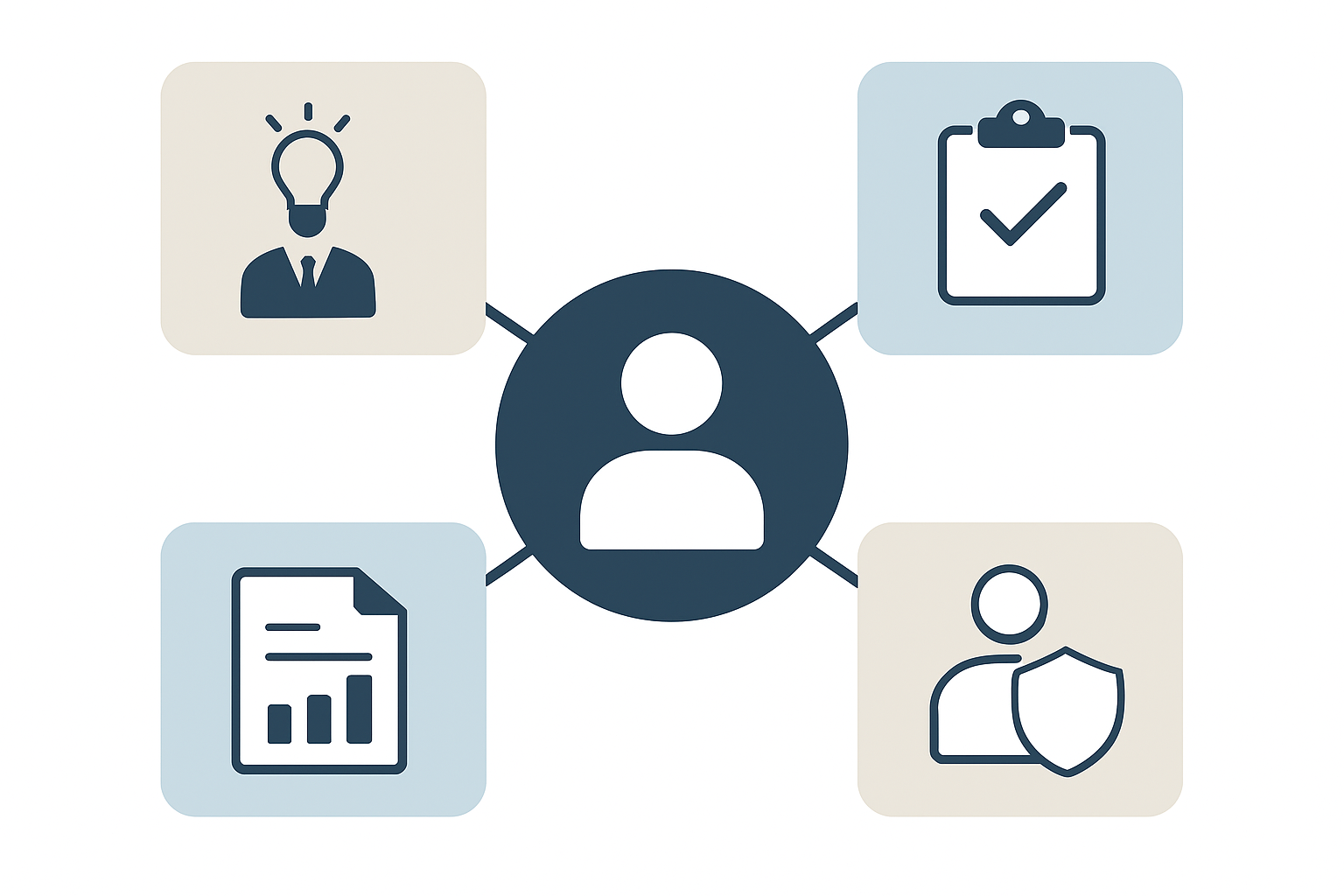
The expensive SEO failures are rarely caused by a lack of text. They happen when teams target the wrong opportunity, publish inaccurate claims, break a technical pathway, or report activity instead of commercial impact.
Human expertise remains necessary because someone must understand the business context and own the consequences.
Strategy, Business Context, and Product Priorities
AI can identify that thousands of people search for a product category. It cannot reliably decide whether that category has enough margin, stock availability, repeat-purchase potential, or strategic value to justify the investment.
A store selling both premium bundles and low-margin accessories should not allocate effort based on search volume alone. The right SEO strategy weighs demand alongside contribution margin, customer lifetime value, merchandising priorities, seasonality, and the pages most likely to convert.
This is where human insight changes the work. Your SEO experts need to decide whether to build a category hub, improve a collection page, create comparison content, consolidate cannibalizing pages, or avoid a query that brings the wrong buyer.
Original Experience, Brand Voice, and Customer Understanding
AI can summarize what already exists online. It cannot test your product, interview your customers, inspect why returns happen, or explain the trade-off that a serious buyer needs before checkout.
Generic product copy often describes features. Strong eCommerce content resolves the questions that prevent a purchase: fit, compatibility, durability, setup time, use cases, limitations, shipping concerns, and comparison criteria.
The strongest eCommerce content often comes from the questions customers ask before buying, returning, or comparing products, not from generic prompts alone. That is why buyer-intent content needs product expertise, honest guidance, and a distinctive brand point of view.
Fact-Checking, Risk, and Accountability
Plausible output is not proof. AI can misstate a specification, invent a source, use outdated policy details, or recommend a template-level change that creates duplicate-content and canonical problems across thousands of URLs.
Your approval process should require source review, product-team validation, legal review where claims matter, and live testing for technical changes. Teams should understand how AI hallucinations can create plausible but false claims before allowing AI output to reach customers.
The human owner is not there to slow the process down. They are there to prevent fast, scalable mistakes.
AI Search Is Changing How Brands Earn Visibility
Search visibility is no longer confined to a list of ten blue links. AI-generated answers and conversational interfaces can synthesize information before a shopper reaches a publisher or store.
That shift does not make conventional SEO obsolete. It raises the standard for being understood and selected as a source.
From Rankings Alone to Retrieval, Citations, and Brand Trust
Ranking remains valuable, especially for commercial queries. But AI systems may retrieve a limited set of sources to support an answer, which makes clarity, evidence, and brand trust more important.
Build pages that state the answer early, use descriptive headings, explain product distinctions plainly, and support claims with real proof. Keep your company, product, and category information consistent across your site and credible third-party sources.
That work sits behind the growing discussion of how ai overview will change seo. The practical response is not to chase every new label. It is to make your store easier to retrieve, easier to trust, and more useful than a generic summary.
Earned links, reputable brand mentions, authentic reviews, digital PR, and useful community participation also matter. AI can draft outreach language; it cannot manufacture a trustworthy relationship or genuine public confidence in your brand.
Why Technical SEO Is Still the Foundation
A great page cannot perform consistently if search engines cannot access or interpret it. Crawlability, indexation, rendering, canonical consistency, structured data, mobile usability, site speed, and internal linking remain foundational technical SEO work.
Shopify and WooCommerce stores have specific pressure points: duplicate template copy, filtered navigation, variant URLs, collection-to-product relationships, pagination, and thin pages generated at scale. A tool can flag a pattern, but a human must inspect the live site, understand the platform behavior, and judge business impact.
For teams comparing seo vs aeo, the answer is not to choose one foundation over another. Technical accessibility and useful source material support both traditional rankings and answer-oriented visibility.
AI Tools vs. SEO Experts: A Practical Comparison
The useful comparison is not AI versus people. It is task automation versus accountable ownership.
AI tools can broaden what a capable team can investigate. SEO professionals turn that investigation into controlled work that protects revenue and brand trust.
| SEO Area | AI Tool Output | Expert-Validated SEO Decision |
|---|---|---|
| Keyword research | Clusters, related questions, and volume patterns | Choose opportunities based on intent, margin, funnel role, and competition |
| Content briefs | Draft outlines and topical suggestions | Set information gain, approved claims, conversion goal, and editorial angle |
| Product and category copy | Scalable first drafts | Add product truth, customer objections, differentiation, and compliance review |
| Technical diagnosis | Flags possible errors and anomalies | Confirm root cause, prioritize fixes, implement, and test live impact |
| Internal linking | Suggested connections between pages | Build a deliberate hierarchy around priority collections and buyer journeys |
| Authority building | Prospect lists and outreach drafts | Earn credible links, PR coverage, brand mentions, and community trust |
| Reporting | Automated summaries and trend alerts | Connect organic activity to revenue, assisted conversions, and CAC |
| Strategic prioritization | Pattern-based recommendations | Make trade-offs across merchandising, development capacity, risk, and growth goals |
What AI Should Own, Assist With, and Never Approve Alone
Use a three-part decision model to keep AI productive without handing it control.
- AI can lead preparation. Let it cluster keywords, detect recurring themes, summarize datasets, and draft alternatives.
- AI can assist production. Use it for outlines, metadata options, content QA prompts, and early technical checks.
- Humans must own decisions. Keep strategy, product claims, technical implementation, quality approval, authority building, and revenue choices under named human accountability.
This model stops two bad extremes: manual teams wasting time on repeatable work, and automated teams producing large volumes of unverified output.
The Best AI-Assisted SEO Workflow for Shopify and WooCommerce Brands
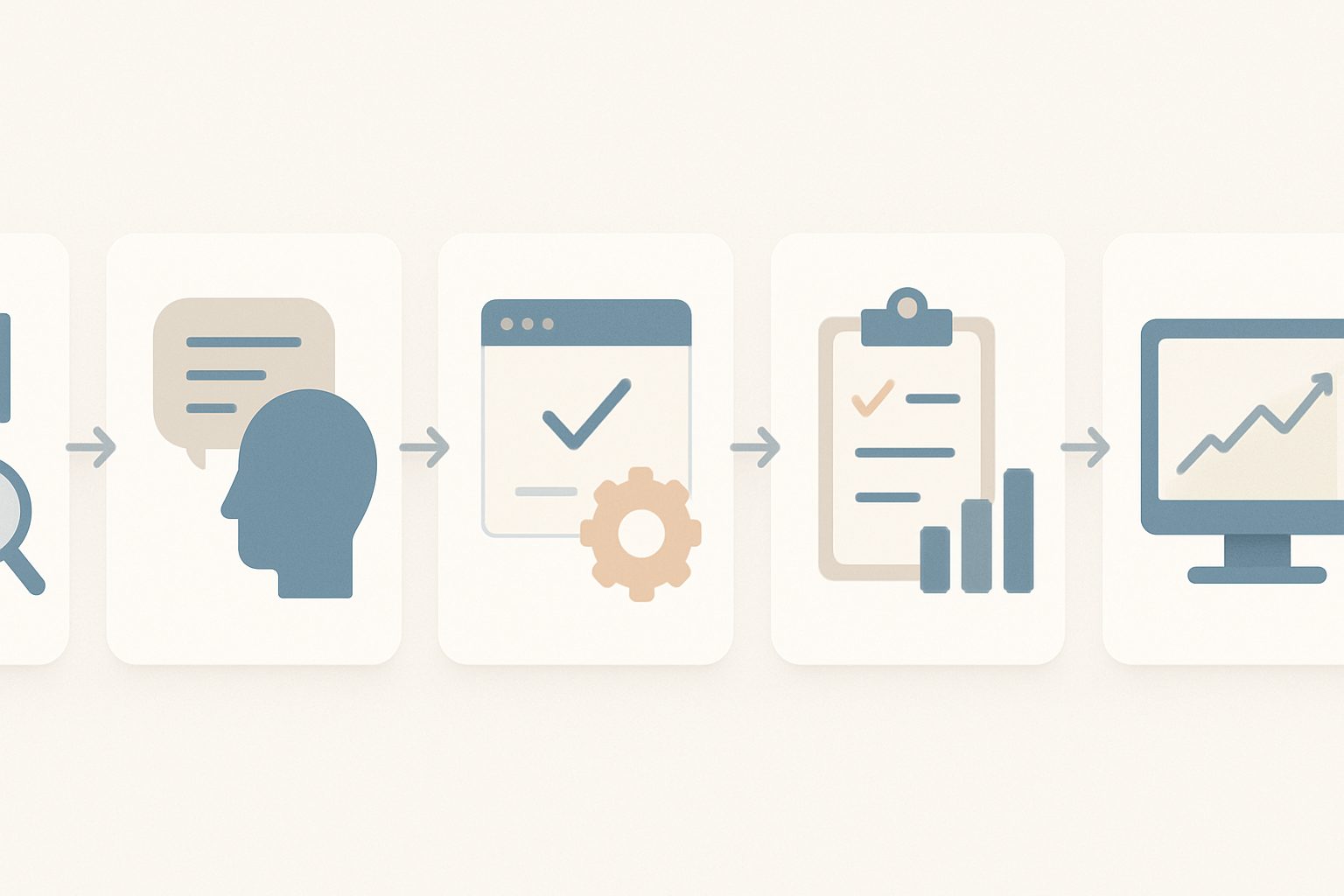
The strongest workflow starts with commercial evidence, not prompts. Every AI task should connect to a priority category, a buyer problem, a technical constraint, or a measurable growth target.
Step 1: Start With Revenue Goals and Customer Intent
Set priorities using organic revenue, gross margin, stock position, conversion paths, seasonality, and recurring buyer objections. Then use keyword research to identify how customers articulate the need.
A keyword with moderate volume and high purchase intent can outperform a broad informational term that produces traffic but no meaningful sales. Human expertise is needed to make that call.
Step 2: Use AI to Accelerate Research and Drafts
Use AI tools to cluster queries, summarize customer reviews and support tickets, propose content structures, identify likely gaps, and create draft metadata. This reduces preparation time and gives your team more angles to assess.
Do not publish the first output by default. Check every draft against live search results, brand standards, product data, and the intended page type.
Step 3: Add the Evidence AI Cannot Invent
Commodity AI-generated content repeats the market. Useful content adds proof the market does not already have.
Bring in original product comparisons, expert review, customer questions, demonstrations, real-world use cases, transparent limitations, first-party data, and carefully selected credible sources. This improves content quality and gives shoppers a reason to trust your page over a generic answer.
Step 4: Validate Technical SEO Before Scaling Content
Confirm that priority pages are indexable, linked from relevant hubs, canonicalized correctly, and supported by structured product information. Review duplicate templates, faceted-navigation risks, collection and product relationships, mobile usability, and rendering.
Scaling content onto a weak site architecture creates more URLs, not necessarily more visibility. Fix the routes that allow search engines to discover, understand, and rank the pages that matter.
Step 5: Measure Revenue, Not AI Output Volume
Track qualified non-branded traffic, priority-category visibility, organic conversion rate, assisted conversions, organic revenue, and changes in paid-ad dependency. Rankings still matter, but they are evidence, not the final outcome.
Do not celebrate prompt counts, draft counts, or pages published. Those measures can hide work that creates no customer value.
Need a clear starting point? SEO.DIGITAL can provide a custom Shopify or WooCommerce technical and AI-search visibility audit to identify the highest-impact risks and opportunities, then turn them into an expert-led roadmap.
What Will the Future of SEO Look Like?
The future of SEO is AI-assisted, human-led, evidence-based, technically rigorous, and more accountable to business outcomes. Search engine optimization will extend beyond ranking pages to earning discoverability across search engines, AI-generated answers, and the audience platforms where buying decisions take shape.
The foundations will hold: accessible pages, useful content, strong user experience, clear product information, and authority that is difficult to imitate. The teams that win will connect those foundations to merchandising, development, PR, customer research, and revenue reporting.
SEO Roles Will Shift From Manual Output to Strategic Ownership
Roles built mainly around repetitive formatting, first drafts, and basic reporting face greater automation pressure. That does not mean an entire profession disappears.
SEO experts who can diagnose technical issues, interpret intent, challenge weak assumptions, align stakeholders, assess risk, and connect work to commercial results become more valuable. The role shifts from producing tasks to deciding which tasks deserve production.
Is AI Better Than SEO?
No. AI is a capability and a set of tools; SEO is the strategic discipline of improving discoverability, relevance, technical accessibility, trust, and user experience.
AI can make SEO execution faster. It cannot remove the need to understand your customer, make your site crawlable, earn authority, or prove that organic activity contributes to revenue.
FAQ: Will AI Replace SEO or SEO Jobs?
Which 5 Jobs Will Survive AI?
No job is guaranteed safe. Work rooted in judgment, accountability, complex problem-solving, relationship building, original expertise, and customer understanding is harder to fully automate. In eCommerce, that includes strategic SEO leadership, technical SEO, digital PR, merchandising strategy, and conversion optimization.
What Jobs Will Be Gone by 2030 Due to AI?
Specific job-loss forecasts are uncertain. AI is more likely to reduce repetitive task bundles before it removes entire professions. SEO professionals should build skill in validation, technical literacy, strategy, analysis, and cross-functional communication rather than rely on manual production alone.
What Will Be the Future of SEO?
SEO will become more AI-assisted and more focused on retrieval, authority, technical quality, user intent, and revenue. Search engines and answer tools still need useful, accessible, trustworthy information, so strong content quality and site foundations remain essential.
Can AI Create SEO Content Without Human Input?
AI can draft SEO content, but it should not operate as an autonomous publisher. Human experts need to verify facts, add original evidence, confirm user intent, protect brand voice, and ensure every page supports a defined business outcome.
Final Verdict: Use AI to Make SEO Better, Not Generic
Will AI replace SEO? No. It will make low-value production easier to automate, while raising the cost of generic content, weak technical foundations, and strategy without accountability.
Use AI tools to reduce busywork. Invest human expertise in the work that determines whether your Shopify or WooCommerce store is found, trusted, chosen, and able to convert organic visibility into profitable revenue.
If your Shopify or WooCommerce brand generates $50k+ MRR and needs a transparent, revenue-focused AI-era growth plan, book a call with SEO.DIGITAL for a no-obligation deep-dive consultation.