
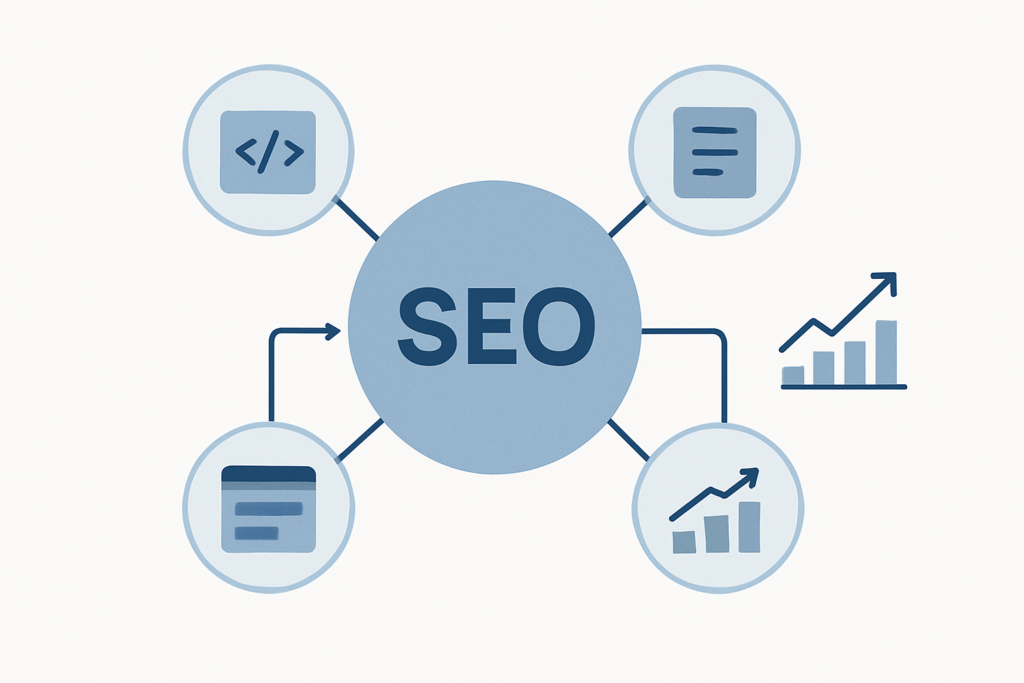

Organic search can either become a dependable acquisition channel or remain an unexplained line item in a traffic report. The benefits of using an seo company come from bringing strategy, technical execution, content, authority, and commercial measurement into one accountable system.
For Shopify and WooCommerce operators, generic SEO activity is rarely enough. Category pages compete with marketplaces, product variants create indexation risk, and rising paid-media costs put more pressure on every organic session to convert.
The traditional view treats SEO as a list of keywords and occasional blog posts. High-performing retailers treat it as a revenue discipline: fix the pages search engines cannot understand, target the searches buyers use before purchasing, and measure the route from impression to order.
What Does an SEO Company Actually Help Your Business Do?
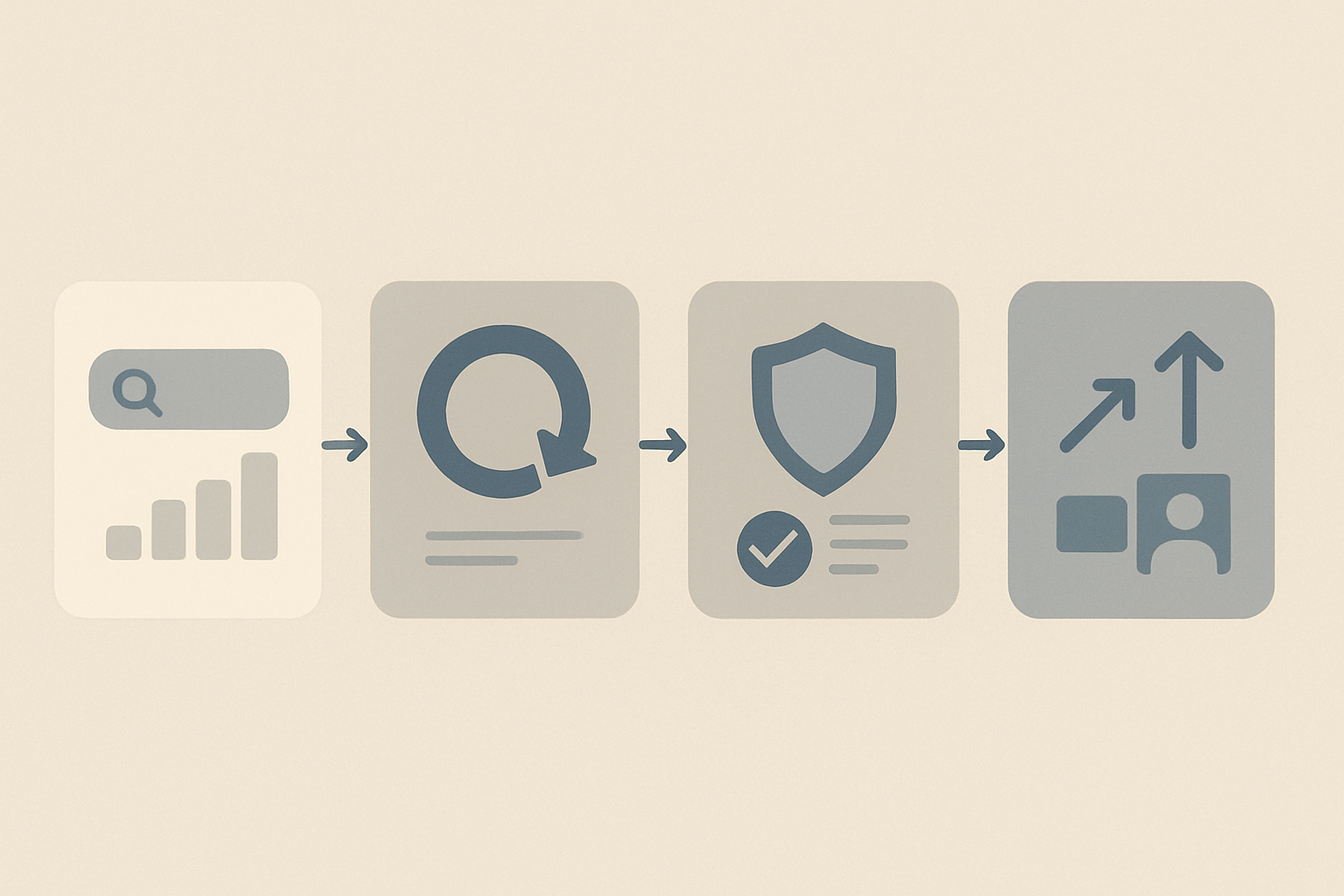
An SEO company improves a site’s ability to appear for relevant searches and turn that visibility into commercial opportunity. Search engine optimization combines technical work, content, authority signals, and user experience improvements so search engines can find, understand, and trust the pages that matter.
That is different from asking a busy marketing manager to update title tags between campaigns. It is also broader than a freelancer handling isolated tasks or a general digital marketing agency applying the same checklist to a retailer, law firm, and SaaS company.
A capable SEO agency coordinates research, implementation, editorial direction, link earning, analytics, and prioritization around business goals. For an online store, that means deciding whether the next opportunity is a collection-page rewrite, a duplicate-content fix, stronger internal links, a buying guide, or conversion tracking repair.
Why the Benefits Go Beyond Higher Search Rankings
Rankings are a leading indicator, not the finish line. A top position for an irrelevant query can inflate organic traffic while doing little for add-to-carts, purchases, or customer acquisition cost.
The stronger question is whether visibility reaches shoppers with a reason to buy. Teams should track non-branded organic sessions, conversion rate, assisted revenue, sales, and CAC efficiency, using guidance on tracking organic conversions to connect search performance with customer actions.
10 Benefits of Using an SEO Company
The value is not that an agency performs more tasks. It is that each activity supports the next, turning scattered optimization into a clear route from search demand to business growth.
1. Get a Strategy Built Around Search Demand and Revenue Potential
Strong SEO strategy starts with commercial reality. An agency examines search intent, competitor gaps, margins, seasonality, current visibility, and the pages most likely to attract qualified buyers.
For eCommerce, that usually means more than broad product terms. Collection pages, product comparisons, alternatives, use-case queries, buying guides, and post-purchase support content can all serve different points in the customer journey.
Keyword research identifies opportunity, but prioritization creates value. Teams that want to gain the benefits of learning seo can use SEO learning resources for understanding keyword research fundamentals, then evaluate whether their current plan actually focuses on terms with purchase potential.
2. Fix Technical SEO Issues That Limit Crawlability and Indexation
Great content cannot carry a store that search engines struggle to crawl, render, or index. Shopify and WooCommerce sites commonly accumulate duplicate URLs, weak internal linking, parameter issues, thin variant pages, slow templates, and confusing collection architecture.
A technical SEO audit should prioritize crawlability, indexation, duplicate-page risk, site architecture, and conversion-impacting store issues. The right work makes it easier for search engines to locate priority pages and for shoppers to move from category to product without friction.
Technical fixes can include structured data, metadata, canonical controls, redirects, mobile usability, page-speed improvements, and semantic HTML. The order matters: repairing a low-impact warning while high-value collection pages remain poorly linked is not a growth strategy.
3. Create Quality Content That Attracts and Educates Buyers
Retail content fails when it exists only to repeat target phrases. Quality content answers the uncertainty that blocks a purchase: which option fits, how products compare, what specifications matter, and how a buyer should use or maintain an item.
An SEO company can turn customer language into useful collection-page copy, product-supporting resources, comparison pages, FAQs, editorial content, and buying guides. This makes content creation a sales-enablement function, not a publishing quota.
Useful pages also give merchandising and paid-media teams stronger messages to test. Search intent exposes the objections, vocabulary, and product attributes buyers care about before they arrive on a landing page.
4. Build Authority, Trust, and Brand Awareness
Search engines need evidence that a retailer deserves visibility, particularly in competitive categories. Relevant editorial links, credible brand mentions, expert contributions, and genuine community discussion create signals that a store is known beyond its own website.
This is not a case for buying cheap links or spraying comments across forums. Ethical authority building relies on niche relevance, useful stories, digital PR, strong resources, and authentic engagement in places where customers already discuss the category.
Trust has commercial weight because buyers frequently use search to validate brands before spending. Research on trust in Google as a digital resource helps explain why visibility in credible search results can reinforce brand awareness alongside direct traffic.
5. Improve User Experience Alongside Search Performance
A slow mobile product page, unclear filters, or unstable layout creates two problems at once. It makes a site harder to use and can limit the experience signals that support strong search performance.
SEO work often improves navigation, internal linking, mobile usability, loading performance, content clarity, and page structure. These changes do not guarantee rankings, but they remove friction that prevents both discovery and conversion.
For a retailer, the practical test is simple: can a shopper find the right collection, understand the product, and reach checkout without unnecessary effort? Core Web Vitals matter, but the wider user experience matters more than one dashboard score.
6. Gain Specialized Expertise Without Building Every Capability In-House
One internal marketer rarely has the capacity to audit technical templates, research buyer intent, brief writers, earn authority, monitor indexing, and explain organic revenue to leadership. The opportunity cost appears as delayed launches, weak prioritization, and work that never reaches implementation.
An SEO company gives the brand access to coordinated specialists without requiring separate full-time hires for technical SEO, copywriting, outreach, analytics, and strategy. That depth is especially valuable when platform updates or competitor moves expose an urgent weakness.
SEO.DIGITAL acts as an eCommerce-focused extension of qualified Shopify and WooCommerce teams, combining technical, content, authority, and reporting capabilities into a prioritized growth roadmap rather than forcing the brand to assemble every specialty internally.
If you are still deciding how responsibilities should split between a partner and your team, understanding what does an seo company do makes the evaluation more concrete.
7. Make Organic Growth a Long-Term Strategy, Not a One-Off Task
Organic visibility compounds when foundational work continues. A well-optimized collection page can attract relevant demand over time, while supporting content, stronger internal links, and earned authority increase the store’s ability to compete across more searches.
That does not mean every campaign rises on the same schedule. Results depend on the site’s baseline condition, competition, implementation speed, inventory, content quality, and the resources committed to sustained execution. Initial movement may appear within several months, but meaningful commercial impact needs ongoing measurement.
A sensible program reviews returns through attributable revenue, assisted conversions, margin context, and CAC, not rank screenshots alone. Use an SEO ROI measurement framework to structure that conversation before assigning a universal return target.
8. Reduce Dependence on Paid Advertising Without Treating SEO as a Replacement
Paid advertising delivers speed, but visibility disappears when spend pauses. SEO builds owned assets: useful landing pages, technical health, content, and authority that can continue earning qualified traffic without a cost for every click.
Organic and paid channels work better together than in opposition. Search data can improve ad copy and landing-page messaging, while paid campaigns can test demand, support launches, and fill the gap while SEO gains traction.
The goal is not to eliminate paid media. It is to stop placing all acquisition risk in an auction environment where costs can change overnight.
9. Measure What Matters: Conversions, Revenue, and CAC
Traffic-only reporting hides more than it reveals. A revenue-focused SEO company establishes baseline performance, agrees on KPIs, and explains how technical, content, and authority work should influence qualified sessions and commercial outcomes.
Useful reporting includes impressions and search rankings, but it also examines non-branded traffic, engagement, add-to-carts, purchases, organic revenue, assisted revenue, and customer acquisition cost. It should identify what changed, why it matters, and what the team will do next.
This transparency protects the retailer as much as the agency. If a campaign cannot explain how it will connect organic traffic to conversion tracking, it cannot credibly claim business impact.
10. Stay Competitive as Search, AI, and Customer Behavior Change
Search results change because platforms, competitors, customer expectations, and search interfaces change. AI-shaped results increase the premium on sourceable, clear, people-first content and credible signals that support a brand’s expertise.
A company provides continuity: ongoing site checks, content refreshes, competitive review, authority work, and iteration based on performance. This keeps SEO from becoming a one-time clean-up that decays after launch.
As search results increasingly reward trustworthy answers, retailers also need to understand the benefits of international seo if growth involves new markets, languages, or regional search behavior.
DIY SEO vs. an In-House Hire vs. an SEO Company
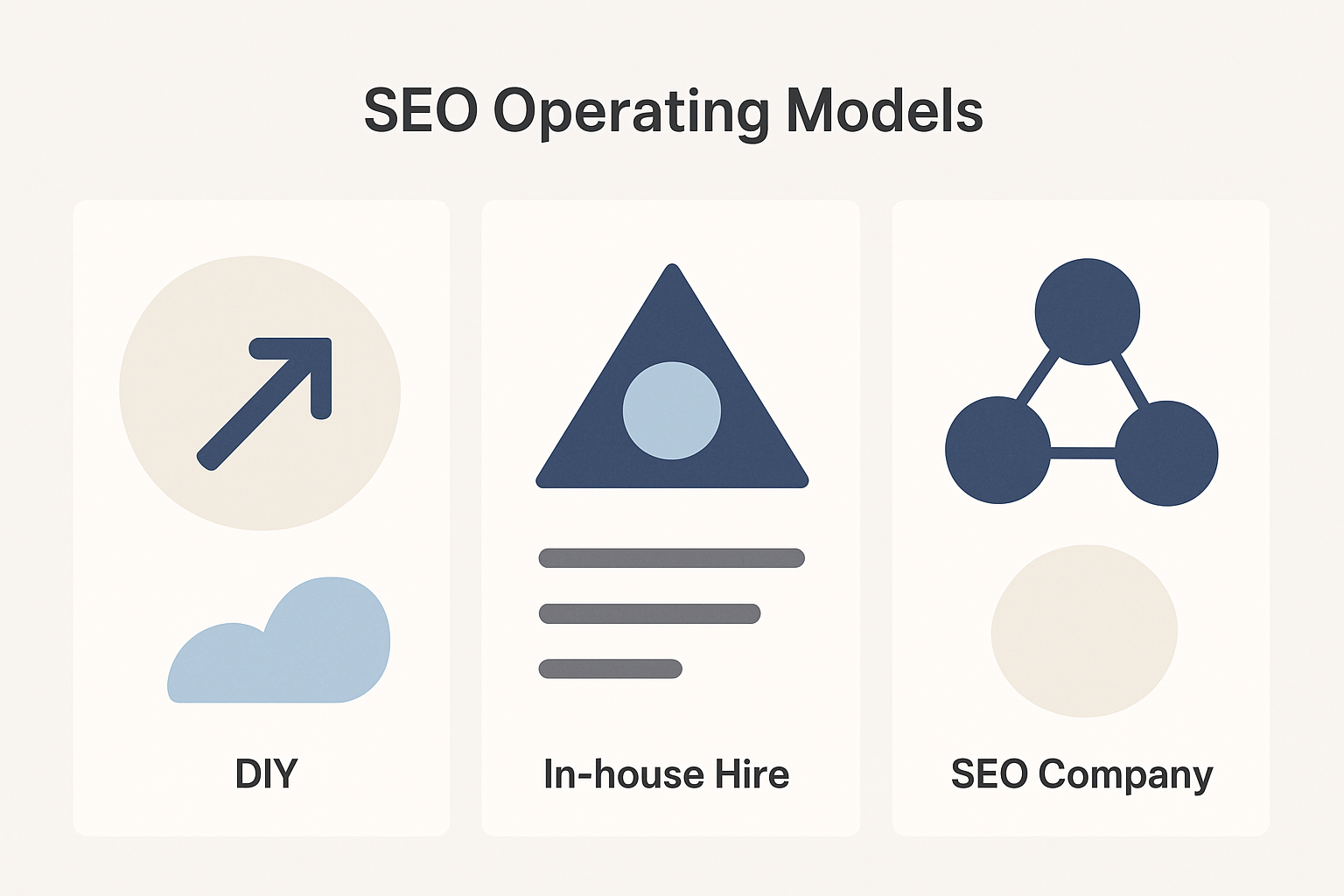
No operating model wins by default. The right choice depends on store complexity, growth targets, internal capacity, budget, and whether the business needs a single specialist or a coordinated delivery team.
| Factor | DIY SEO | In-House Hire | SEO Company |
|---|---|---|---|
| Best fit | Early-stage learning and simple fixes | Sustained internal ownership | Complex stores and integrated growth needs |
| Specialist depth | Limited by available time and knowledge | Strong in one or two disciplines | Technical, content, authority, and analytics coverage |
| Tool access | Often basic or fragmented | Requires ongoing software investment | Shared professional tool stack and process |
| Execution speed | Dependent on founder or marketer bandwidth | Dependent on one person’s workload | Parallel work across specialist roles |
| Management burden | High | Moderate, including hiring and retention | Shared roadmap with client approvals |
| Cost structure | Lower cash cost, higher time cost | Salary, benefits, and tool costs | Retainer tied to agreed scope |
Agency retainers vary widely by scope, market, and level of technical depth. Ahrefs’ visual benchmark of monthly SEO pricing is useful context, but pricing should follow the workload required to reach the agreed commercial goals.
When an SEO Company Is the Stronger Choice
An agency is often the stronger choice when organic growth has stalled, paid advertising costs are climbing, or a store carries technical debt that internal teams cannot address quickly. It also fits when content production is inconsistent, authority building has no owner, or reporting fails to connect activity with revenue.
Choose carefully, though. A retailer with a clear strategy and a capable in-house SEO lead may need specialist support only for technical projects or digital PR. The benefit comes from filling real capability gaps, not outsourcing responsibility blindly.
What a Good SEO Company Should Do Each Month
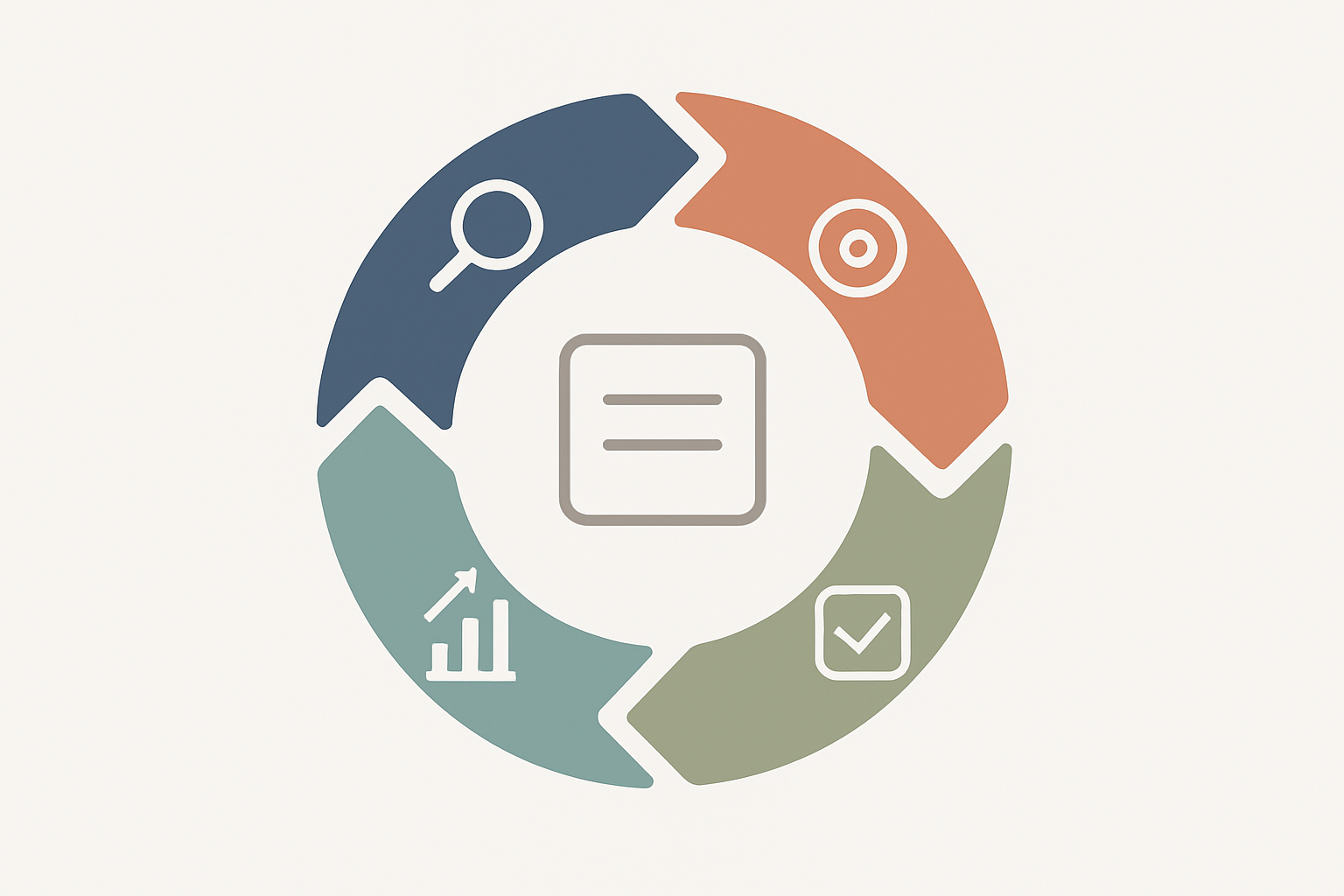
Monthly work should reflect the biggest available opportunity, not a fixed quota of blogs and backlinks. A mature program maintains a disciplined operating rhythm while adapting to what the data and store condition reveal.
- Monitor store health: Review crawlability, indexation, site changes, template issues, and priority-page performance.
- Prioritize opportunities: Rank technical fixes, content gaps, and conversion paths by likely impact and effort.
- Execute and improve: Optimize priority pages, publish useful content, strengthen internal linking, and resolve approved technical issues.
- Build relevant authority: Earn credible links and mentions through digital PR, niche resources, and genuine community relevance.
- Report and refine: Connect work completed to visibility, qualified traffic, conversions, revenue, and the next set of actions.
Check your current program: Does it cover technical health, high-intent content, authority building, and revenue-focused reporting, or does it mainly send ranking snapshots? Compare your provider against that standard before renewing another retainer.
The First 90 Days: Foundations, Quick Wins, and Clear Expectations
The first month should focus on access, discovery, analytics validation, competitive context, and a view of technical SEO health. This is where an agency finds the blockers that make every later effort less effective.
The next phase turns findings into a prioritized roadmap. Teams should see which pages, queries, technical barriers, and content opportunities matter first, plus the rationale and expected leading indicators.
Initial implementation follows: high-impact fixes, priority-page optimization, content briefs, tracking improvements, and an authority plan. Search rankings may not shift immediately, but the work should leave the retailer with clearer ownership, measurable milestones, and a credible long-term strategy.
How to Choose an SEO Company Without Falling for Red Flags
Promises are cheap in SEO. A provider earns trust by making its methodology, deliverables, data access, and commercial assumptions easy to inspect.
Look for these standards before signing:
- Transparent scope: You can see what work is included, who performs it, and what requires client approval.
- Relevant experience: The team understands Shopify or WooCommerce architecture, merchandising, and eCommerce conversion paths.
- Business-aligned KPIs: Reporting covers qualified organic traffic, revenue, and CAC context, not rankings alone.
- Ethical authority work: The provider can explain link acquisition and rejects schemes designed to manipulate search results.
- Realistic communication: Timelines, risks, dependencies, and reporting cadence are clear from the outset.
Guaranteed rankings, vague deliverables, hidden fees, unexplained links, and traffic-only success claims are warning signs. Before committing, spend time on avoiding black hat seo company practices that can damage visibility and create costly clean-up work.
Questions to Ask Before You Sign a Retainer
Ask direct questions and expect direct answers:
- What will you prioritize first, and why?
- How do you handle Shopify or WooCommerce technical SEO?
- How will you measure organic revenue and assisted conversions?
- Who creates the content and earns links?
- What does success look like at three, six, and 12 months?
Also ask what happens when a recommendation needs developer time, merchandising approval, or better product information. An agency cannot create results from a report that no one implements.
Why SEO.DIGITAL Is Built for Shopify and WooCommerce Growth
Generalist SEO often misses the operational details that decide eCommerce performance. SEO.DIGITAL works exclusively with Shopify and WooCommerce brands generating more than $50k MRR, where the store has the product-market fit and operational capacity to act on a serious organic growth plan.
The work begins with a deep-dive consultation around revenue goals, site health, acquisition constraints, and competitive pressure. That feeds a custom strategy and audit, followed by execution across technical fixes, buyer-intent copy, blog content, high-authority link building, digital PR, and authentic community signals.
Transparent retainers and direct reporting keep the work visible. The standard is not ranking theater. It is a clear explanation of what is being improved, why it matters, and how performance connects to sales.
From Ad-Spend Dependence to a Predictable Organic Revenue Engine
Retailers do not need another disconnected task list. They need a system that connects collection architecture, product discovery, useful content, trusted mentions, and conversion reporting to the same commercial objective.
SEO.DIGITAL is designed to replace fragmented activity with that system. Deep work on technical foundations and authority takes time, but it can create a stronger base for high-intent organic traffic and more resilient brand awareness.
Frequently Asked Questions
What Are the Benefits of Using SEO for Businesses?
SEO can improve website visibility, attract qualified organic traffic, strengthen credibility, improve user experience, and reveal how customers search before they buy. Hiring an SEO company adds specialist execution and accountability across those areas, helping businesses connect optimization work to commercial outcomes.
Is SEO Still Worth It in 2026?
SEO is still worth it when a business treats it as a measurable long-term strategy rather than a shortcut to instant rankings. AI-shaped search increases the value of helpful content, sound technical SEO, credible authority, and pages that give customers clear answers.
What Is the 80/20 Rule in SEO?
The 80/20 rule in SEO is a prioritization principle, not a formal search-engine rule. A small number of technical barriers, high-value pages, conversion paths, or buyer-intent queries can create a disproportionate share of opportunity, which is why audits should rank work by likely impact.
What Are the 3 C’s of SEO?
The 3 C’s are not a universal industry standard, but a practical model is Content, Code, and Credibility. Content matches buyer intent, code supports crawling and user experience, and credibility comes from relevant links, brand mentions, and demonstrated expertise.
The Bottom Line: Choose an SEO Partner That Can Prove Business Impact
The benefits of using an seo company are not automatic. They come from coordinated specialist work, disciplined prioritization, ethical execution, and reporting that ties organic visibility to the realities of an eCommerce business.
For Shopify and WooCommerce brands above $50k MRR, SEO.DIGITAL offers a no-obligation deep-dive consultation focused on revenue goals, technical health, content gaps, authority opportunities, and growth constraints. Book a call to determine whether a focused organic growth system is the right next investment for your store.